AFCON Final Fallout: Senegal and Morocco Hit with Over $1 Million in Fines, Key Personnel Banned After Chaotic Finale
Rabat, Morocco – In a stern rebuke against unsporting behavior and match disruption, the Confederation of African Football (CAF) has issued unprecedented sanctions against both Senegal and Morocco following the tumultuous conclusion of the 2025 Africa Cup of Nations (AFCON) final. The disciplinary action, announced Wednesday, January 28, 2026, includes combined fines exceeding $1 million and suspensions for players and coaching staff from both federations, sending a clear message regarding the integrity of African football.
The penalties stem from a dramatic and chaotic final held on January 18, which saw significant disturbances, including a walk-off protest by the Senegalese team, crowd unrest, player altercations, and questionable conduct from stadium personnel. While Senegal ultimately clinched their second continental title with a 1-0 victory in extra time, the aftermath has cast a shadow over their triumph and raised serious questions about match conduct at the highest level of African football.
The Controversial Climax: A Final Marred by Disorder
The flashpoint of the controversy occurred deep into stoppage time of the goalless final when Morocco was awarded a penalty following a prolonged Video Assistant Referee (VAR) review of an incident involving Senegalese defender Moussa Diouf and Moroccan forward Brahim Díaz. This decision ignited furious reactions from the Senegalese bench and players, leading to a pivotal moment where Senegal's head coach, Pape Thiaw, appeared to instruct his team to leave the field in protest. Most of the Senegalese squad briefly walked off, causing a nearly 20-minute halt to play as tensions escalated, requiring security personnel intervention to prevent a pitch invasion. Despite the mass walk-off, Senegal's captain Sadio Mané reportedly urged his teammates to return to continue the match. When play eventually resumed, Moroccan forward Brahim Díaz's subsequent penalty attempt was saved by Senegalese goalkeeper Edouard Mendy, a moment that proved to be a significant turning point in the game. Senegal then went on to secure the victory in extra time with a goal from Pape Gueye.
CAF Cracks Down: Senegal Faces Hefty Penalties
The Confederation of African Football's Disciplinary Board meticulously reviewed the events, concluding that both nations had breached various provisions of the CAF Disciplinary Code, including principles of fair play, loyalty, and integrity. Senegal, as the tournament victors, faced the most substantial financial hit, with their football federation, the Fédération Sénégalaise de Football (FSF), being fined a staggering $615,000. This total includes $300,000 for fan misbehavior, another $300,000 for the unsporting conduct of players and technical staff, and an additional $15,000 for accumulating five yellow cards during the match.
Individual sanctions were also severe. Head coach Pape Thiaw received a five-match CAF suspension and a personal fine of $100,000 for "unsporting conduct" and "bringing the game into disrepute," directly referencing his role in the team's walk-off. Additionally, two key Senegalese players, Iliman Ndiaye and Ismaila Sarr, were each handed a two-match CAF suspension for unsporting behavior directed toward the referee.
Morocco Not Spared: Fines and Bans for the Hosts
The host nation, Morocco, and its Royal Moroccan Football Federation (FRMF) were not immune to CAF's disciplinary actions, receiving a total fine of $415,000. A significant portion of this fine, $200,000, was levied due to the "inappropriate behavior of stadium ball boys." These ball boys were notably observed attempting to seize a towel used by Senegal's goalkeeper Edouard Mendy, an act widely interpreted as an effort to distract him during crucial moments. The FRMF was further fined $100,000 for the improper conduct of its players and technical staff, who invaded the VAR review area and obstructed the referee's work, violating fair play principles. An additional $15,000 fine was imposed due to Moroccan supporters using laser pointers to distract Senegalese players.
On the player front, Moroccan midfielder Ismail Saibari was handed a three-match CAF ban and a $100,000 fine for unsporting behavior. Captain Achraf Hakimi also received a two-match ban, with one match suspended for a year, for unsporting conduct. CAF also confirmed its rejection of Morocco's appeal to strip Senegal of the AFCON title, upholding the 1-0 victory for the Teranga Lions.
A Tarnished Image and Future Implications
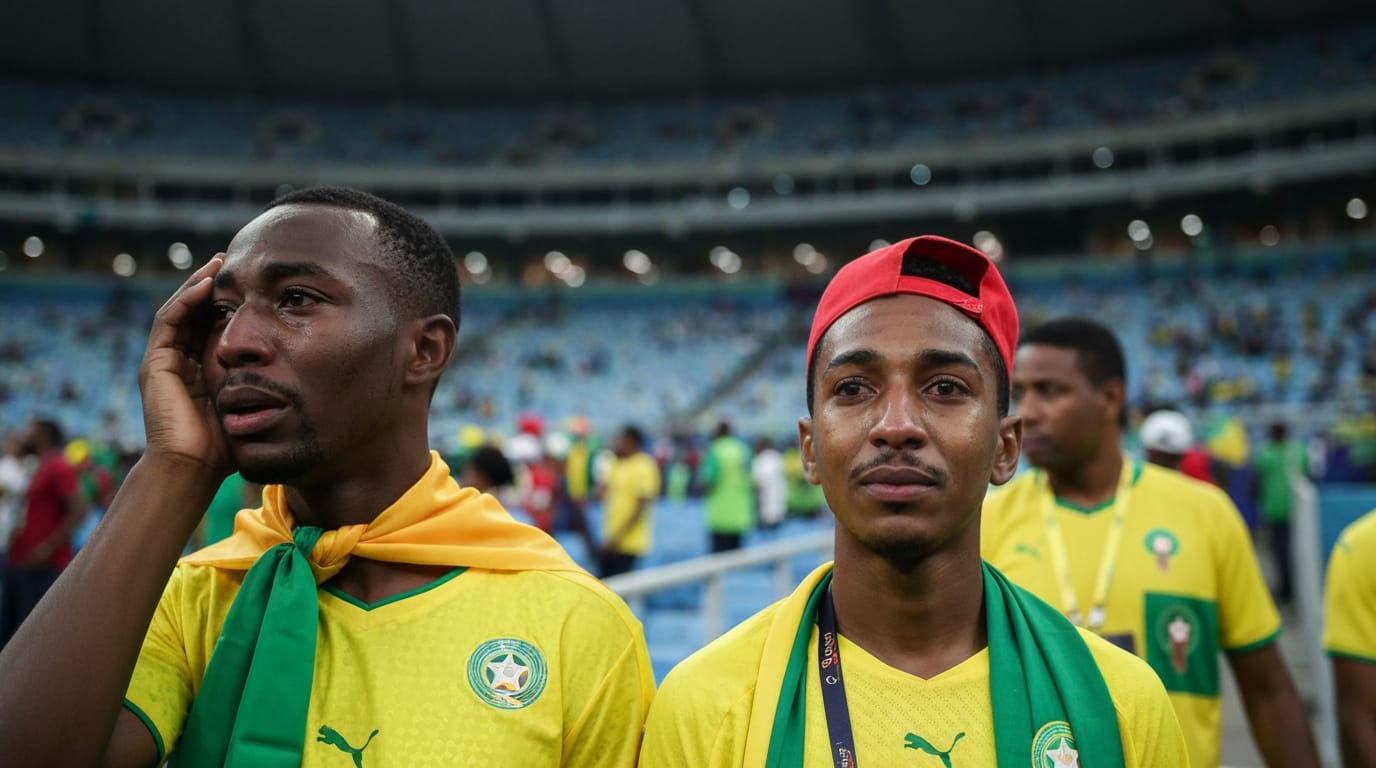
The chaotic scenes from the AFCON final, and the subsequent disciplinary fallout, have unfortunately tarnished the image of African football on the global stage. Morocco's coach Walid Regragui expressed that the game had given African soccer a "shameful" image. The incident also momentarily strained diplomatic ties between Senegal and Morocco, leading to calls for calm from political officials in both nations.
The sanctions carry significant implications for both national teams, particularly as they look towards future CAF competitions. The absence of key players and coaches due to suspensions will undoubtedly impact squad selections and strategic planning. For Morocco, a co-host of the 2030 World Cup alongside Spain and Portugal, the events of the final bring unwanted scrutiny and raise questions about organizational capabilities and crowd control, especially as they had aspirations to host the World Cup final. Rights groups in Morocco also reportedly denounced hate speech targeting sub-Saharan African residents in the country following the incident.
Conclusion: A Call for Discipline and Integrity
CAF's robust response underscores its commitment to upholding the principles of fair play, loyalty, and integrity within African football. The substantial fines and bans serve as a stark warning that such conduct will not be tolerated, even in the high-stakes environment of a continental final. By penalizing both federations, along with individual players and coaching staff, CAF aims to deter future escalations and ensure that the focus remains on the sport itself, rather than on disruptive behavior. As African football continues to grow in prominence, these measures signal a determined effort to protect its reputation and ensure a more disciplined and respectful environment for players, officials, and fans alike.