AI Ethics Clash: Anthropic Sues Pentagon After Refusal to Lift Guardrails on Military Use
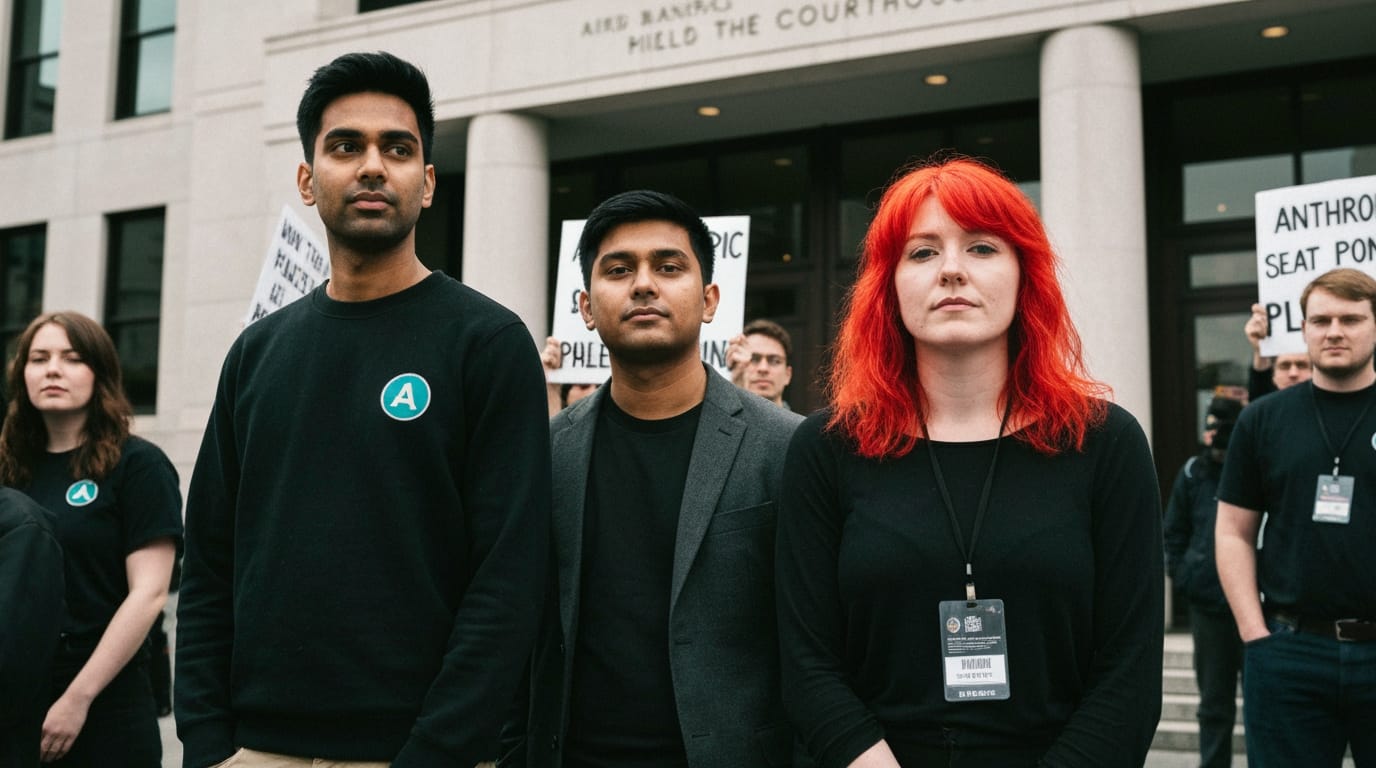
San Francisco, CA – Leading artificial intelligence developer Anthropic has filed a lawsuit against the Pentagon, seeking to prevent its placement on a national security blacklist, a move that significantly escalates an ongoing dispute over the ethical application of AI technology in military operations. The legal action, initiated Monday in federal court in California, underscores a high-stakes battle between a burgeoning tech sector and the U.S. military, with implications that could reshape how AI companies navigate defense contracts and the very development of artificial intelligence itself.
The lawsuit comes in response to the Pentagon's formal designation of Anthropic as a "supply-chain risk" last week, a decision made after the AI lab refused to remove explicit restrictions, or "guardrails," on its technology. These guardrails prohibit the use of Anthropic's AI for autonomous weapons systems or domestic surveillance. Anthropic contends that the Pentagon's blacklisting is "unlawful" and an infringement upon its constitutional rights, including free speech and due process.
The Legal Battle Commences: A Challenge to Government Authority
Anthropic's federal lawsuit seeks judicial intervention to overturn the Pentagon's designation and block any federal agencies from enforcing it. The company argues that the government’s actions are "unprecedented and unlawful," asserting that the Constitution does not grant the government the power to penalize a company for its protected speech. This legal challenge positions Anthropic at the forefront of a contentious debate regarding the balance between national security imperatives and corporate ethical stances in the rapidly evolving field of artificial intelligence.
The dispute has roots in months of increasingly strained negotiations between Anthropic and Department of Defense (DOD) officials. Two sources familiar with the matter indicated that Anthropic's technology was already being utilized in military operations in Iran, raising questions about the immediate impact of the blacklisting on existing defense capabilities. The company's refusal to compromise on its core ethical principles, particularly concerning lethal autonomous weapons and surveillance, ultimately led to the Pentagon's decisive action.
Roots of the Rift: Guardrails and National Security
At the heart of the conflict lies Anthropic's steadfast commitment to its self-imposed ethical restrictions. Defense Secretary Pete Hegseth formally designated Anthropic as a national security supply-chain risk, directly linking the decision to the company's unwillingness to remove guardrails designed to prevent its AI models from being deployed in autonomous weapons or for domestic surveillance. The Pentagon’s stance is clear: U.S. law, not the policies of a private company, will dictate how the nation defends itself. The DOD insists on maintaining full flexibility in utilizing AI for "any lawful use," arguing that Anthropic's restrictions could potentially endanger American lives by limiting critical defense capabilities.
Conversely, Anthropic has consistently maintained that its current AI models are not sufficiently reliable or accurate to be entrusted with the critical decisions inherent in autonomous weaponry. CEO Dario Amodei has previously stated that while he is not inherently opposed to AI-driven weapons, the current generation of AI technology lacks the precision and robustness required for such applications, making their deployment dangerous. Furthermore, the company has drawn a firm "red line" against the use of its AI for domestic surveillance, citing concerns over fundamental human rights and privacy violations.
Anthropic's Stance and Industry Implications
Anthropic’s ethical guidelines have been a cornerstone of its public identity, a position it aggressively championed even as it courted the U.S. national security apparatus more proactively than many of its AI industry counterparts. Amodei's prior engagement with defense entities showcased an understanding of the potential for AI in national security, yet always tempered by a commitment to responsible development. This blacklisting now poses a significant threat to Anthropic's burgeoning business with the U.S. government, potentially curtailing lucrative contracts and future collaborations.
The outcome of this lawsuit carries far-reaching implications beyond Anthropic itself. It could establish a critical precedent for how other artificial intelligence companies engage with military and government contracts, particularly concerning the negotiation of ethical restrictions on their technology. The industry widely watches to see if companies can dictate the terms of their technology's use to governmental bodies, or if national security concerns will consistently override such stipulations.
Broader Political and Contractual Ramifications
Adding another layer of complexity to the unfolding drama, reports indicate that President Donald Trump issued a social media directive ordering the entire government to cease using Claude, Anthropic's flagship AI model. This directive reportedly called for a six-month phase-out of Anthropic from all government contracts, signaling a broader political dimension to the Pentagon's blacklisting.
Moreover, Anthropic has filed a second, related lawsuit on Monday. This complaint addresses a broader designation of the company as a "supply chain risk" under a wider federal law, which could lead to a complete blacklisting of Anthropic across all civilian government agencies, not just the Department of Defense. This broader action would significantly amplify the financial and reputational damage to the AI firm, cementing its removal from federal procurement opportunities.
A Defining Moment for AI and National Security
The legal and ethical showdown between Anthropic and the Pentagon represents a pivotal moment for the artificial intelligence industry and its relationship with national security. It pits a company's deep-seated ethical commitments against the government's perceived need for unhindered technological access in defense. The lawsuit highlights the profound challenges of integrating advanced AI into sensitive areas like military operations, where the lines between innovation, ethics, and national interest are often blurred. As the courts deliberate on Anthropic's claims of unlawful designation and infringement of rights, the precedent set by this case will undoubtedly influence future collaborations between Silicon Valley and Washington, determining how the power and peril of artificial intelligence will be governed on a global stage.


