Arctic Blast Grips Europe, Unleashing Widespread Travel Chaos and Fatalities
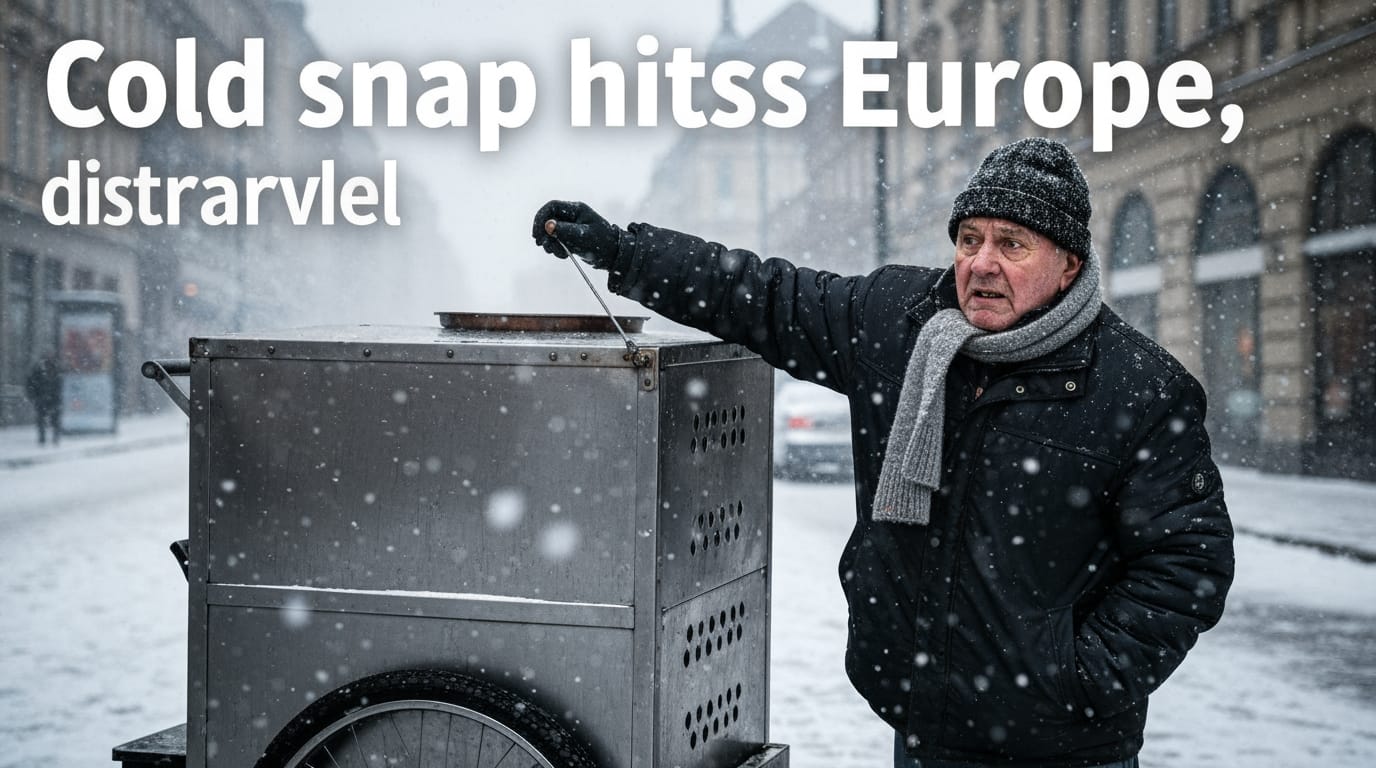
Europe is in the throes of an intense Arctic cold snap, triggering widespread travel disruptions, straining infrastructure, and tragically claiming at least six lives across the continent. The sudden and severe plunge in temperatures, accompanied by significant snowfall and treacherous ice, has crippled air, rail, and road networks from the United Kingdom to the Balkans, leaving thousands of travelers stranded and prompting urgent calls for citizens to limit non-essential movement. This deep freeze, hitting shortly after the new year, marks one of the most challenging winter weather events Europe has faced in recent years, testing emergency services and critical utilities across multiple nations.
The Arctic Grip Tightens Across the Continent
The bitter cold front descended upon Europe around January 5, intensifying dramatically into January 6, 2026. This severe weather event is characterized by temperatures plummeting far below seasonal norms, a direct consequence of an Arctic air mass spreading across the continent. London experienced temperatures as low as 30 degrees Fahrenheit on Monday, with forecasts indicating freezing conditions for Tuesday. Paris saw even more extreme cold, with lows expected around 25 degrees Fahrenheit on Monday and Tuesday, approximately 45 degrees below the long-term average for the period. Up to six inches of snow blanketed parts of France, while Munich faced minimum temperatures ranging from 10 to 14 degrees Fahrenheit for much of the week.
The frigid conditions extended eastward and northward with even greater severity. Northern Sweden and Finland recorded temperatures well below -30 degrees Celsius, with some areas in Sweden plunging to approximately -40 degrees Celsius. Lithuania reported its coldest night in nearly two years on January 1, with a low of -20.4 degrees Celsius. In the United Kingdom, Norfolk in eastern England registered -12.5 degrees Celsius overnight, marking the coldest night of the winter so far, with Scotland bracing for up to 15 centimeters of snow. This widespread deep freeze has boosted power demand significantly, with France, for instance, ramping up gas generators to meet electricity consumption that reached a five-year high on Monday.
Europe's Travel Networks Grind to a Halt
The sudden onset of severe winter weather has brought European transportation systems to a near standstill, causing extensive delays and cancellations across all modes of travel. Air travel has been particularly hard hit, with Amsterdam's Schiphol Airport (AMS) experiencing its fifth consecutive day of disruption. On January 6 alone, between 400 and 520 flights were canceled, crippling one of Europe's main transit hubs and leaving thousands of passengers facing chaotic scenes and lengthy queues. Javier Sepulveda, a Spanish national, recounted being stranded at Schiphol for three days while attempting to return home to Norway, describing the situation as "chaotic, insane."
Similarly, French airports faced significant challenges. Six smaller airports in northern and western France were forced to shut down, and flights were severely curtailed at Paris's major hubs, Charles de Gaulle (CDG) and Orly. Airlines were instructed to reduce flights by 15 percent on Monday, with forecasts indicating that 40 percent of flights at CDG and 25 percent at Orly would be scrapped early Wednesday to allow ground crews to clear runways and de-ice aircraft. In the UK, Liverpool's John Lennon Airport experienced temporary closure, and flights were canceled at airports in Aberdeen, Inverness, and Belfast.
Rail services also suffered widespread disruption. In the Netherlands, all domestic rail services were suspended early Tuesday morning, exacerbated by an IT outage alongside the severe weather. While some services resumed later, problems persisted around Amsterdam, and high-speed Eurostar services connecting Amsterdam to Paris faced cancellations and significant delays. British rail networks reported widespread issues, with snowplows deployed in Scotland, and Glasgow's subway temporarily halted due to ice-related power failures.
Road conditions became perilous across the continent. France experienced record traffic jams, including a massive 565 miles of congestion in the Paris region alone. Bus services in the capital were suspended, and authorities prohibited heavy goods traffic on several major highways in Brittany. French Transport Minister Philippe Tabarot urged residents to avoid non-essential travel and work from home, highlighting the dangers of thawed snow refreezing overnight. In the UK, roadside assistance providers reported a 40 percent spike in callouts, and police cautioned against driving on closed roads. Even cycling proved treacherous, with reports from Arnhem in the Netherlands describing very slippery conditions leading to numerous falls.
Fatalities and Wider Societal Strain
The cold snap has had tragic human consequences, with at least six fatalities reported across Europe. Five of these deaths occurred in France. Three individuals died in accidents linked to black ice in southwestern France on Monday morning. Separately, a taxi driver perished after his vehicle veered into the Marne river in the Paris region, with his passenger treated for hypothermia. Another driver lost his life east of Paris following a collision with a heavy goods vehicle. In Bosnia, a woman died in Sarajevo after a tree, weighed down by heavy, wet snow, fell on her.
Beyond the immediate fatalities, the severe weather has placed considerable strain on public services and daily life. School transportation was suspended in Brittany and Normandy, and hundreds of schools across Scotland, Northern Ireland, Wales, and northern England were closed. Sporting events were canceled in the UK, and Belfast Zoo remained shut due to the conditions. The unprecedented demand for heating has stressed energy grids, particularly in France, where gas generators were activated to manage the surge in electricity consumption. Parts of the Western Balkans also experienced power outages and localized flooding due to heavy snow and rain.
A Winter of Volatility: Context and Outlook
This severe cold snap aligns with meteorological predictions for the winter of 2025-2026, which suggested a return of stronger Arctic cold spells to Europe. Experts had warned of episodic but severe cold snaps, driven by instability in the polar vortex and the influence of the La Niña phenomenon. These atmospheric patterns can lead to frigid Arctic air spilling southward, resulting in short but intense periods of cold and heavy snowfall in regions not typically accustomed to such conditions. While not indicative of a "winter of the century," these events highlight increasing weather volatility, where extreme contrasts become more common.
Looking ahead, forecasts suggest the high-pressure system currently dominating the weather will likely give way to warmer, wetter air from the Atlantic, potentially bringing milder conditions to Western Europe by next week. However, some weather models indicate the possibility of cold weather returning quickly. Meteorologists in Germany are also forecasting another storm with heavy snowfall for Friday, January 9, particularly in the north and east. This underscores the unpredictable nature of the current winter, requiring continued vigilance and preparedness across the continent.
Responding to the Deep Freeze
The current cold snap serves as a stark reminder of Europe's vulnerability to extreme winter weather, despite recent decades of milder winters. The widespread disruptions and tragic loss of life underscore the critical importance of robust infrastructure, effective emergency response planning, and clear public advisories. As communities navigate the immediate challenges of ice-bound roads, paralyzed transport hubs, and strained utilities, the focus remains on ensuring public safety and restoring normalcy. The ability of nations to adapt to increasingly volatile weather patterns, characterized by both sudden freezes and intense storms, will be crucial in mitigating the impact of future extreme climatic events.


