Arson Attack Targets Brandenburg Antisemitism Commissioner's Home Amid Surging Hatred in Germany
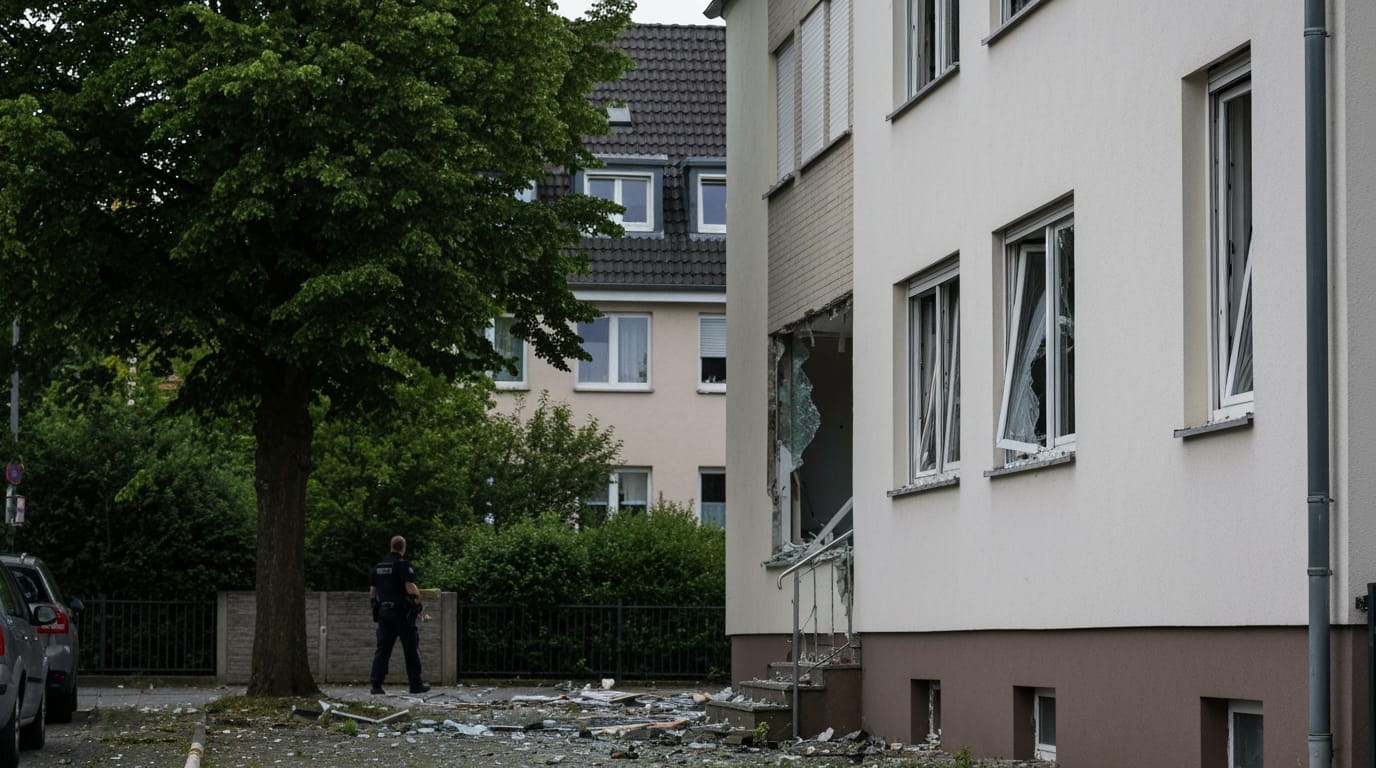
TEMPLIN, Germany – The home of Andreas Büttner, Brandenburg's state antisemitism commissioner, was the target of a suspected arson attack in the early hours of Sunday morning, January 4, 2026, sending a chilling message across Germany already grappling with a dramatic surge in antisemitic incidents. The assault, which involved a fire at a shed on his property and the painting of extremist symbols, underscores the escalating threat faced by those actively working to combat Jew-hatred in the country. This direct attack on a public official dedicated to protecting Jewish life casts a stark light on the deepening divisions and the emboldened nature of extremist elements within German society.
A Direct Assault on a Defender of Jewish Life
The incident unfolded in Templin, a town approximately 70 kilometers north of Berlin, when police were alerted to a fire at Büttner's property around 3:40 a.m. local time. Firefighters quickly brought the blaze under control, and fortunately, no physical injuries were reported, though Büttner and his family were inside the main house at the time of the attack. Authorities discovered an "anti-constitutional symbol" painted near the shed, a stark reminder of Germany's dark past and the resurgent threat of right-wing extremism. More alarmingly, a red triangle, a symbol widely associated with Hamas and used in its publications to represent Israeli forces, was found painted on the front door of the main residence.
Speaking after the incident, Büttner expressed his family's shock and the gravity of the situation. "My family was in the house at the time. We are physically unharmed, but we are under the impression of a serious attack," he stated, vowing, "I will not be intimidated by this." The state's security service has launched an investigation, treating the case as a potential act of extremism. The symbolism of the attack — merging anti-constitutional extremism with a symbol tied to a designated terrorist organization — highlights the complex and multifaceted nature of contemporary antisemitism in Germany.
Unprecedented Rise in Antisemitic Incidents
This attack occurs against a backdrop of an alarming and sustained increase in antisemitic incidents across Germany, particularly since the Hamas attacks on Israel on October 7, 2023, and the subsequent war in Gaza. Data from various watchdog groups, including the Federal Association of Research and Information on Antisemitism (RIAS), paints a grim picture. In 2024 alone, Germany recorded a historic 8,627 antisemitic incidents, marking an 80% increase over the 2023 total and the highest annual figure ever documented. This translates to approximately 24 incidents per day, or one every hour. The surge was especially pronounced in the months following October 7, 2023, with more than half of all incidents in 2023 occurring in the final months of the year, bringing the total for 2023 to 4,782 incidents.
The nature of these incidents ranges from verbal harassment and property damage to physical assaults and acts of extreme violence. In 2024, RIAS documented 186 antisemitic assaults that did not involve "extreme violence," a significant rise from 127 in 2023 and 58 in 2022. Eight incidents in 2024 were classified as involving "extreme violence," including two Islamist terrorist attacks. The incidents included arson attempts on a Berlin synagogue and flares thrown at a Jewish family's home in North Rhine-Westphalia in October 2023. Beyond overt violence, antisemitism has increasingly permeated everyday life, impacting Jewish individuals in workplaces, educational institutions, and on social media platforms. The rise in incidents at universities and schools is particularly concerning, with 450 such incidents at universities in 2024 (compared to 151 in 2023) and 284 in schools, including 19 assaults against Jewish or Israeli students.
This dramatic increase has been attributed to a combination of factors, including far-right extremism, anti-Israel activism, and Islamist groups. A significant portion of incidents is related to anti-Israel activism, where antisemitic tropes are often exacerbated and redirected towards current events, portraying Jews as "the new Nazis" and holding Jewish communities collectively responsible for Israeli policies. The impact of the October 7, 2023, attacks and the subsequent conflict has been described by Felix Klein, Germany's Federal Government Commissioner for Jewish Life in Germany and the Fight against Antisemitism, as a "tsunami" of hostility towards Jews, the worst since 1945.
The Crucial Role of Antisemitism Commissioners
The position of antisemitism commissioner, held by Andreas Büttner in Brandenburg and by counterparts at federal and state levels, was established precisely to address this growing problem. Germany created the office of Federal Government Commissioner for Jewish Life in Germany and the Fight against Antisemitism in 2018, with Dr. Felix Klein appointed as the first holder. By 2024, 15 of Germany's 16 federal states had appointed their own antisemitism commissioners, a response to the intensifying debate over antisemitism and the need for coordinated action.
These commissioners play a vital role in coordinating measures across various federal ministries, serving as a contact point for Jewish organizations, and liaising between federal, state, and civil society initiatives. Their responsibilities also include public information and civic education to raise awareness about antisemitism, both historical and contemporary. The attack on Commissioner Büttner's home, therefore, is not merely an act of vandalism but a direct challenge to Germany's institutionalized efforts to protect its Jewish citizens and combat hatred. It targets a symbol of the state's commitment to fighting antisemitism, aiming to intimidate and silence those dedicated to this cause.
Unwavering Condemnation and the Path Forward
Brandenburg Premier Dietmar Woidke strongly condemned the attack, stating unequivocally that "extremism in any form has no place" in the state and that "violence against people or property is and remains absolutely unacceptable." Interior Minister René Wilke echoed these sentiments, expressing support for Büttner and affirming the government's commitment to stand by him, describing his role as "a special service for the state and its people." Such condemnations highlight the German government's official stance and its dedication to combating antisemitism, a commitment deeply rooted in the country's historical responsibility.
Germany has implemented various measures to counter antisemitism, including anti-radicalization legal frameworks, banning hate speech, and public diplomacy efforts. The "National Strategy against Antisemitism and for Jewish Life," approved by the German Cabinet in 2022, outlines five key areas of action: data collection and research, education, Holocaust remembrance, increasing security, and making Jewish life visible. However, the ongoing attacks, particularly the recent targeting of a public official, underscore the immense challenges that remain.
The arson attack on Andreas Büttner's home serves as a stark reminder of the persistent and evolving threat of antisemitism in Germany. It illustrates how the abstract statistics of rising hatred translate into tangible fear and vulnerability for individuals dedicated to fighting it. While the swift condemnation from political leaders is crucial, the incident demands a renewed and more robust commitment from all levels of society to protect Jewish life, uphold democratic values, and confront the extremist ideologies that seek to undermine them. The resilience shown by Commissioner Büttner in the face of this intimidation embodies the spirit required to continue the fight against this deeply ingrained societal ill.