Australia Reels Amid Unprecedented Barrage of Shark Attacks, Beaches Closed
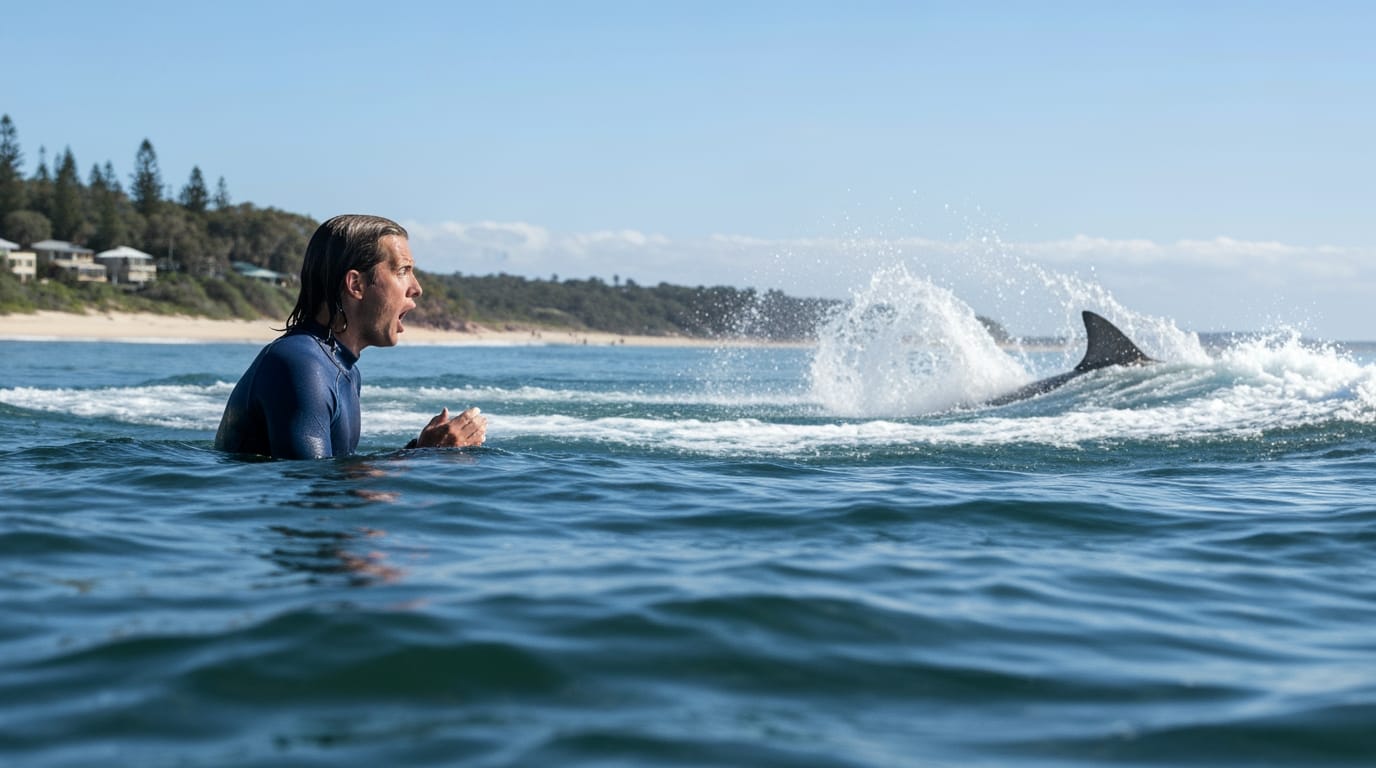
Sydney, Australia – A startling surge of four shark attacks across New South Wales within a 48-hour period has prompted widespread beach closures and urgent warnings from authorities, raising concerns among residents and tourists alike. The cluster of incidents, which began Sunday, January 18th, and continued into Tuesday, January 20th, has left two individuals in critical condition and highlighted the complex dynamics between human activity and marine life along Australia's popular coastlines.
The unusual frequency and geographical spread of the attacks have led to a rapid response from emergency services and marine experts, who are pointing to recent heavy rainfall and subsequent murky water conditions as potential factors. As investigations continue, public safety remains paramount, with officials advising caution and, in some areas, recommending pools over ocean swimming.
A Weekend of Unsettling Encounters
The alarming sequence began on Sunday afternoon in Sydney's Vaucluse, a normally tranquil area, when a 12-year-old boy was severely bitten at Shark Beach. The incident, believed to involve a bull shark, left the boy with critical injuries to both legs. His friends are credited with heroic actions, pulling him from the water to safety.
Less than 24 hours later, on Monday morning, the northern beaches area of Sydney experienced its first incident when an 11-year-old surfer at Dee Why Beach had a close call. A shark bit his surfboard, knocking him into the water, though fortunately, he escaped uninjured. Preliminary analysis of the 15-centimeter bite mark indicated the involvement of a bull shark. The unnerving trend escalated on Monday evening at North Steyne Beach in Manly, where a man, aged between 20 and 27, suffered serious leg injuries while surfing. Eyewitnesses quickly applied a makeshift tourniquet using a surfboard leg rope, and he was transported to the hospital in critical but stable condition.
The fourth attack in the series occurred on Tuesday morning, farther north near Point Plomer, not far from Port Macquarie. A 39-year-old surfer was bitten, sustaining minor injuries to one leg. He was reported to be in stable condition following the encounter. These events collectively mark a rare concentration of shark interactions within such a compressed timeframe, particularly in Sydney Harbour, which has historically recorded very few such incidents.
Murky Waters and the Bull Shark Factor
Marine experts and authorities are actively investigating the exact causes behind this sudden cluster of attacks, with a primary focus on environmental conditions. Heavy rainfall preceding the incidents is being cited as a significant contributing factor. Intense rainstorms have flushed substantial runoff from land into coastal waters, drastically reducing visibility and carrying pollutants and waste into the sea.
These murky, brackish conditions are known to attract bait fish, which in turn draw in predators, particularly bull sharks. Bull sharks are highly adaptable and capable of thriving in both saltwater and freshwater environments, making them particularly prevalent in estuaries and near shorelines after heavy rainfall. They are also characterized as opportunistic hunters. The New South Wales Department of Primary Industries, in its preliminary assessments, indicated that bull sharks were likely involved in at least two of the Sydney incidents. This adaptability and opportunistic feeding behavior, coupled with reduced water clarity, likely increased the probability of interactions with humans engaged in water activities.
The confluence of these environmental factors creates a heightened risk scenario, prompting authorities to issue strong recommendations against swimming in the ocean. The chief executive of Surf Life Saving New South Wales, Steven Pearce, explicitly advised individuals considering a swim to opt for a local pool, stating that "beaches are unsafe" due to the poor water quality conducive to shark activity.
Australia's Ongoing Challenge with Shark Encounters
Australia, with its extensive coastline and vibrant beach culture, consistently records a high number of shark incidents globally. The Australian Shark-Incident Database, maintained by the Taronga Conservation Society in collaboration with Flinders University, has meticulously documented shark encounters since 1791. This comprehensive database indicates that between 1791 and November 2025, there have been 312 fatal shark attacks in Australian waters, with 59 occurring since 2000, including 23 since 2020.
While the recent cluster of attacks is unusual in its intensity, shark encounters are not uncommon in Australia, averaging between 15 to 20 unprovoked incidents annually in recent years, with fewer than three fatalities per year on average. The species predominantly responsible for serious bites and fatalities are the great white, bull, and tiger sharks.
The reasons for a general increase in shark incidents over recent decades are multifaceted and remain a subject of ongoing debate among researchers. Hypotheses include the steady growth of the human population along coastal areas, a corresponding increase in water-based recreational activities such as surfing and diving, and various environmental factors. These environmental considerations encompass variations in water temperature, reduced water clarity in certain regions, and the broader impacts of climate change, all of which are considered potential contributors to changing shark distribution and feeding patterns. Furthermore, some theories suggest that recovering shark populations, following decades of conservation efforts, might also contribute to more frequent human-shark interactions.
Implementing Mitigation and Public Safety Measures
In response to the inherent risks and increasing interactions, Australian states, particularly New South Wales and Queensland, have invested significantly in shark mitigation strategies. These efforts aim to enhance public safety while also seeking to minimize harm to marine ecosystems.
Current mitigation approaches include the deployment of aerial drones for real-time shark surveillance, especially in popular coastal areas. These drones can monitor beaches and use image recognition software to detect sharks, allowing lifeguards to make informed decisions about beach closures or warnings. "Smart" drumlines, which are non-lethal baited hooks that alert authorities when a shark is caught, allow for tagging and relocation rather than culling. Physical eco-barriers have also been trialed in some locations, offering enclosed swimming areas without entangling marine life. Individual deterrent devices that emit electromagnetic fields are also available for personal use, designed to deter sharks based on their unique physiology.
Despite these technological advancements, traditional shark nets and drumlines continue to be employed in parts of Queensland and New South Wales. However, their effectiveness and environmental impact, particularly concerning bycatch of non-target species, remain subjects of considerable debate. The New South Wales government's Shark Management Strategy represents a multi-million-dollar investment in a scientifically driven, integrated approach, combining ongoing aerial surveillance, listening stations to track tagged sharks, and public awareness campaigns.
Following the recent spate of attacks, numerous beaches across Sydney's northern beaches, the Vaucluse area, and the mid-north coast have been closed until further notice, pending safety reviews. Authorities continue to stress the importance of following official warnings, avoiding swimming at dawn and dusk, and staying out of the ocean and waterways after heavy rainfall, especially in and around estuaries, due to the inherent dangers of reduced visibility and increased shark activity.
The recent cluster of shark attacks serves as a stark reminder of the dynamic and sometimes unpredictable nature of the marine environment. While authorities and researchers work to understand the underlying factors and enhance safety measures, the incidents underscore the importance of public awareness and adherence to safety guidelines when sharing coastal waters with these powerful predators.


