Austria's Three-Way Coalition Secures Final Approval, Ushering in New Era of Governance
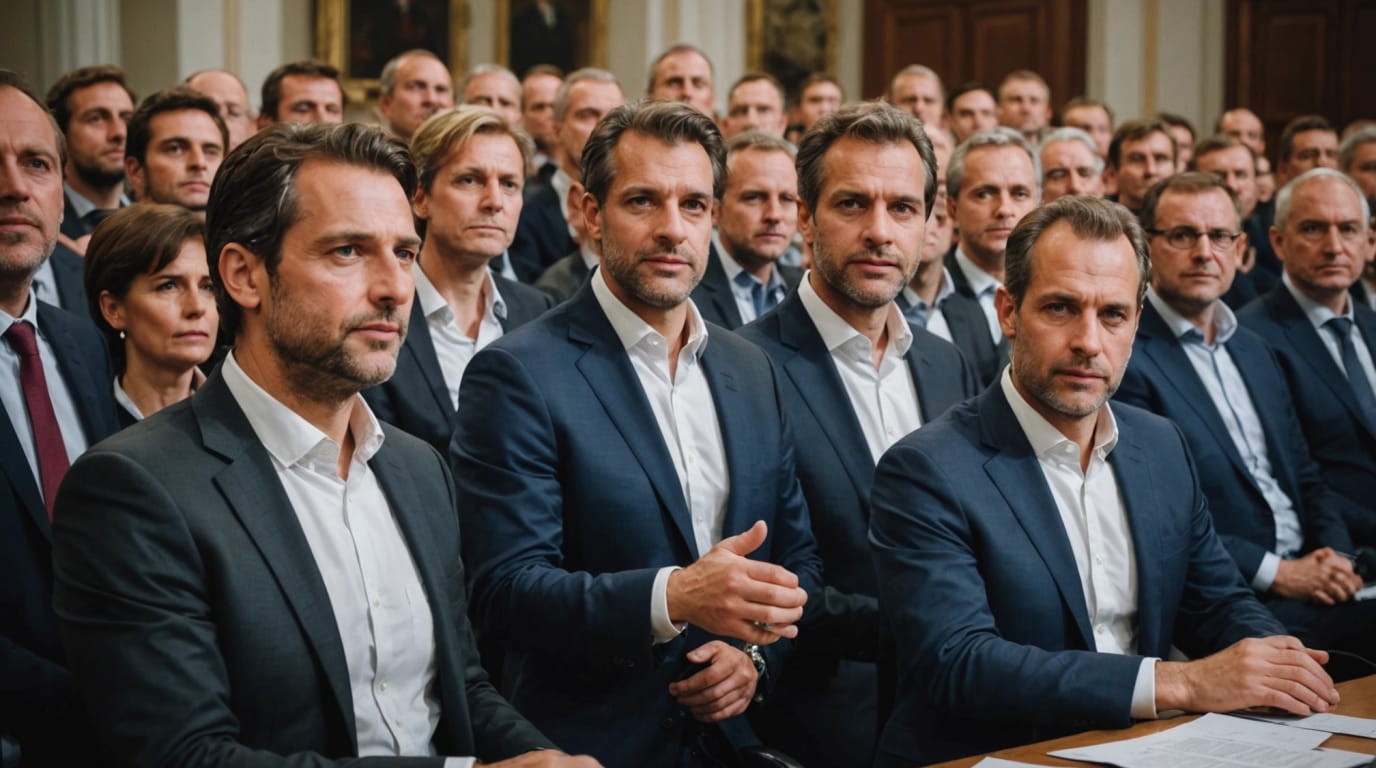
After months of political gridlock, Austria is set to inaugurate a new three-way coalition government, uniting the center-right Austrian People's Party (ÖVP), the center-left Social Democratic Party (SPÖ), and the liberal NEOS party. This alliance marks a significant shift in Austrian politics, sidelining the far-right Freedom Party (FPÖ), which won the most votes in the September elections but failed to garner enough support to form a government. The coalition aims to bring stability and address key issues such as migration, budget deficits, and social reforms.
NEOS Approval Seals the Deal
The final hurdle to the coalition's formation was cleared Sunday when members of the NEOS party overwhelmingly approved the coalition agreement. Roughly 2,000 NEOS party members participated in a hybrid meeting in Vienna, with over 94% voting in favor of the 200-page coalition agreement. According to party rules, a two-thirds majority was required for approval. Had NEOS rejected the proposal, the ÖVP and SPÖ would have held only a one-seat majority in the National Council, the lower house of parliament, potentially leading to further instability. NEOS leader Beate Meinl-Reisinger hailed the vote as a historic moment, urging members to support what she views as a move supporting liberal democracy.
Stocker to Become Chancellor, Babler Vice Chancellor
With the coalition agreement now ratified, Christian Stocker, leader of the ÖVP, is poised to become Austria's new chancellor. Andreas Babler, leader of the SPÖ, will serve as vice chancellor. The new government is expected to be sworn in on Monday, marking the end of a prolonged period of political uncertainty that followed the September elections. This will be Austria's first three-party coalition since the 1940s.
Policy Priorities and Challenges
The coalition agreement outlines a series of policy priorities, including tighter migration rules, austerity measures to tackle the budget deficit, and a cap on rent increases. The government also plans to cut state spending and red tape, along with pension reform. These policies reflect a blend of conservative and progressive approaches, aiming to balance fiscal responsibility with social welfare.
However, the coalition faces significant challenges. The FPÖ, led by Herbert Kickl, has denounced the new government as a coalition of "losers" and is calling for snap elections. Opinion polls suggest that the FPÖ could increase its lead if new elections were held, potentially undermining the stability of the current coalition.
Averting Far-Right Leadership
A key motivation behind the formation of the three-way coalition was to prevent the FPÖ from assuming power. Despite winning the largest share of votes in the September elections, the FPÖ's inability to form a coalition with other parties led to a mandate from Austrian President Alexander Van der Bellen for the ÖVP to explore alternative governing arrangements. Negotiations between the ÖVP, SPÖ, and NEOS initially faltered, and the ÖVP briefly considered forming a coalition with the FPÖ. However, these talks ultimately proved unsuccessful due to policy differences.
The coalition agreement between the ÖVP, SPÖ, and NEOS represents a compromise between different political ideologies, united by a common goal of maintaining stability and preventing the rise of the far-right. The agreement aims to address pressing issues such as economic uncertainty, migration, and social inequality, while also upholding Austria's commitment to liberal democracy.
Implications for Austria and Europe
The formation of Austria's new coalition government has significant implications for both the country and the wider European political landscape. By sidelining the FPÖ, Austria has avoided the potential for a far-right government that could have challenged European Union norms and values. The coalition's commitment to fiscal responsibility and social reform could serve as a model for other European countries grappling with similar challenges.
However, the coalition's long-term success remains uncertain. The FPÖ's strong support base and its calls for snap elections could destabilize the government and create further political uncertainty. The coalition will need to demonstrate its ability to deliver tangible results and address the concerns of Austrian voters in order to maintain its legitimacy and prevent a resurgence of the far-right.
A New Chapter for Austrian Politics
The formation of Austria's three-way coalition government marks the beginning of a new chapter in the country's political history. The alliance between the ÖVP, SPÖ, and NEOS represents a departure from traditional two-party politics and a commitment to finding common ground in a fragmented political landscape. While the challenges ahead are significant, the coalition offers a chance for Austria to address its pressing issues and reaffirm its commitment to democratic values. The coming months will be crucial in determining whether this new experiment in governance can deliver stability and progress for the Austrian people.