Baloch Insurgents Hijack Pakistan Train, Sparking Deadly Standoff
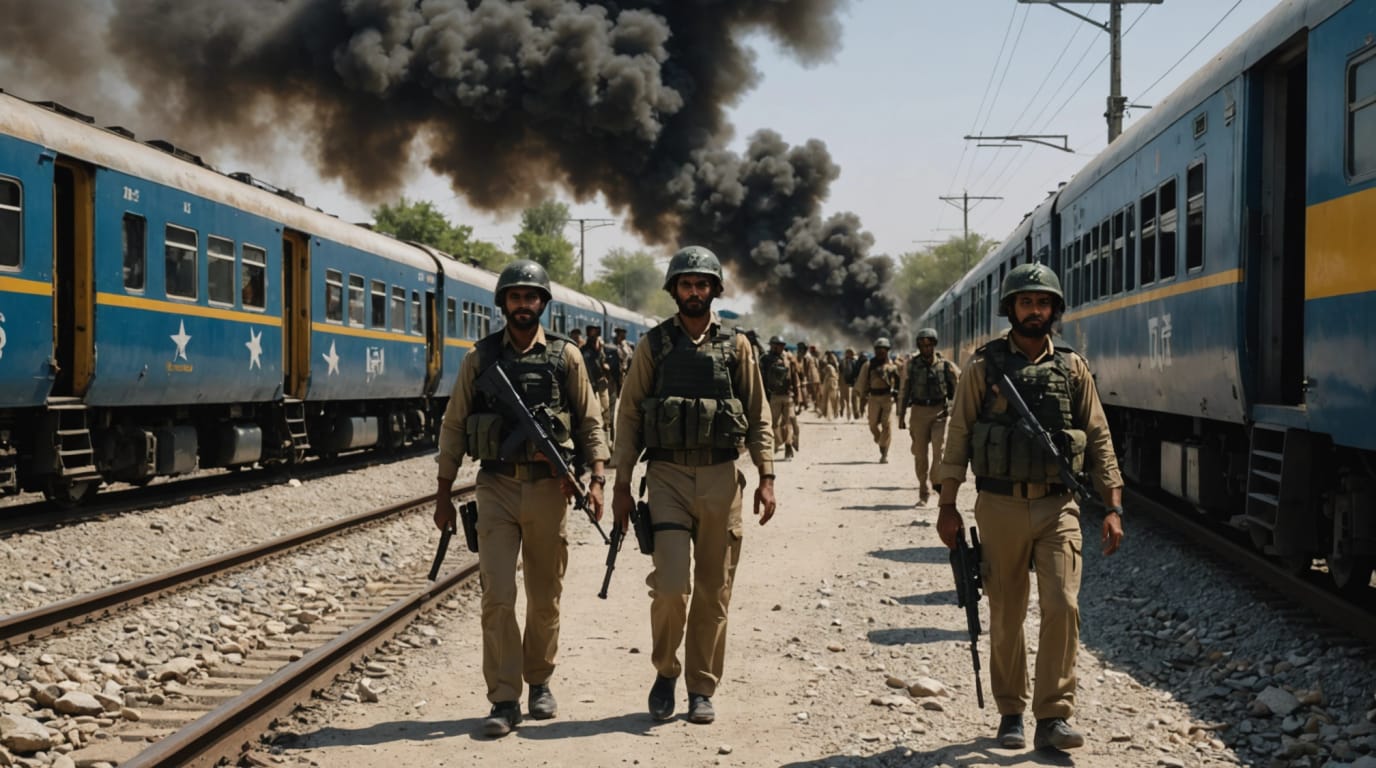
A passenger train traveling through Pakistan's Balochistan province was hijacked Tuesday by Baloch insurgents, resulting in a bloody standoff with security forces and raising concerns about the escalating insurgency in the region. The Balochistan Liberation Army (BLA), a separatist group, claimed responsibility for the attack on the Jaffar Express, which was en route from Quetta to Peshawar. The brazen act marks a significant escalation in the Baloch insurgency and highlights the challenges faced by the Pakistani government in maintaining security in the restive province.
Attack and Hostage Situation
The BLA targeted the Jaffar Express by detonating explosives on the railway track, derailing the train in a remote, mountainous area of Balochistan. Following the derailment, armed militants stormed the train, taking passengers hostage. Initial reports indicated that over 400 passengers were on board the train, with the BLA claiming to have seized over 180 hostages, including Pakistani military personnel. The BLA threatened to execute the hostages if security forces attempted a rescue operation, further escalating the tension. The attack resulted in casualties, including the death of the train driver and reportedly at least 20 soldiers.
Security Forces Respond
Pakistani security forces swiftly launched an operation to free the hostages and regain control of the train. Fierce clashes erupted between the insurgents and security forces, resulting in significant casualties on both sides. As of Wednesday, security forces reported that they had rescued approximately 190 passengers and killed at least 30 militants. However, the operation was ongoing, and the fate of the remaining hostages remained uncertain. The government has vowed to continue the operation until all hostages are freed and the insurgents are neutralized.
Balochistan's Insurgency
The train hijacking underscores the long-standing insurgency in Balochistan, Pakistan's largest and most sparsely populated province. Baloch separatists have been fighting for greater autonomy and control over the province's natural resources for decades. The BLA is one of several insurgent groups operating in the region, and it has been responsible for numerous attacks on security forces and infrastructure in recent years. The group's increased activity has led to a surge in violence in Balochistan, with the number of terror attacks by Baloch separatist groups reaching levels recorded a decade ago. Nearly 590 people, including Pakistani Army personnel, have been killed in Baloch insurgent attacks in the past five years.
Regional Implications and Chinese Concerns
The Balochistan insurgency has broader regional implications, particularly concerning China's investments in the region. Balochistan is a key component of the China-Pakistan Economic Corridor (CPEC), a massive infrastructure project that aims to connect China to the Arabian Sea through Pakistan. The Gwadar deep-water port, located in Balochistan, is a crucial element of CPEC. Baloch insurgents have repeatedly targeted CPEC projects and Chinese personnel in the past, viewing them as symbols of Pakistani exploitation of the province's resources. The recent train hijacking has raised concerns about the security of CPEC and China's investments in the region. China has condemned the attack, with a foreign ministry spokesperson stating, "We noted the reports and strongly condemn this terrorist attack."
Challenges and Future Outlook
The train hijacking highlights the complex challenges facing the Pakistani government in Balochistan. The government's efforts to quell the insurgency have been hampered by a combination of factors, including the region's rugged terrain, the insurgents' local support networks, and grievances related to economic marginalization and political exclusion. Analysts predict that the final details of the attack, including the number of casualties, will shock the country. The incident is likely to further strain relations between the government and Baloch separatists, making a peaceful resolution to the conflict even more difficult to achieve. Reining in the Baloch insurgents will require a multi-pronged approach that addresses the root causes of the insurgency, strengthens security measures, and promotes inclusive development in Balochistan.