Bavarian Communities Grapple with Aftermath as Lightning Fury Divides Regions
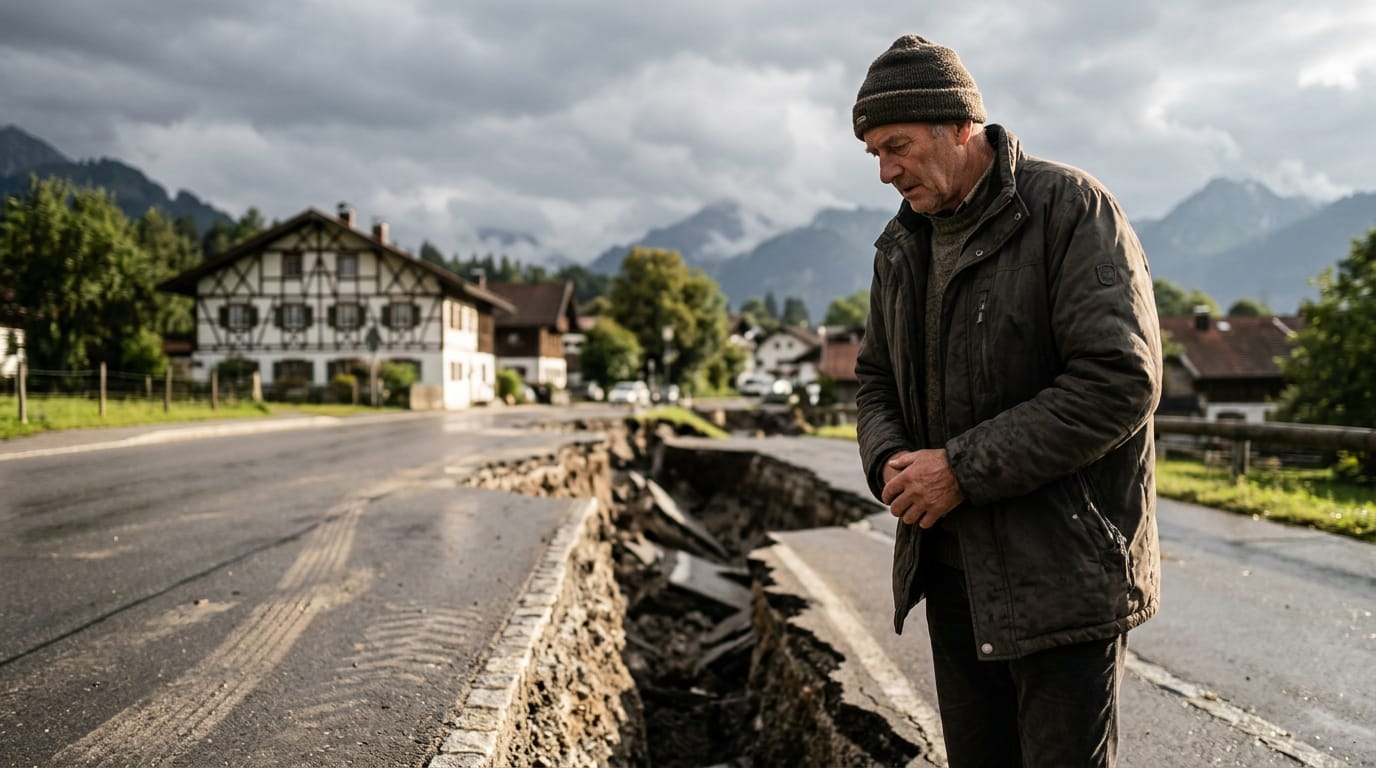
Munich, Bavaria – A series of ferocious thunderstorms, punctuated by intense lightning strikes and destructive winds, recently swept across Bavaria, leaving a trail of significant damage and, in some areas, effectively carving divisions through communities as infrastructure crumbled. The extreme weather event, particularly pronounced on August 1, 2026, unleashed its fury on several regions, including Augsburg and Nuremberg, with wind gusts reaching up to 130 kilometers per hour. The widespread disruption caused by power outages, blocked transportation routes, and damaged essential services has presented a formidable challenge to residents and emergency responders alike, highlighting the increasing vulnerability of modern infrastructure to the raw power of nature.
The Night the Skies Roared: Bavaria Under Siege
The atmospheric assault began with little warning, intensifying rapidly as July transitioned into August. On August 1, 2026, the German Meteorological Service (DWD) had issued severe weather warnings, but the sheer force of the resulting supercell thunderstorms exceeded many expectations. Bavaria found itself at the epicenter of this meteorological maelstrom, with numerous lightning strikes illuminating the night sky and signaling widespread impacts. Areas around Augsburg and Nuremberg reported extensive damage, as structures sustained blows from high winds and falling debris. Trees were uprooted, vehicles were damaged, and public infrastructure, already strained by recent weather patterns, buckled under the sustained assault.
One particularly dramatic incident unfolded on a mountain in Upper Bavaria, near Bad Reichenhall, where a lightning strike ignited a forest fire on the Hochstaufen. The blaze necessitated a complex rescue operation, with 17 individuals needing evacuation from a remote hut, underscoring the immediate danger posed by the electrical discharges. Meanwhile, a separate, but equally devastating, lightning strike on May 6, 2026, had already demonstrated lightning's destructive potential when it completely destroyed a warehouse in Meiernhof, a district near Münchberg in Bavaria. These incidents collectively paint a vivid picture of the relentless natural forces that have been impacting the region.
Infrastructure Fractured: How Towns Were "Cut In Two"
The notion of a town being "cut in two" in this context refers not to a literal geological fissure, but rather to the severe functional fragmentation and isolation experienced by communities due to the extensive damage to critical infrastructure. The primary vectors of this division were widespread power outages and the sudden immobilization of transportation networks. In the town of Munsingen, for instance, two lightning strikes on June 20, 2026, resulted in significant power outages affecting large portions of the municipality, plunging homes and businesses into darkness and disrupting daily life. Although power was reportedly restored within 90 minutes, such interruptions, especially when prolonged, can effectively isolate segments of a population from essential services and information.
Beyond electricity, the tempestuous winds and heavy rainfall led to numerous fallen trees, transforming roads and rail lines into impassable barriers. While specific Bavarian towns weren't physically split, similar scenarios were observed in other German regions affected by these storms, such as the Frankfurt region, where all long-distance rail lines to and from the city were temporarily closed due to storm-related damage. Such disruptions sever vital connections, preventing residents from accessing work, schools, and medical facilities, and hindering emergency services from reaching affected areas. The cumulative effect of power loss, communication breakdowns, and transportation paralysis creates an environment where parts of a town can become effectively isolated, functionally "cut off" from the rest.
The Human Cost and Heroic Response
The immediate aftermath of the storms saw emergency services stretched thin, responding to a myriad of incidents across affected areas. From battling raging fires to managing casualties, the coordination and dedication of rescue teams were paramount. The forest fire on the Hochstaufen mountain required not only firefighting efforts but also the precise execution of a helicopter rescue to safely extract those stranded.
Injuries were also reported across southern Germany. On June 20, 2026, a lightning strike at a handball tournament campsite in Rastatt, Baden-Württemberg, injured nine people, one seriously, illustrating the random and often severe human toll of these events. In Munsingen-Dottingen, a 71-year-old woman was electrocuted after lightning struck near her tent, highlighting the grave personal danger posed by electrical discharges during storms. First responders, including fire crews, paramedics, and police, navigated torrential rain and difficult conditions to provide on-site treatment and transport the injured to hospitals. These incidents underscore the bravery and critical role played by emergency personnel in mitigating the immediate human impact of such natural disasters.
Bavaria's Enduring Battle with Extreme Weather
The recent events serve as a stark reminder of Germany's, and particularly Bavaria's, susceptibility to severe thunderstorms and lightning activity. Annually, Germany records approximately 2 million lightning strikes, a figure that experts suggest may be on the rise due to changing climate patterns. Bavaria consistently features among the regions with the highest lightning densities in Germany, making its communities particularly vulnerable to the destructive forces of these atmospheric phenomena.
This recurring threat has led to ongoing discussions about enhancing resilience and preparedness. While external lightning protection systems on buildings are common, the impact of surges, even from distant strikes, can still devastate sensitive electronics and critical infrastructure. The need for comprehensive internal surge protection and robust emergency planning becomes increasingly apparent as these events become more frequent and intense.
Rebuilding and Adapting for a Stormier Future
As Bavarian communities begin the arduous process of clearing debris, repairing damaged infrastructure, and restoring normalcy, the recent storms offer valuable, albeit harsh, lessons. The rapid response of emergency services and the solidarity within affected communities have been vital in navigating the immediate crisis. However, the functional "cutting" of towns by power failures and impassable routes signals a need for more resilient, distributed infrastructure and communication systems that can withstand such shocks.
The focus now shifts to long-term recovery and strategic adaptation. Investing in climate-resilient infrastructure, improving early warning systems, and educating the public on severe weather preparedness are critical steps. Bavaria's recent ordeal underscores a broader imperative for Germany and other regions worldwide: to acknowledge the growing intensity of extreme weather events and to proactively build more robust and connected communities capable of enduring nature's increasing fury. The path to full recovery will be long, but the determination to rebuild stronger and smarter is evident in the wake of this summer's devastating storms.