Bayreuth Festival at 150: A Legacy of Innovation, Controversy, and Enduring Power

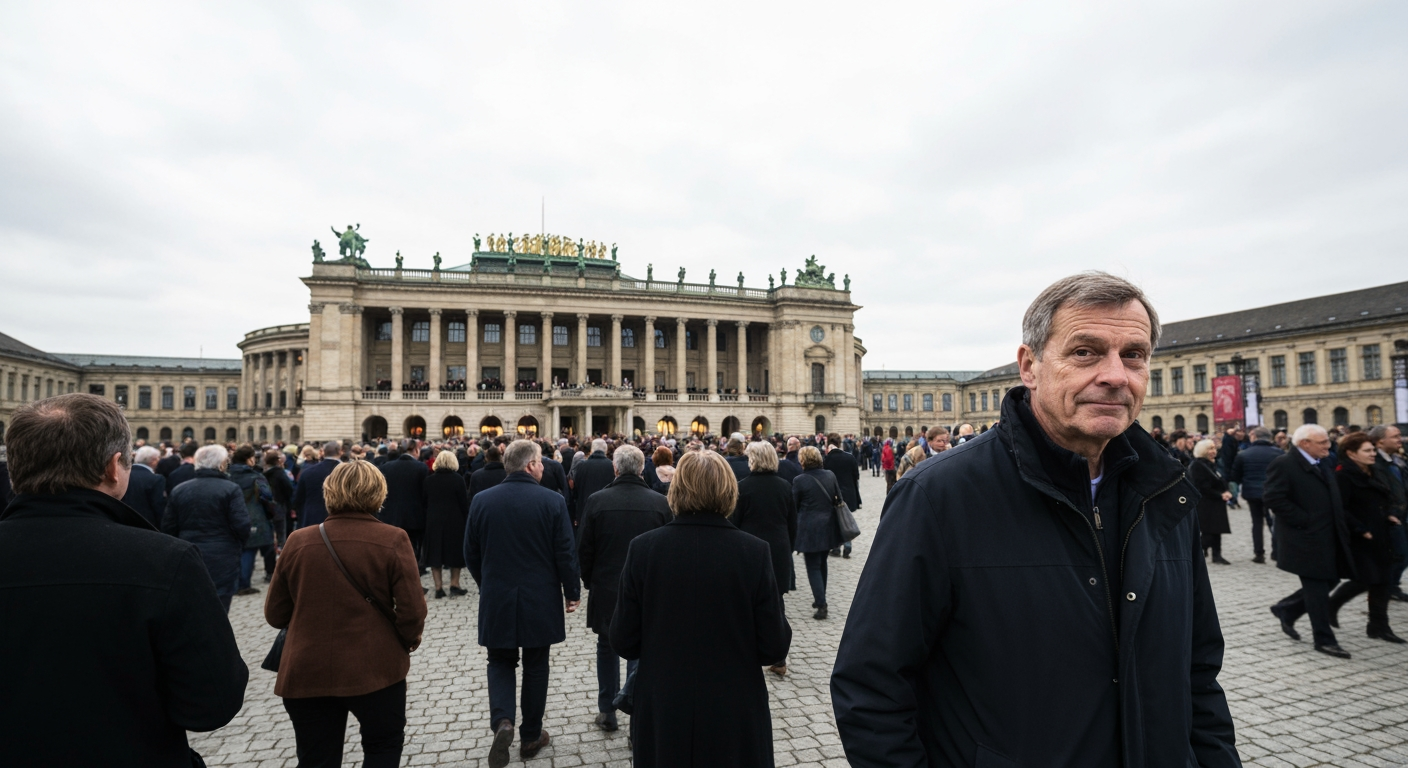
BAYREUTH, Germany – As the Bayreuth Festival prepares to celebrate its 150th anniversary in 2026, the venerable institution stands at a complex intersection of artistic reverence, historical reckoning, and modern innovation. What began as Richard Wagner's singular vision for a dedicated operatic stage has evolved into a global pilgrimage site for devotees of his monumental works, yet it remains inextricably linked to the darker chapters of German history. This landmark year offers an opportunity to reflect on the festival's profound highs and challenging lows, celebrating its unparalleled artistic contributions while confronting its controversial past head-on.
A Vision Forged: The Birth of a Unique Artistic Temple
The Bayreuth Festival owes its existence to the ambitious and often tumultuous vision of Richard Wagner himself. Dissatisfied with conventional opera houses, Wagner conceived of a special festival solely dedicated to showcasing his dramatic works, particularly his epic Der Ring des Nibelungen and Parsifal. He envisioned a unique performance space, a Gesamtkunstwerk (total work of art), where music, drama, and staging would merge seamlessly. After considering several locations, Bayreuth was chosen, partly because it lacked a competing cultural scene and was outside the territories where he had sold performance rights to his operas.
Construction of the Festspielhaus, the festival's purpose-built theater, began in 1872. It incorporated revolutionary architectural and acoustic innovations, including a sunken, covered orchestra pit—dubbed the "mystic gulf"—designed to allow the sound to blend before reaching the audience, enabling singers to project without straining over the large Wagnerian orchestra. Additionally, for the first time in an opera house, the auditorium lights were extinguished during performances, directing the audience's full attention to the stage.
The inaugural festival opened on August 13, 1876, with the world premiere of the complete Ring cycle, attracting European royalty, intellectual luminaries like Friedrich Nietzsche, and renowned composers including Pyotr Tchaikovsky and Franz Liszt. Despite early financial struggles that necessitated intervention from King Ludwig II of Bavaria, the festival solidified its place as a groundbreaking artistic endeavor. Following Wagner's death in 1883, his widow, Cosima Wagner, took over the management, gradually expanding the festival's repertoire to include other mature works from the Wagnerian canon.
The Stain of History: Bayreuth Under the Swastika
The festival's artistic triumphs have long been shadowed by its profound and troubling association with antisemitism and National Socialism. Richard Wagner's own virulent antisemitic writings, particularly "Jewishness in Music," laid a foundation that later generations would exploit. This dark legacy intensified dramatically under the leadership of Wagner's daughter-in-law, Winifred Wagner, who developed a close personal relationship with Adolf Hitler.
During the Nazi era, particularly from 1933 to 1945, the Bayreuth Festival became a cultural showcase for the Third Reich, essentially transforming into a "Hitler-festival." Hitler was a frequent and celebrated guest, and the festival served as a haven for banned Nazi Party members. While Winifred Wagner's influence paradoxically protected the Festspielhaus from bombing during World War II by preventing its use for military purposes, the festival's reputation was irrevocably tainted. Even today, Israel maintains an unofficial ban on Wagner's music, a testament to the enduring pain caused by the composer's ideology and the festival's historical embrace of it.
The current administration, under great-granddaughter Katharina Wagner, has made efforts to confront this past, but the issue remains a live and often contentious debate. A recent incident surrounding the 150th-anniversary celebrations highlights this tension: Jewish public intellectual Michel Friedman's keynote address on Wagner's antisemitism was initially postponed due to "security concerns" before being reinstated after significant public outcry, leading some to accuse the festival leadership of being "historically oblivious." Adding to the controversy, the 2026 program includes the first-ever staging of Rienzi, an early Wagner opera famously admired by Hitler.
Reinvention and the "New Bayreuth": Artistic Evolution
After the devastation of World War II, the Bayreuth Festival reopened its doors in 1951, under the direction of Wagner's grandsons, Wieland and Wolfgang Wagner. This marked the beginning of what became known as the "New Bayreuth." Wieland Wagner, in particular, ushered in a radical aesthetic shift, abandoning the elaborate, naturalistic sets of earlier productions in favor of minimalist, abstract stagings. This revolutionary approach aimed to strip away historical baggage and focus on the psychological and universal aspects of Wagner's dramas, setting new standards for European opera production.
Following Wieland's premature death, Wolfgang Wagner continued to lead the festival, introducing the "Werkstatt Bayreuth" (Bayreuth Workshop) concept in the 1970s. This initiative invited new directors to experiment with innovative methods for presenting Wagner's stage works, allowing the festival to renew itself with each production and maintain its reputation as a leader in Wagnerian opera. This tradition of engaging cutting-edge, and often controversial, directors continues to this day, with productions frequently sparking intense debate among audiences and critics.
In recent years, the festival has embraced further modernization. The 2023 production of Parsifal incorporated augmented reality, and the upcoming 2026 Ring cycle will feature stage design developed with the assistance of artificial intelligence, signaling a commitment to exploring new artistic frontiers. The festival has also worked to broaden its audience by offering live transmissions of performances on giant screens in the city and online, making the elusive Bayreuth experience more accessible.
The 150th Anniversary: Facing the Future
The 150th anniversary in 2026 is being celebrated not just on the Grüner Hügel (Green Hill) but throughout the city of Bayreuth with a year-long program titled "Festival150," featuring around 150 events across various stages, encompassing music, theater, and art. The core festival itself planned an ambitious program, initially hoping to present all ten of Richard Wagner's major operas, along with the first-ever staging of Rienzi. However, due to significant budget constraints and rising costs, the festival has scaled back its operatic offerings to seven works, including a new Ring tetralogy and the aforementioned Rienzi.
Despite these financial challenges and the persistent historical debates, the Bayreuth Festival retains its status as one of the world's most significant and prestigious music theater events. Tickets remain notoriously difficult to acquire, with waiting lists often extending for years, a testament to the festival's enduring mystique and the powerful allure of Wagner's music performed in the unique acoustic environment of the Festspielhaus.
Conclusion
The Bayreuth Festival, at 150 years old, is a living paradox: a deeply traditional institution that has consistently pushed artistic boundaries, a monument to a revolutionary composer whose legacy is both celebrated and reviled. It stands as a testament to the enduring power of Richard Wagner's musical genius and his vision for a total work of art. Yet, its story is also a stark reminder of the complexities of cultural heritage, demanding continuous engagement with its problematic past and a commitment to critical self-reflection. As the festival looks to its next chapter, it navigates a delicate balance between honoring its origins and embracing a future where artistic innovation and historical accountability can coexist, ensuring its unique and often challenging journey continues to captivate and provoke for generations to come.
Related Articles

The Unsung Saga of the "Plain" Spice: Vanilla's Rich and Tumultuous History
Often relegated to the background, synonymous with blandness, the flavor of vanilla belies a history as intricate, dramatic, and globally influential as any precious spice. From its ancient origins in the rainforests of...

Hitler's Birthplace Reborn: Austrian Police Station Aims to Neutralize Dark Legacy
BRAUNAU AM INN, Austria – Decades of national deliberation over the fate of Adolf Hitler's birthplace have culminated in a symbolic transformation, as the unremarkable 17th-century building in Braunau am Inn formally...


Politically Charged Music Navigates Shifting Media Landscape Amidst Television Cancellations
In an era where cultural narratives are increasingly shaped by both traditional and digital media, the interplay between television programming, musical expression, and public sentiment remains a dynamic force. While...