Belgium Battles Unprecedented Wildfire, Hundreds Evacuated as Blaze Scorches Historic Nature Reserve
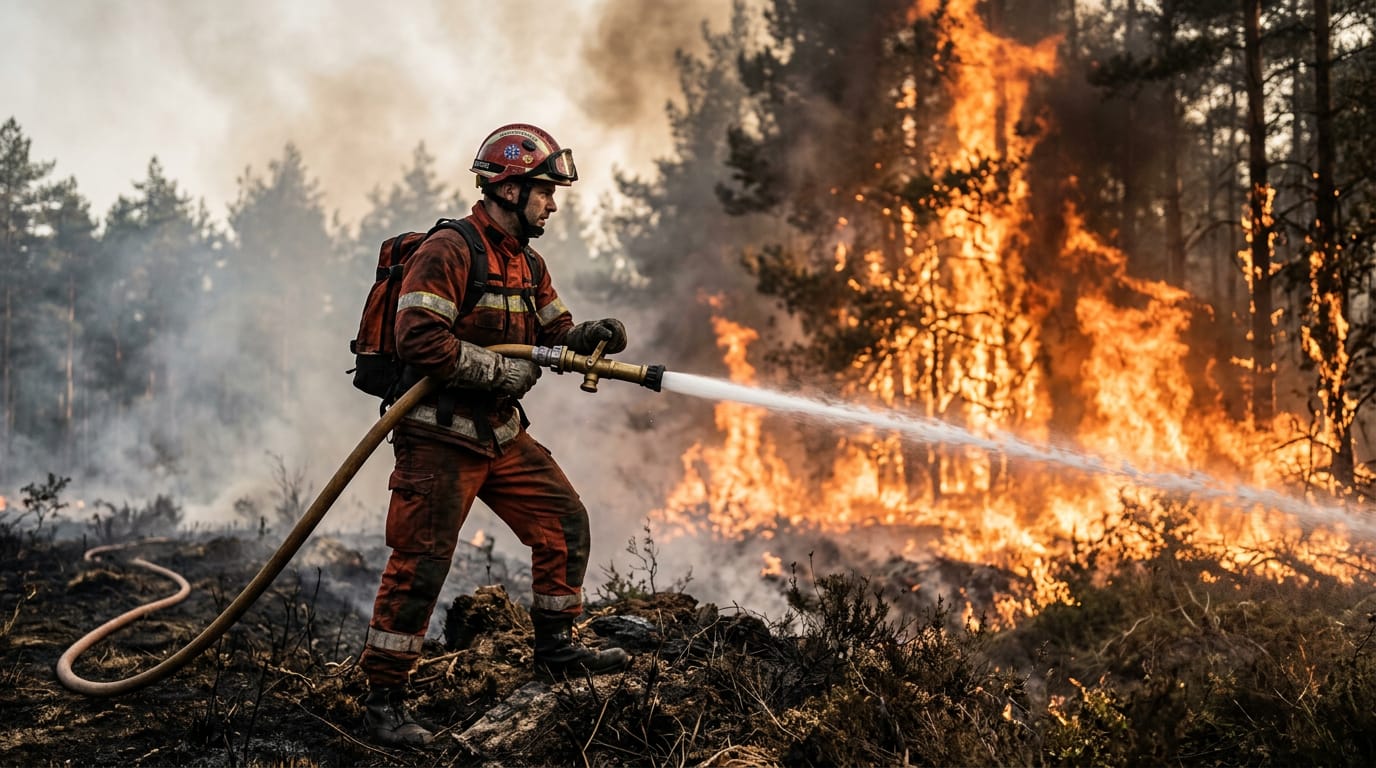
BRUSSELS, Belgium – Firefighters from across Belgium and Europe are battling the country's largest wildfire on record, which has torn through the ecologically sensitive High Fens natural park, forcing the evacuation of hundreds of residents and visitors. The blaze, which ignited Friday afternoon, has rapidly consumed vast stretches of peatland and pine forest, presenting a formidable challenge to emergency services amidst a prolonged period of extreme heat and drought across the region.
The uncontrolled inferno, located in eastern Belgium near the German border, serves as a stark reminder of the escalating wildfire risks facing even traditionally less susceptible European nations. As of Saturday evening, the fire had scorched an estimated 2,700 hectares, or approximately 6,670 acres, significantly surpassing a major 2011 blaze that burned nearly 1,400 hectares in the same area. The rapid spread prompted the activation of the European Union's civil protection mechanism, bringing in international air support to aid the overwhelmed ground crews.
The Blaze Ignites: A Battle Against Nature's Fury
The wildfire originated around 2 p.m. Friday in the Fagne des Deux-Series area, near the Drossart roundabout in the Baelen municipality of Liege province. Initial efforts to contain the fire were hampered by the rugged and often inaccessible terrain of the High Fens, a vast wood- and heathland popular with hikers and home to valuable Natura 2000 conservation sites. Changing wind patterns throughout Saturday further complicated firefighting operations, pushing smoke and flames into new areas and accelerating the fire's advance.
Firefighters, bolstered by personnel from across Belgium, neighboring Germany, and Luxembourg, worked tirelessly for over 30 hours to establish control lines. The Belgian military deployed Panther firefighting vehicles to reinforce ground operations, while local farmers assisted by refilling water sources for the aerial assault. By early Saturday afternoon, the fire had already consumed 1,600 hectares, quickly establishing itself as the largest on record for the country. The flames continued to spread into the evening, with later reports indicating the burned area had expanded to as much as 2,700 hectares.
Evacuations and Community Impact
As the wildfire intensified and winds shifted, local authorities in Liege province issued evacuation orders for parts of the villages of Sourbrodt and Buetgenbach. Approximately 600 residents were asked to leave their homes as a precautionary measure due to the encroaching threat and heavy smoke. Tourists in the area were advised to depart, and a children's summer camp was also evacuated, underscoring the immediate human impact of the disaster. A gymnasium in a neighboring municipality was opened to provide shelter for those displaced.
For local businesses and residents, the fire presented a sudden and devastating disruption. David Rodolfs, who owns restaurants in the nearby Waimes area, described the scene as "a catastrophe" after his establishments were forced to evacuate. Residents reported ash falling from the sky as the fire raged, a stark visual of the destruction unfolding in what is normally a serene natural landscape. While officials stressed efforts to protect homes, the risk of the fire reaching residential areas remained a serious concern.
European Solidarity and the Shadow of Climate Change
In response to the escalating crisis, Belgium swiftly activated the European Union Civil Protection Mechanism, a system designed to facilitate coordinated assistance during emergencies. The request for international aid resulted in the deployment of three helicopters and two water-bombing aircraft from Sweden, the Czech Republic, and the Netherlands. This cross-border cooperation highlights the increasing regional nature of extreme weather events, which often require collective action to manage.
While the official cause of the current blaze remains under investigation, local authorities suggest a combination of extreme heatwaves, a severe lack of moisture, and human activity likely contributed to its ignition and rapid spread. Belgium has endured its fifth heatwave of the summer, with temperatures reaching as high as 37 degrees Celsius (98.6 degrees Fahrenheit) in some parts of the country on Friday. Scientists and officials have increasingly linked the worsening wildfire risks and intense heat events to human-caused climate change. Studies indicate that hot and dry conditions, exacerbated by climate change, significantly increase the likelihood of wildfires spreading faster and burning longer. Researchers also point out that over 95% of wildfires in Belgium are typically caused by human activity, whether through negligence or deliberate arson, rather than natural phenomena like lightning.
A Troubling Trend and Future Preparedness
The High Fens area, a fragile peatland, has a history of major wildfires, including a significant blaze in 1911 during a similar period of extreme heat and drought. However, the sheer scale of the current fire underscores a troubling trend. Belgium has already recorded more wildfires in the first seven months of this year than in all of 2025, with 117 incidents compared to 115 last year. This figure is almost double the annual average of 62 wildfires recorded between 2010 and 2025, indicating a clear shift in the country's fire landscape.
The events in the High Fens, alongside a significant fire just dozens of kilometers away in western Germany that also forced thousands of evacuations, illustrate that the impact of climate change and associated wildfire risks are not limited to traditionally fire-prone Mediterranean countries. While Belgium has historically experienced a relatively low frequency of wildfires, and damage to infrastructure or casualties has been limited, the increasing prevalence of extreme weather conditions is altering this reality. The ongoing battle in the High Fens serves as a critical test of Belgium's preparedness and highlights the urgent need for enhanced wildfire prevention strategies and international cooperation in a changing climate.
Conclusion: A Landscape Transformed, A Call for Vigilance
The record-breaking wildfire in Belgium's High Fens has left a significant scar on one of the country's most cherished natural reserves, displacing hundreds and stretching emergency resources to their limit. The swift, coordinated response from Belgian and European firefighters has been crucial in the face of a rapidly evolving and challenging situation. However, the event serves as a potent symbol of the broader environmental challenges confronting Europe, where once-uncommon large-scale wildfires are becoming a more frequent and intense reality.
As efforts continue to fully extinguish the blaze and assess its long-term ecological and community impact, the incident underscores the urgent need for robust climate adaptation measures, heightened public awareness regarding wildfire prevention, and continued international collaboration to safeguard vulnerable landscapes and communities against the increasing threat of a hotter, drier future. The recovery of the High Fens will be a lengthy process, a visible testament to the cost of a changing climate and a call for sustained vigilance.