Berlin Summit Underscores Germany's Enduring Commitment to Ukraine Under Chancellor Merz
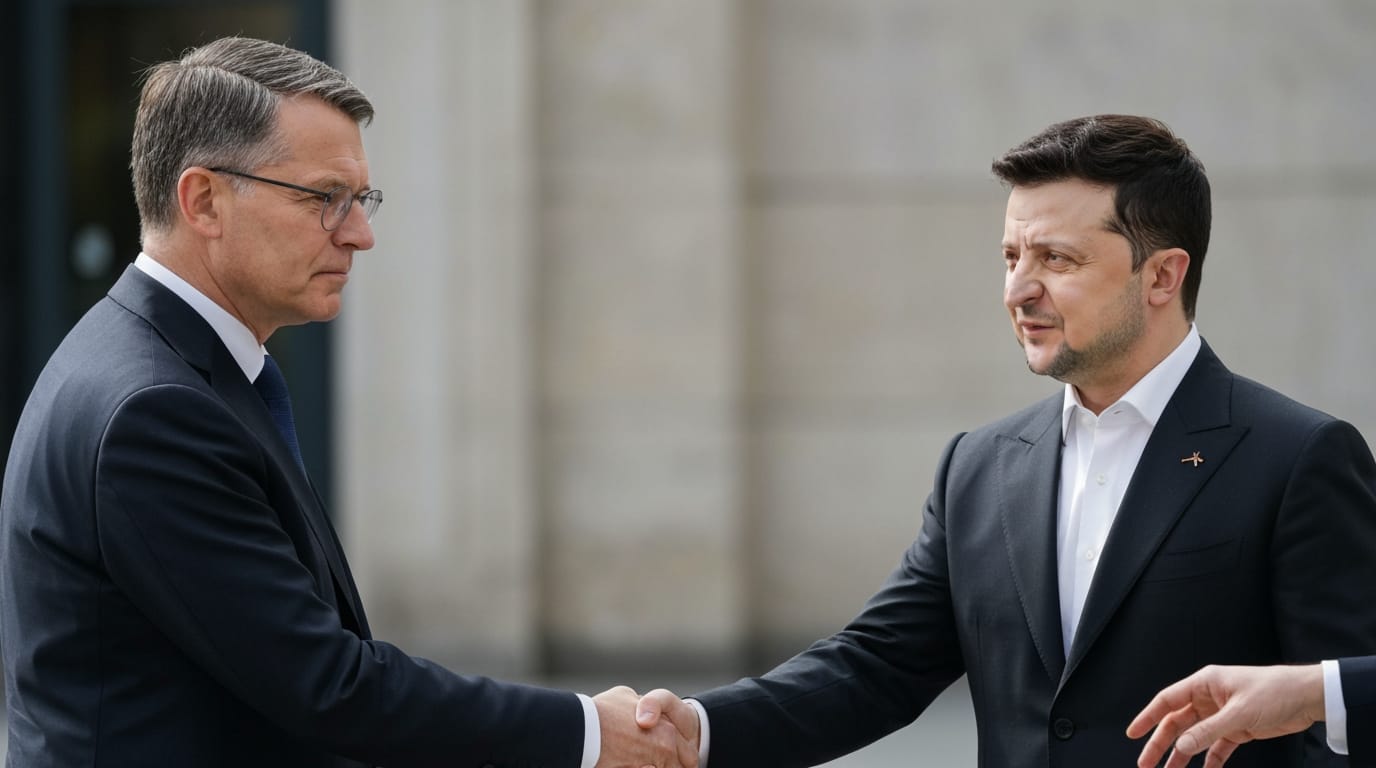
Berlin, Germany – In a series of high-stakes diplomatic engagements throughout 2025, German Chancellor Friedrich Merz hosted Ukrainian President Volodymyr Zelenskyy in Berlin, reinforcing Germany's unwavering support for Ukraine amidst the ongoing conflict with Russia. These critical meetings, particularly those held in May, August, and December, underlined Berlin's escalating commitment to Kyiv, spanning military aid, economic cooperation, and concerted efforts toward a lasting peace settlement. The discussions served not only to solidify bilateral ties but also to shape a broader European and international strategy for resolving the protracted war and ensuring Ukraine's future sovereignty and security.
The Shifting Political Landscape: Merz's Ascent and Steadfast Support
Friedrich Merz's transition from a prominent opposition leader to Germany's Chancellor in early 2025 marked a significant development in the nation's political landscape, yet his commitment to Ukraine remained a constant. Even before assuming the chancellorship, Merz demonstrated consistent engagement with Kyiv, visiting President Zelenskyy in the Ukrainian capital in May 2022 and again in December 2024 as the leader of the Christian Democratic Union (CDU) and a leading candidate for the nation's highest office. During these earlier visits, Merz articulated the CDU's steadfast commitment to providing comprehensive support to Ukraine, encompassing financial, humanitarian, and military assistance. He notably advocated for the delivery of long-range weapons, including Germany's Taurus cruise missiles, a position that would later gain traction under his chancellorship. His party's election platform, outlined in December 2024, explicitly pledged continued support for Ukraine "with all necessary diplomatic, financial, humanitarian, and military assistance" and emphasized strengthening sanctions against Russia. Following his electoral victory in February 2025, Merz reiterated that ending Russia's war against Ukraine would be a key strategic priority for his government, affirming that Ukraine must win and regain all its territory.
Bilateral Talks Intensify: Aid, Arms, and European Aspirations
The first formal hosting of President Zelenskyy by Chancellor Merz in Berlin occurred on May 28, 2025, marking a pivotal moment in the deepening German-Ukrainian partnership. The meeting, which came just weeks after Merz assumed the chancellorship, focused heavily on Ukraine's urgent need for increased military support in the face of an escalating Russian bombing campaign. Germany, already the second-largest supplier of military aid to Ukraine after the United States, saw Merz actively pursuing diplomatic efforts to secure a ceasefire and maintain robust Western backing for Kyiv. A key item on the agenda was the potential supply of Germany's Taurus long-range cruise missiles, a weapon system Merz had advocated for as an opposition leader and which Ukraine urgently sought to complement existing British and French long-range missiles. The Chancellor indicated that Germany and other major allies were no longer imposing range restrictions on weapons supplied to Ukraine for use against Russian military targets, signifying a notable shift in policy. Beyond military hardware, discussions also touched upon Ukraine's aspirations for European Union membership and security guarantees, fundamental elements for the nation's long-term stability.
Further high-level engagement took place on August 13, 2025, when Chancellor Merz again hosted President Zelenskyy in Berlin for an expanded-format meeting. This gathering included a significant videoconference with then-U.S. President Donald Trump and other European leaders, highlighting the multilateral nature of the support effort. Discussions during this session included increasing defense support, Germany's participation in new initiatives like the PURL initiative, and specifically strengthening Ukraine's air defense capabilities with additional Patriot systems and missiles. The leaders also addressed the crucial issue of reliable security guarantees for Ukraine, with key elements identified as a strong Ukrainian army and eventual membership in the European Union. A joint agreement was reached that pressure on Russia must be maintained and Ukraine's strength enhanced as long as Moscow avoided concrete steps towards peace.
Charting a Path to Peace: The December 2025 Diplomatic Offensive
The crescendo of diplomatic efforts in 2025 saw Chancellor Merz hosting President Zelenskyy in Berlin on December 15, following an announcement of a broader summit involving several European heads of state and government, as well as top EU and NATO representatives. These critical talks, which also involved negotiators from the U.S., focused on the latest developments in peace negotiations and a US-backed 20-point peace plan aimed at ending the war.
At a joint press conference, Chancellor Merz emphasized Germany's unwavering commitment, stating, "Germany will continue to help Ukraine as its closest partner." He spoke of a genuine opportunity for a peace process, noting "the greatest diplomatic dynamics since the beginning of the Russian war of aggression." Key issues on the agenda included security guarantees, territorial integrity, and effective mechanisms for monitoring a ceasefire. Merz underscored that any territorial arrangements could only be determined by the Ukrainian people and their president, while calling for Moscow to cease "playing for time" and become open to a ceasefire. During these discussions, Ukraine reportedly indicated a willingness to relinquish its ambition to join NATO in exchange for robust Western security guarantees, with President Zelenskyy suggesting that a ceasefire along current front lines could represent a fair resolution, though direct talks with Russia were not underway at that stage. The German federal budget for 2026 was highlighted as providing major support for the Ukrainian armed forces, reinforcing the long-term nature of Germany's commitment.
Domestic Concerns and International Resonance
While the focus of the Berlin meetings was predominantly on military and political support for Ukraine, German domestic considerations also subtly influenced the bilateral dialogue. In November 2025, Chancellor Merz had a phone call with President Zelenskyy during which he urged Ukraine to address the influx of young Ukrainian men into Germany, suggesting they were needed in their homeland. This reflects broader internal debates in Germany regarding migration and the equitable distribution of responsibility for defending Ukraine. Despite these nuanced discussions, Germany's stance under Chancellor Merz has consistently been one of strong advocacy for Ukraine's territorial integrity and sovereignty.
These consecutive high-level meetings in Berlin throughout 2025 underscore Germany's critical and evolving role in the international response to the conflict in Ukraine. Under Chancellor Merz, Germany has solidified its position as a leading partner for Kyiv, moving beyond initial hesitations to become a key provider of military aid and a central player in diplomatic efforts. The discussions reflect a complex interplay of military necessity, economic solidarity, and the arduous pursuit of a viable peace formula, all against the backdrop of European security concerns and Germany's own domestic political dynamics. The collaborative approach, particularly the inclusion of U.S. and other European leaders in pivotal talks, signals a united front in seeking a resolution that upholds international law and ensures a secure future for Ukraine and Europe.