Bosnia Issues Arrest Warrants for Serb Leader Dodik, Escalating Political Crisis
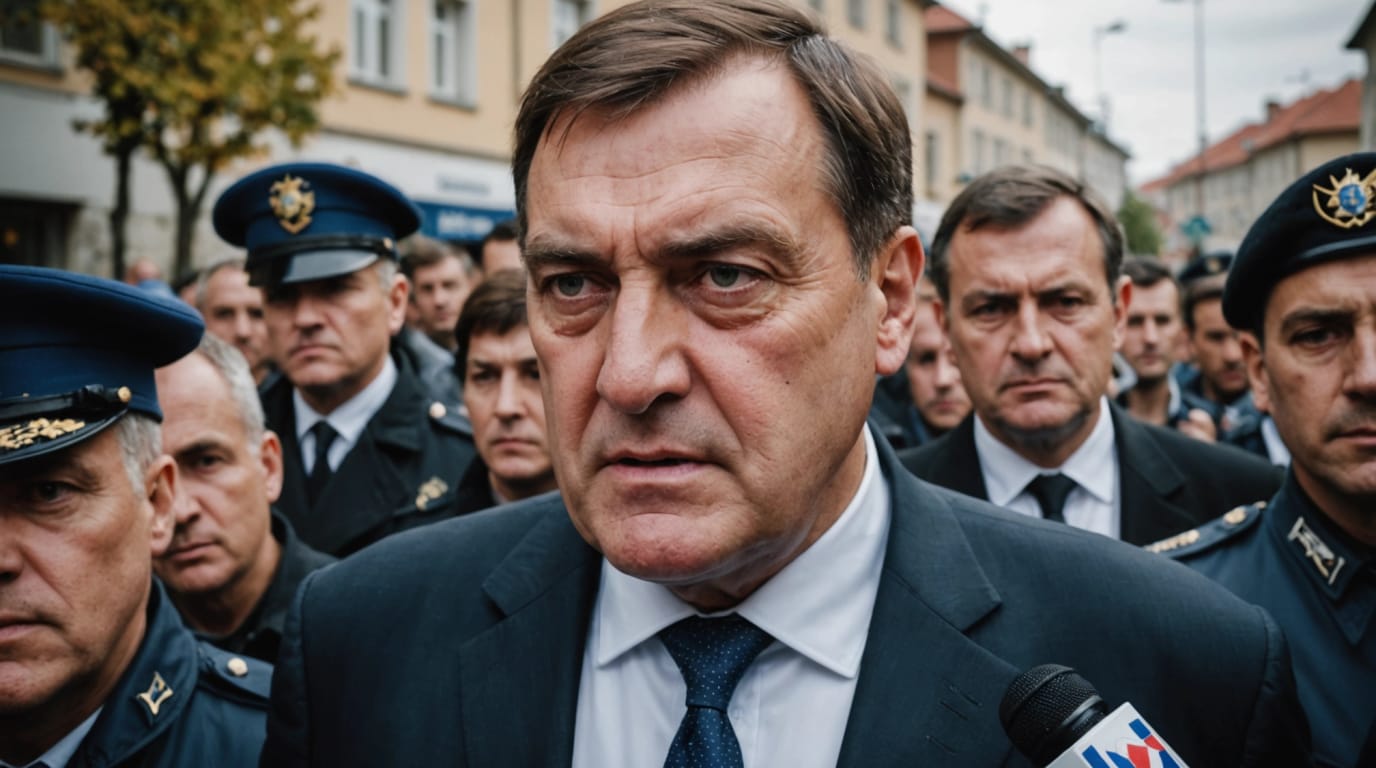
SARAJEVO, Bosnia and Herzegovina (March 12, 2025) – Bosnian state prosecutors have issued arrest warrants for Milorad Dodik, the president of Republika Srpska (RS), the Serb-majority entity within Bosnia and Herzegovina, along with several other top officials. The move intensifies an already volatile political crisis and raises concerns about the stability of the country. Dodik and his associates are accused of defying court summons and threatening the constitutional order of Bosnia and Herzegovina through a series of actions challenging the authority of state-level institutions.
The Prosecutor's Office of Bosnia and Herzegovina ordered the detention of Dodik, RS Prime Minister Radovan Viskovic, and the President of the National Assembly of RS, Nenad Stevandic. The warrants were issued after the officials repeatedly ignored summons to appear before the state court in Sarajevo. The charges against them stem from their efforts to undermine the authority of the central government and its institutions within Republika Srpska.
The specific accusations against Dodik and the other officials relate to their signing into law measures passed by the RS parliament that effectively ban the operation of federal judicial and investigative institutions within the entity. These laws, which have since been temporarily suspended by the Constitutional Court of Bosnia and Herzegovina, are viewed as a direct challenge to the Dayton Peace Agreement, which established the country's current political structure after the Bosnian War in the 1990s.
Dodik, who has long advocated for greater autonomy for Republika Srpska and has even hinted at secession, has dismissed the arrest warrants as politically motivated and has refused to comply with the court summons. He has repeatedly stated that he does not recognize the authority of the Bosnian prosecutor's office and will not travel to Sarajevo for questioning. Viskovic has echoed these sentiments, expressing a lack of trust in the fairness of the state-level judicial system.
The issuance of the arrest warrants coincides with a move by the Republika Srpska parliament to discuss and potentially adopt a new constitution. This draft constitution seeks to redefine the entity's official status as a state of the Serbian people, grant it the right to self-determination, and establish its own army. Critics view this as a further step towards undermining the sovereignty and territorial integrity of Bosnia and Herzegovina.
The international community has expressed concern over the escalating tensions in Bosnia and Herzegovina. The European Union Force (EUFOR) has announced a "temporary increase" in troop numbers in the country as a "proactive measure" to maintain stability. The first batch of reserve forces arrived at Sarajevo Airport on Tuesday, with additional helicopters expected to reinforce the contingent. Western governments have also imposed sanctions on Dodik for his actions, which they say are aimed at the secession of Republika Srpska from Bosnia.
The current crisis highlights the deep-seated divisions that continue to plague Bosnia and Herzegovina more than two decades after the end of the war. The country remains divided along ethnic lines, with Bosniaks, Serbs, and Croats struggling to find common ground and build a functional state. The actions of Dodik and other Serb leaders have further exacerbated these divisions and raised fears of renewed conflict.
The situation remains fluid and unpredictable. It is unclear whether authorities will attempt to forcibly detain Dodik and the other officials, or whether they will continue to defy the court summons. The response of the Republika Srpska Ministry of Interior, which is responsible for law enforcement within the entity, will be crucial in determining the next steps. Sinisa Karan, the minister of interior of RS, has stated that his department's primary duty is to protect the constitutional order of Republika Srpska, suggesting that they will not cooperate with the state-level authorities in carrying out the arrests.
The coming days and weeks will be critical in determining the future of Bosnia and Herzegovina. The international community must remain engaged and work to de-escalate tensions, promote dialogue, and ensure that the country remains on a path towards stability and reconciliation. The alternative could be a return to the violence and division that scarred the region in the 1990s.