Chancellor Merz's World Cup Praise Strikes Sour Note Amidst German Disappointment
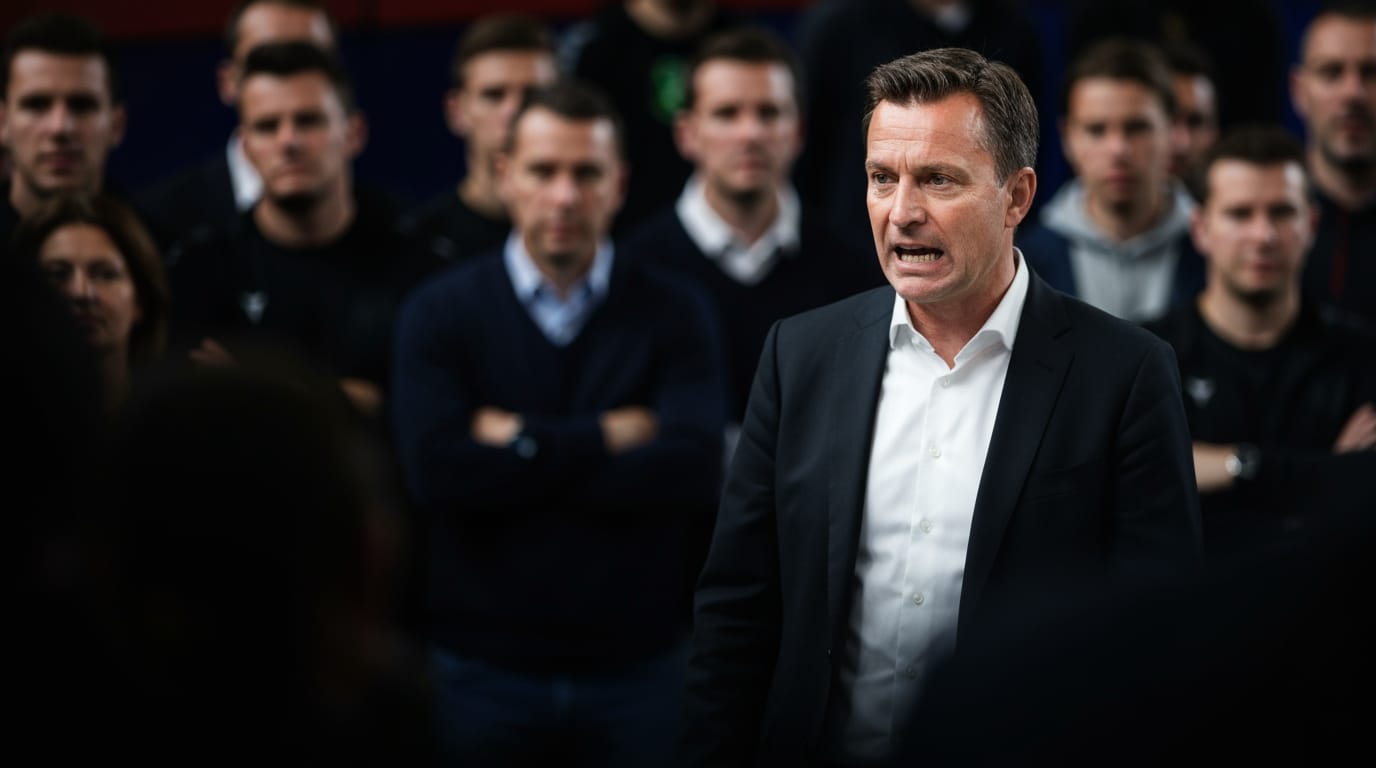
Berlin, Germany – German Chancellor Friedrich Merz found himself at the center of a national uproar this week, drawing widespread ridicule and criticism following his decision to laud the national football team, "Die Mannschaft," in the immediate aftermath of their stunning elimination from the FIFA World Cup 2026. His social media remarks, intended perhaps as a gesture of solidarity, instead ignited a firestorm, laying bare a deep disconnect between political rhetoric and public sentiment. The incident has since evolved into a broader commentary on Merz's leadership and the state of the nation.
The controversy erupted late Tuesday, June 30, after Germany, a four-time World Cup champion, suffered a disheartening penalty shootout defeat to Paraguay in the Round of 32, marking their earliest World Cup knockout stage exit in 12 years. Despite the national team's largely uninspired performance throughout the tournament, culminating in a 1-1 draw and a 3-4 loss on penalties to an underdog Paraguayan side, Chancellor Merz quickly took to X (formerly Twitter). "What a game!" Merz posted. "With your commitment and team spirit at this World Cup, you have thrilled our country. We are proud of you." This effusive praise, coming after a performance widely described as slow, dull, and lethargic, immediately struck many as tone-deaf and out of touch with the prevailing national mood.
A Nation's Discontent, A Chancellor's Misstep
The backlash to Merz's optimistic assessment was swift and severe. Online, social media users questioned whether the Chancellor had even watched the match, with many expressing anger, disappointment, and even fury, rather than pride. Leading German media outlets amplified the public's discontent. The widely read Bild newspaper, in particular, did not mince words, labeling Merz's post "a disaster" and stating that the Chancellor was "making a fool of himself." Bild's editor-in-chief, Marion Horn, directly challenged Merz's sentiment, writing, "Chancellor, I am not proud. I'm angry. I'm disappointed. I'm furious! Our children only know Germany as a loser!" Other publications, like Die Welt, echoed the sentiment of national decline, lamenting, "Germany isn't Germany anymore." Critics pointed out that Germany's footballing woes were not new, with the team having been eliminated in the group stage in two consecutive previous World Cups, intensifying the pain of the current early exit. The perceived disconnect between Merz's positive framing and the team's poor showing fueled accusations that the Chancellor was failing to "read the room" and understand the country's frustration.
Political Own Goal on the World Stage
Beyond the immediate sporting disappointment, Merz's comments quickly took on a political dimension, morphing into a public relations debacle that provided ammunition for his political adversaries. Critics were quick to draw parallels between Merz's "rosy view" of the team's defeat and his handling of other pressing national issues, including a stagnant economy, industrial decline, and an increasingly fraught strategic position. The implication was clear: the Chancellor, a center-right Christian Democrat, was being accused of consistently "sugarcoating" failures and announcing grand plans without delivering tangible change, whether in football or national policy.
Opposition figures and even international actors capitalized on the situation. A "Kremlin confidant," Kirill Dmitriev, reportedly took to X to suggest, "Merz is good at always encouraging a failure," directly weaponizing Germany's World Cup frustration into a political attack. Similarly, Germany's far-right Alternative for Germany (AfD) party seized the opportunity, remarking, "Merz has become so accustomed to sugarcoating the miserable performance of his CDU that he simply cannot help himself anymore." These reactions underscored how a seemingly innocuous sporting comment by a political leader could be exploited to undermine their credibility and contribute to a narrative of national instability and underperformance. What Merz likely intended as a harmless show of respect to the national team after their bitter elimination, ultimately spiraled into a significant political uproar.
The Chancellor's Defense and Lingering Questions
In an attempt to quell the growing outrage, Merz posted a follow-up message on X later the same day. He sought to emphasize unity in defeat, writing, "We celebrate our successes together. And in defeat, we stand together. That is what makes us strong. Anyone who wears the eagle on their chest deserves our support, not our ridicule." However, this clarification also met with a largely hostile audience on social media, indicating that the initial damage to his public image had already been done.
The incident further highlights a period of intense "soul-searching" within German football, already under scrutiny due to unrelated investigations into alleged ticket and hospitality violations at the German Football Association (DFB) headquarters concerning the Euro 2024 tournament. This broader context of disappointment and controversy in German football meant that any political leader's comments on the national team were likely to be met with heightened sensitivity and critical examination. The Chancellor's misjudgment served to exacerbate an already tense national mood, connecting the perceived shortcomings of the football team to wider anxieties about the country's direction and its leadership.
In the wake of this public relations misstep, Chancellor Merz faces renewed questions about his ability to connect with the populace and his perceived detachment from the everyday realities and frustrations of German citizens. The episode serves as a potent reminder that in a nation as passionate about football as Germany, political leaders must tread carefully when commenting on the beautiful game, lest a seemingly supportive gesture transform into a widely ridiculed "own goal."