Checkmate? Russia's Centuries-Long Chess Supremacy Faces Unprecedented Global Challenge
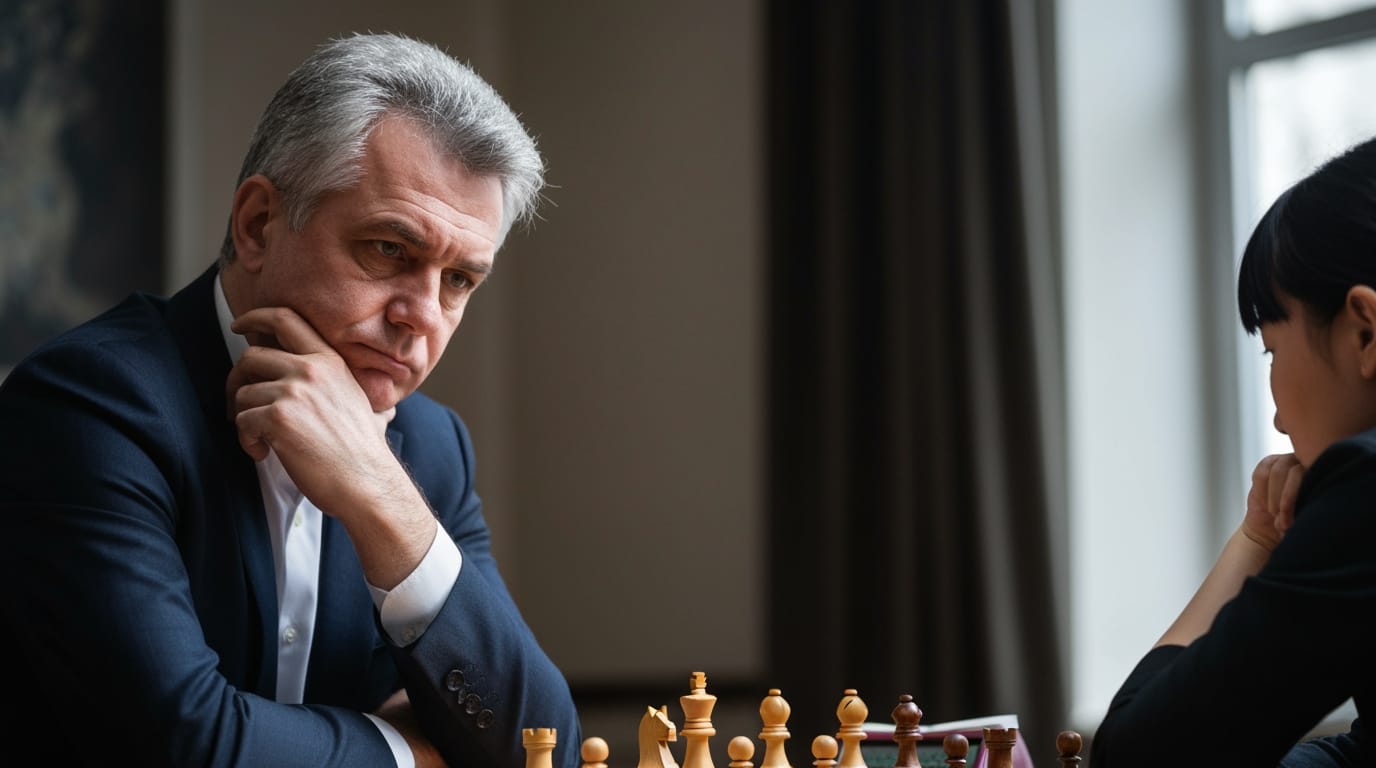
The enduring reign of Russia as the undisputed titan of the chess world, a legacy forged in Soviet-era state-sponsored programs and upheld by generations of grandmasters, is now facing its most significant challenge yet. A confluence of geopolitical pressures, internal systemic shifts, and the ascendance of a new generation of global talent is rapidly reshaping the landscape of international chess, signaling a potential end to Russia's long-held dominance.
For decades, the mention of chess evoked images of Russian and Soviet intellectual prowess, a direct link to a period where the game was elevated to a national obsession and a tool of soft power. However, recent developments, including sanctions against the Russian Chess Federation and the meteoric rise of players from nations like India, China, and the United States, suggest a historic power shift is underway on the 64 squares.
The Grand Legacy: A Century of Russian Chess Power
The roots of Russia's chess hegemony stretch back to the early 20th century, but it was under the Soviet Union that the nation truly cemented its place as a chess superpower. Vladimir Lenin, a known chess enthusiast, championed the game as an ideal revolutionary sport, suitable for mass participation and intellectual stimulation. This philosophy translated into an effective state-backed system of chess institutions and training schools, designed to identify and cultivate talent from a young age. Mikhail Botvinnik, a key figure, not only became a world champion but also pioneered structured training methods that would produce an almost uninterrupted line of Soviet world champions from 1948 until 1990, with the notable exception of Bobby Fischer in 1972.
This "grandmaster factory" produced legends like Tigran Petrosian, Boris Spassky, Anatoly Karpov, and Garry Kasparov, who collectively symbolized Soviet intellectual superiority and consistent control over the game. The Soviet system ensured that chess was not merely a pastime but a serious science, with government funding supporting clubs in schools and factories, providing systematic coaching, and fostering an environment where talent was nurtured and rewarded. The Russian Federation inherited this deep-rooted chess culture and continued to produce strong players, topping national rankings for decades.
A Shifting Board: New Powers Emerge
The 21st century has introduced a starkly different narrative. While Russia continued to produce strong players, its absolute dominance began to wane as other countries caught up. The landscape of elite chess has become increasingly diverse, with players from across the globe challenging the traditional order. Norway's Magnus Carlsen has been a singular force, holding the world No. 1 position since July 2011 and widely considered one of the greatest players of all time. His consistent dominance marked a clear departure from the Russian/Soviet monopoly on the world championship title.
Beyond individual brilliance, entire nations have invested heavily in chess development. India, in particular, has emerged as a formidable challenger, now boasting a cohort of exceptionally talented young grandmasters. Gukesh Dommaraju, an Indian prodigy, made history in December 2024 by becoming the youngest undisputed World Chess Champion, shattering a record previously held by Garry Kasparov. India's rapid rise is further evidenced by a significant increase in its grandmaster count, from approximately 20 in 2010 to 84 currently, reflecting a strong belief in chess as a professional career. China and the United States have also made significant strides, consistently placing multiple players among the world's elite and demonstrating a more widespread distribution of top talent.
Geopolitical Pressures and International Isolation
The most recent and perhaps most impactful blow to Russia's chess standing stems from geopolitical events. Following the 2022 invasion of Ukraine, the International Chess Federation (FIDE) imposed significant sanctions on Russia. In June 2026, the Russian Chess Federation (CFR) was officially suspended by FIDE after failing to comply with a Court of Arbitration for Sport (CAS) ruling. The CAS had ordered the CFR to cease organizing chess activities in Russian-occupied Ukrainian territories within 90 days.
This suspension marks a major moment, as the CFR loses voting rights in FIDE elections and cannot nominate officers for FIDE positions. While adult Russian players may still compete in individual tournaments under the FIDE flag, rather than their national one, and juniors can play under the Russian flag, the team events remain a point of contention, with Russian teams potentially eligible only under a neutral banner. This international isolation has contributed to an "exodus of talent," with some Russian players opting to change federations. The move reflects how geopolitics can profoundly entangle and disrupt international sports, affecting players' careers and national pride.
Decline in Elite Representation and Systemic Changes
The effects of these changes are palpable in FIDE's rankings. The Russian Chess Federation, which was rated highest until February 2022, has fallen to fourth place. For the first time ever, no Russian player is ranked among the top 20 players worldwide. As of June 2024, only three Russian players maintain a FIDE rating above 2700, a significant drop from over ten players in 2012.
Beyond political isolation, the collapse of the Soviet Union in 1991 led to a reduction in state funding and a weakening of the meticulously organized training infrastructure that had fueled Soviet dominance. The rise of online chess during the COVID-19 pandemic further decentralized chess development, benefiting English-speaking content creators and a global player base, which some argue left the traditional Soviet system at a disadvantage. While Russia still boasts a large number of grandmasters and a strong chess culture, the collective force that once made absolute domination possible has diminished.
The Future of the Royal Game
The era of singular national dominance in chess appears to be drawing to a close. The confluence of geopolitical factors, the waning of state-backed structures in Russia, and the global democratization of chess knowledge through technology and robust development programs in other countries has created a more competitive and diverse landscape. While Russia's historical contribution to chess is undeniable, the focus now shifts to an exciting future where talent from every corner of the world can ascend to the highest echelons of the game, promising a dynamic and unpredictable era for the sport.