China’s 13-Year-Old Swimming Phenomenon Sparks Global Debate Over Child Athletes
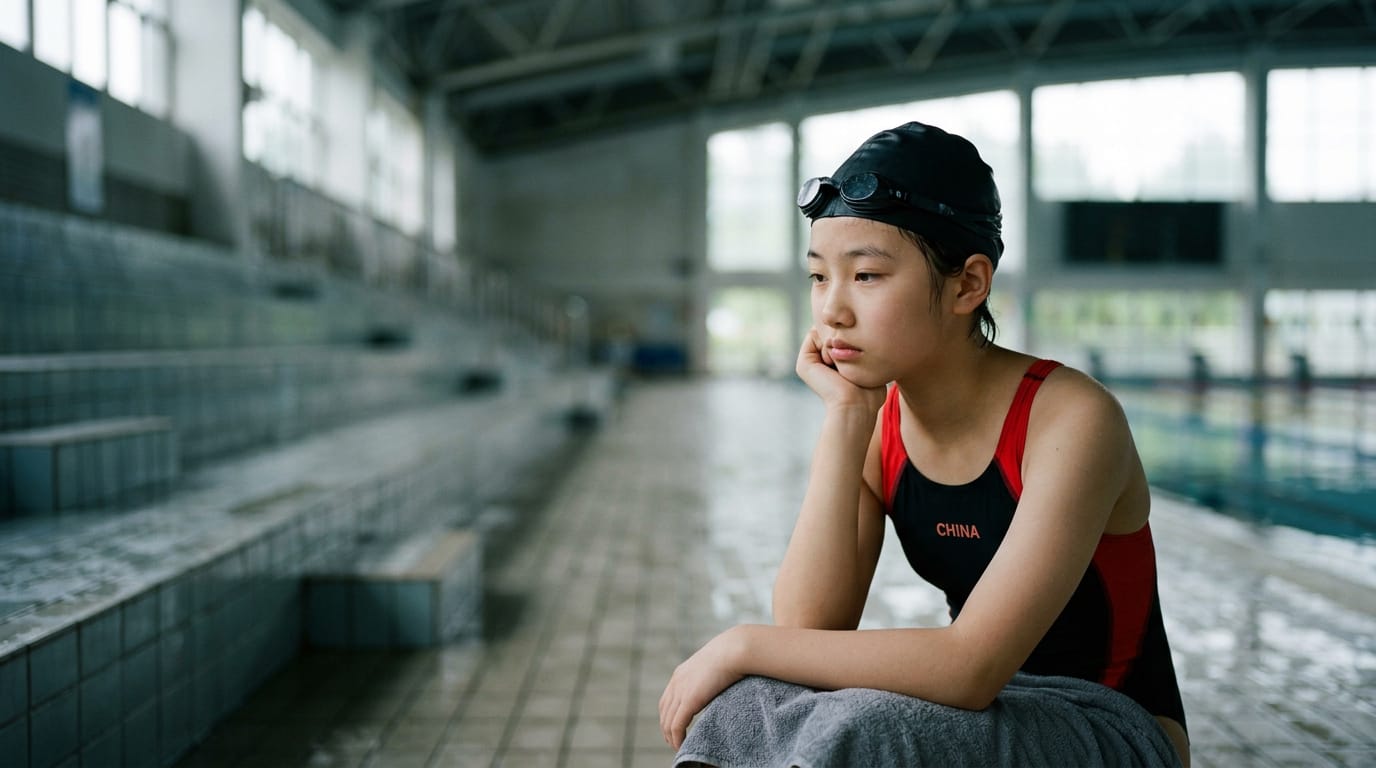
A 13-year-old middle school student has rapidly ascended to the pinnacle of international swimming, shattering records, winning three major titles in four days, and reigniting an intense global conversation about the physical and psychological demands placed on child athletes.
Yu Zidi, an eighth grader from China’s northern Hebei province, captured gold medals in the 200-meter butterfly, the 200-meter individual medley, and the 400-meter individual medley at the Asian Games. Her winning time of 2 minutes, 6.10 seconds in the 200-meter medley marked a new Asian record and world junior record. It also stands as the second-fastest time recorded in the history of the event, finishing just four-tenths of a second behind the world record held by Canada’s multi-time Olympic champion Summer McIntosh.
The teenager’s breathtaking emergence has dazzled spectators and sports analysts worldwide. At the same time, her sudden rise into high-stakes senior competition has drawn sharp scrutiny from child welfare advocates, medical professionals, and international sports federations grappling with the ethics of youth participation at elite levels.
Record-Breaking Pace and Early Ascension
Yu first gained international attention at age 12 during the World Aquatics Championships in Singapore, where she earned a bronze medal as part of China’s 4x200-meter freestyle relay preliminaries. That finish made her the youngest medalist in the history of the world championships. She also placed fourth in three individual senior finals, narrowly missing individual podium finishes against competitors nearly twice her age.
Under World Aquatics regulations, international competitors typically must turn at least 14 years old within the competition year. However, exceptions allow younger swimmers to enter if they achieve strict qualifying entry standards, commonly known as "A" cuts, in sanctioned national trials. Yu cleared those hurdles with ease during national events, setting times that eclipsed those of previous generational stars at the same age.
At 12, Yu was already swimming roughly 12 seconds faster in the 200-meter medley and 15 seconds faster in the 400-meter medley than McIntosh swam at the exact same age. In swimming, where margins are often decided by hundredths of a second, a 15-second gap equals roughly half the length of an Olympic-sized pool.
Her rapid progression has positioned her as an early favorite for upcoming global meets, including the world championships in Budapest and the 2028 Olympic Games in Los Angeles. Yet behind the stunning statistics lies a training routine that highlights the extraordinary burden placed on youth competitors.
The Human Cost of Early Specialization
Yu was introduced to the pool at age 6 after visiting an aquatic park during a summer break with her family. A local coach identified her natural feel for the water, prompting her to abandon childhood pursuits such as piano and dance to commit entirely to competitive training.
Within China’s state-supported sports apparatus, youth identification programs systematically channel promising talent into intensive regimes. For years, Yu split her days between regular schooling and grueling multihour pool sessions. The young swimmer has openly described the strain of balancing rigorous training with the expectations of childhood, acknowledging instances where sheer exhaustion caused her to fall asleep while eating dinner.
Leading up to her major national breakthrough, Yu faced severe emotional pressure while striving to capture gold in the 400-meter medley, an event widely regarded as one of swimming’s most physically punishing disciplines. The relentless focus left her feeling breathless under the weight of expectations, prompting her to ask coaches for a break before being encouraged to push through the exhaustion.
Even after securing her first continental gold medal in record time, Yu told reporters that her race was merely average, quickly critiquing minor technical flaws in her head position, stroke reach, and kick mechanics. Such high levels of perfectionism in young adolescents have raised alarm bells among sports psychologists, who point out that athletes in this age group are still developing their social identities and emotional coping mechanisms.
Medical and Regulatory Concerns
The emergence of adolescent prodigies has repeatedly ignited debate across multiple Olympic sports, notably gymnastics, figure skating, and diving. In recent years, several international governing bodies have enacted higher age restrictions to protect children from developmental harm. Following high-profile welfare crises at the Winter Games, figure skating raised its minimum senior competition age from 15 to 17.
Pediatric sports medicine specialists caution that the physiological risks of early specialization are significant. Repetitive, heavy training loads on immature skeletons can lead to chronic overuse injuries, growth plate disruptions, and hormonal imbalances. Long-term studies on youth athletics reveal that young athletes who undergo intense specialization before puberty face elevated rates of physical burnout, early retirement, and psychological fatigue compared to peers who maintain diverse sporting backgrounds.
Supporters of young competitors argue that athletic potential should not be artificially suppressed by birth dates when training safety guidelines are observed. Proponents note that early training allows athletes to master complex stroke mechanics, build natural cardiovascular endurance, and acquire international experience during their formative years. In many Asian and Western swimming programs alike, swimmers frequently peak during late adolescence or their early 20s.
Nevertheless, child welfare experts point out a clear imbalance in power dynamics. Young children rarely have the autonomy to negotiate their training volume, manage commercial commitments, or push back against systemic pressure from regional and national sporting bodies seeking international prestige.
An Uncertain Future for Youth in Global Sport
The debate over youth participation shows little sign of fading as Yu continues to lower her times toward senior world marks. Her family and coaches emphasize steady long-term development, noting that her current performances stem from personal diligence and focus rather than unrepeatable anomalies.
Yet her presence at the top of senior podiums ensures that governing bodies will face renewed questions regarding athlete welfare policies. As swimming administrators monitor qualifying guidelines leading into the next Olympic cycle, the balance between rewarding exceptional talent and shielding adolescent athletes from extreme pressure remains one of sport's most complex challenges.
Yu's journey over the coming seasons will serve as a prominent case study for international athletics. Whether her unprecedented early success paves the way toward sustained adult longevity, or instead adds to the long list of cautionary tales about early athletic specialization, hinges on how well the sports community safeguards the teenager behind the podium.