Controversy Erupts in NYC as Mayor Mamdani Opposes Hindu Nationalist Leader's Rally
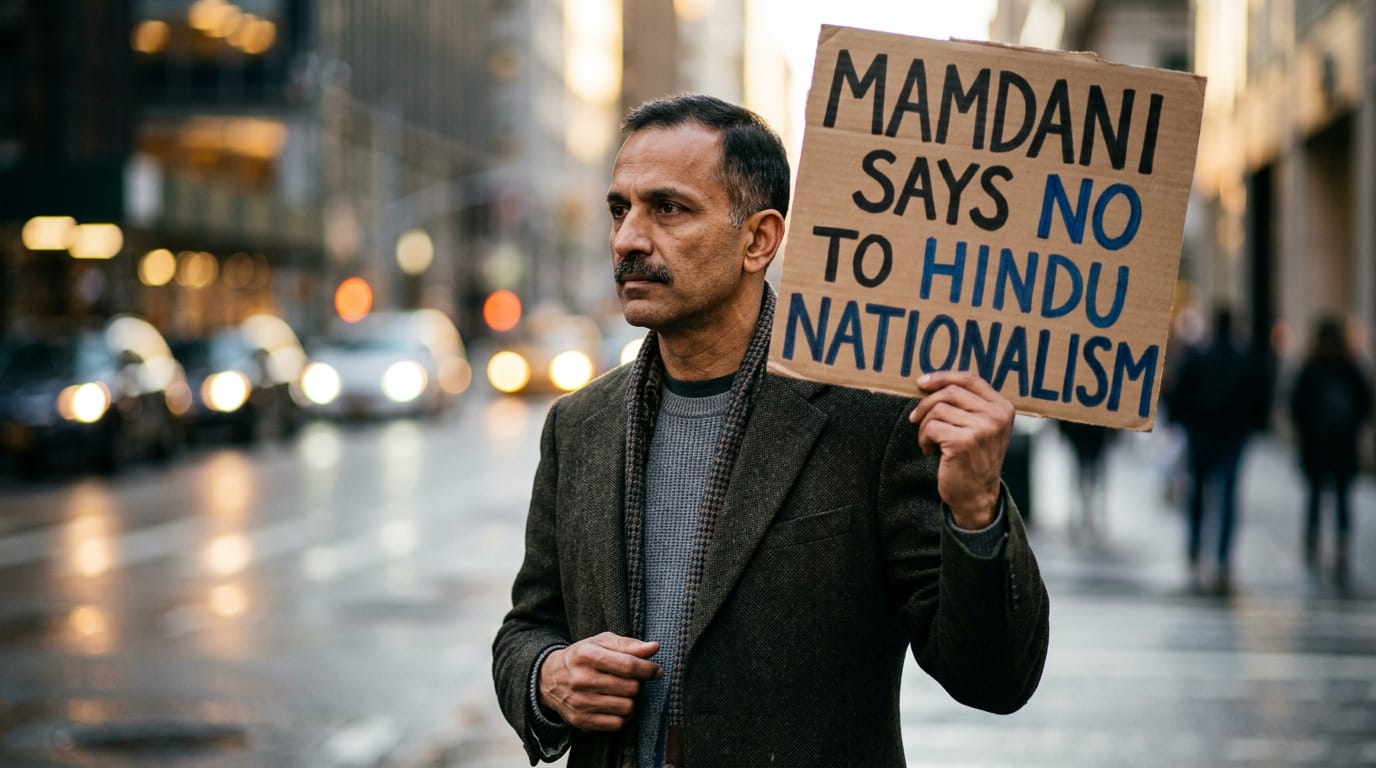
New York City finds itself at the center of a contentious debate as Mayor Zohran Mamdani has publicly voiced his strong opposition to an upcoming event in Manhattan featuring Mohan Bhagwat, the chief of the Rashtriya Swayamsevak Sangh (RSS), a prominent Hindu nationalist organization. The "Universal Oneness Celebration," scheduled for this Saturday, August 29, has sparked significant alarm among various community groups and human rights advocates, who argue against providing a platform for an ideology they describe as exclusionary and historically linked to anti-minority violence. Mayor Mamdani's stance underscores a growing tension surrounding the global reach of Hindu nationalism and its reception in diverse urban centers like New York.
A Divisive Gathering in the Global City
The event, titled the "Universal Oneness Celebration," is slated to take place in Manhattan on Saturday, August 29, and is anticipated to draw a significant gathering, potentially around 5,000 people at a venue such as Madison Square Garden. Organizers, identified as American Hindus for Engagement and Dialogue (AHEAD Forum), assert that the summit's primary objective is to foster unity within the Hindu American community, raise awareness of a common heritage among people from all backgrounds, and encourage interfaith relations. However, the presence of Mohan Bhagwat, the leader of the Rashtriya Swayamsevak Sangh (RSS), has ignited a firestorm of criticism and drawn the event into a broader, more complex ideological conflict. The RSS serves as the ideological parent to India's ruling Bharatiya Janata Party (BJP), positioning Bhagwat as a figurehead for a movement that has significantly shaped India's political and social landscape.
Mayor Mamdani's Principled Stand
New York City Mayor Zohran Mamdani, who holds the distinction of being the city's first Muslim and Indian American mayor, has unequivocally expressed his disapproval of the upcoming rally. In a public statement, Mamdani articulated his concerns, emphasizing that the vision of India he learned from his family was one of a pluralistic, secular republic where every individual belonged. He highlighted the troubling rise of a movement "predicated on an exclusionary vision," a sentiment that directly informs his opposition to the RSS event. Despite his strong objections, Mayor Mamdani acknowledged the limitations of his office, stating that he does not believe the city has the jurisdiction to cancel a private event.
Mamdani's vocal stance is not an isolated incident but rather a continuation of his consistent criticism of Hindu nationalism. As an assembly member, he previously opposed a Hindu nationalist float in the 2024 India Day parade that celebrated a temple built on the site of a demolished mosque, viewing it as a symbol of communal violence. His opposition stems from a profound concern for the principles of inclusivity and secularism, which he sees as being undermined by the RSS's ideology. Furthermore, Mamdani has previously characterized Indian Prime Minister Narendra Modi as a "war criminal" in reference to the 2002 Gujarat riots, demonstrating a deep-seated commitment to challenging the political implications of Hindu nationalist movements. His personal background, as the son of an interfaith Hindu-Muslim marriage, adds a personal dimension to his advocacy against what he perceives as divisive politics.
The Rashtriya Swayamsevak Sangh: Ideology and Allegations
At the heart of the controversy lies the Rashtriya Swayamsevak Sangh (RSS), a century-old organization that defines itself as a "Hindu-centric civilizational, cultural movement" dedicated to uniting Hindus and bringing the nation to "the pinnacle of glory". However, critics and human rights organizations present a starkly different picture. The RSS has a documented history of promoting religious supremacy, fueling anti-minority violence, and challenging India's pluralistic foundations. The U.S. Commission on International Religious Freedom (USCIRF) has stated that the RSS "has been involved in acts of extreme violence and intolerance against members of minority groups for decades".
These allegations are amplified by concerns regarding the broader human rights situation in India. Human rights groups and the United Nations have noted a rise in abuse against Indian minorities in recent years, citing increasing hate speech, a religion-based citizenship law, the demolition of Muslim-owned properties, the revocation of Muslim-majority Kashmir's autonomy, and anti-conversion legislation that challenges freedom of belief. While the RSS disputes accusations of intolerance, its critics contend that the organization's rhetoric and actions contribute to an environment where minority communities face discrimination and violence. The organization's international visits, including to the U.S., are viewed by some as an attempt to counter negative perceptions and bolster its legitimacy and influence abroad.
Community Outcry and the Battle for Narrative
The planned "Universal Oneness Celebration" has galvanized a coalition of Hindu, Muslim, interfaith, and civil rights organizations in New York City. These groups have organized press conferences and plan demonstrations outside City Hall, aiming to amplify their opposition to Mohan Bhagwat's appearance and the spread of Hindu nationalist influence in the United States. Groups such as Hindus for Human Rights and the Indian American Muslim Council are at the forefront of this advocacy.
A central argument from these activists is that Mohan Bhagwat and the RSS do not represent the entirety of the Hindu community. They contend that New York, a city celebrated for its diversity and pluralism, should not provide a platform for what they term "religious nationalism" that seeks to repackage itself as unity. Sravya Tadepalli, Deputy Executive Director of Hindus for Human Rights, asserted that Bhagwat leads an extremist movement responsible for violence and exclusion against minorities, emphasizing that "New York should not provide the RSS with a stage on which religious nationalism can be repackaged as unity". The demonstrators aim to advocate for a genuinely pluralistic vision of India, where faith does not dictate belonging or power.
The controversy also highlights a broader struggle over narrative. While organizers present the event as a celebration of unity and shared heritage, critics view it as an effort to "spiritually sanitize" the RSS's controversial history and expand its influence within the United States. This ideological clash extends to the Indian American diaspora, where a segment of the community aligns with the Hindu nationalist agenda, while others strongly oppose it, reflecting a complex and often divided political landscape within the community.
Navigating Free Speech and Community Values
The situation in New York City encapsulates the delicate balance between upholding principles of free speech and ensuring that public platforms do not inadvertently legitimize ideologies perceived as exclusionary or harmful. While Mayor Mamdani's opposition is clear, his acknowledgment of the city's limited power to cancel a private event underscores the legal complexities involved. The debate forces New York, a beacon of diversity, to confront how it navigates events that provoke deep divisions within its own communities and on the global stage.
This Saturday's "Universal Oneness Celebration" will proceed amidst a backdrop of protest and strong municipal disapproval. It serves as a vivid reminder of the ongoing struggle for pluralism in India and the increasing ways in which these ideological battles are extending to international platforms, fostering robust discussions about identity, human rights, and the nature of community in a globalized world. The controversy in New York City illustrates the persistent challenges faced by diverse societies in reconciling varied viewpoints, particularly when those views are tied to deeply rooted political and religious movements with significant international implications.