Critical Launch Pad at Baikonur Sustains Major Damage, Halting Russia's Crewed Space Missions
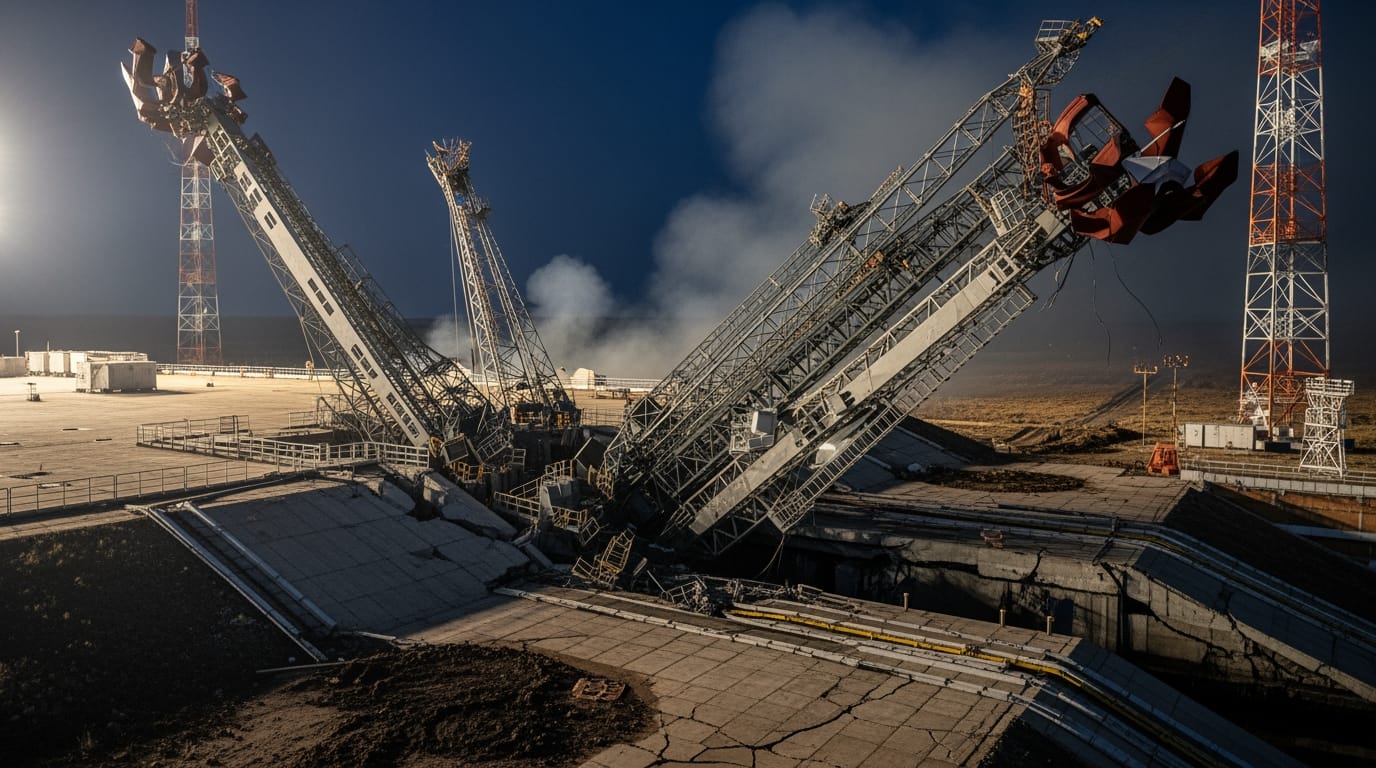
Baikonur Cosmodrome, Kazakhstan – A recent Soyuz rocket launch, successfully delivering a multinational crew to the International Space Station (ISS), has inadvertently crippled Russia's sole operational launch pad for human spaceflight, prompting a temporary suspension of all crewed missions from the facility. The Soyuz MS-28 mission, which lifted off on November 27, 2025, from Launch Pad 31/6, saw its crew safely reach orbit, but post-launch inspections revealed significant structural damage to the historic launch complex, raising concerns about the future cadence of Russian space operations and international cooperation on the ISS.
The Incident Unfolds: A Routine Launch with Unforeseen Consequences
The Soyuz MS-28 mission commenced with what appeared to be a flawless liftoff on November 27, 2025, from the Baikonur Cosmodrome, carrying Russian cosmonauts Sergey Kud-Sverchkov and Sergei Mikayev, alongside NASA astronaut Christopher Williams. The three-person crew successfully docked with the International Space Station several hours later, a testament to the reliability of the Soyuz spacecraft itself. However, the triumph of the mission was quickly overshadowed by discoveries on the ground. During routine post-launch inspections, engineers identified extensive damage to Launch Pad 31/6, the very infrastructure that propelled the crew into space. Roscosmos, Russia's state space corporation, acknowledged "damage to several structural elements" of the launch pad. Independent assessments, supported by drone footage, indicated that a critical mobile service platform or maintenance cabin, vital for rocket preparation and engine access, had collapsed into the flame trench beneath the pad. This collapse, reportedly caused by an unusual amount of blast during liftoff, rendered the pad inoperable for immediate future launches. The service cabin is a three-story metal framework providing technicians access to the rocket's engines from below, retracting into a niche shortly before ignition. Its failure to retract fully or improper securing is believed to have led to its fall into the flame pit.
Russia's Sole Gateway to Orbit Compromised
The damage to Launch Pad 31/6 carries profound implications for Russia's human spaceflight program. This particular pad, also known as Site 31/6, has been the exclusive launch site for Russian crewed missions to the ISS since 2019. Site 1, famously known as "Gagarin's Start" and the launch point for Sputnik and Yuri Gagarin, was retired from crew flights due to heavy wear, leaving Site 31/6 as the sole certified facility for such operations. The incident effectively removes Russia's immediate capability to send humans into space. This disruption directly impacts the upcoming launch schedule, with the Progress MS-33 cargo spacecraft mission, initially slated for December 2025 from the same pad, now facing an indefinite delay. The next crewed mission from Baikonur, scheduled for July 2026, also faces uncertainty. The sudden unavailability of Site 31/6 means that, for the first time in over six decades, Russia finds itself without an immediately operational launch platform for human spaceflight.
Divergent Assessments and Repair Timelines
Official statements from Roscosmos have sought to downplay the severity of the situation, asserting that "all necessary reserve elements are there to restore it and the damage will be eliminated very soon." However, independent analysts and space experts offer a more cautious outlook. Anatoly Zak, a prominent observer of Russian space activities, suggested that repairs could potentially take up to two years, a timeframe significantly longer than Roscosmos's "near future" projection. This discrepancy highlights the potential challenges associated with repairing a facility built in the 1960s, where obtaining specific replacement parts might prove difficult. Russia's space infrastructure, particularly at Baikonur, has been subject to years of constant use and limited modernization, contributing to its aging condition. The current incident further underscores the strain on the Russian space program, which operates under tighter budgets and reduced access to some imported components, exacerbated by Western sanctions.
Broader Implications for International Space Cooperation
The unexpected damage at Baikonur's Launch Pad 31/6 extends its implications beyond Russia's domestic space program, impacting the broader framework of international cooperation on the International Space Station. NASA, a key partner in ISS operations, acknowledged the situation, stating its close coordination with Roscosmos for the safe operation of the station and its crew members. While SpaceX's Dragon spacecraft now provides an alternative means for transporting astronauts to the ISS, the Soyuz has historically served as a critical and reliable transport system, ensuring continuous human presence on the orbital outpost. Any prolonged delay in Russian launches could necessitate adjustments to crew rotations and cargo resupply missions, although both NASA and Roscosmos maintain reserve stocks on the station to mitigate short-term disruptions.
The incident also brings renewed attention to Russia's other launch facilities. While cosmodromes like Plesetsk and Vostochny exist, none are currently certified for ISS-bound crewed missions. Vostochny, located in Russia's Far East, has been envisioned as a future alternative to Baikonur for human spaceflight, but its construction has faced delays and it lacks the full complement of systems required for crewed operations. The reliance on a single, aging launch pad in Kazakhstan for human spaceflight exposes a vulnerability in Russia's space capabilities and raises questions about the long-term sustainability of its contributions to the ISS, which itself is nearing the end of its planned operational life.
Looking Ahead: A Test of Resilience
The damage to Baikonur's Launch Pad 31/6 represents a significant operational setback for Russia's space program. While Roscosmos has expressed confidence in swift repairs, the consensus among independent experts suggests a more protracted timeline. This event underscores the inherent challenges of operating complex space infrastructure and the critical importance of redundancy in launch capabilities, particularly for human spaceflight. The coming months will reveal the true extent of the damage and Roscosmos's ability to swiftly restore its essential gateway to orbit, a factor that will undoubtedly shape the future of both its national space ambitions and its role in international space endeavors. The incident serves as a stark reminder of the fragile nature of space infrastructure and the constant need for maintenance and modernization in an unforgiving environment.


