Deadly Drone Strike in Starobilsk Claims Ten Lives Amid Conflicting Reports
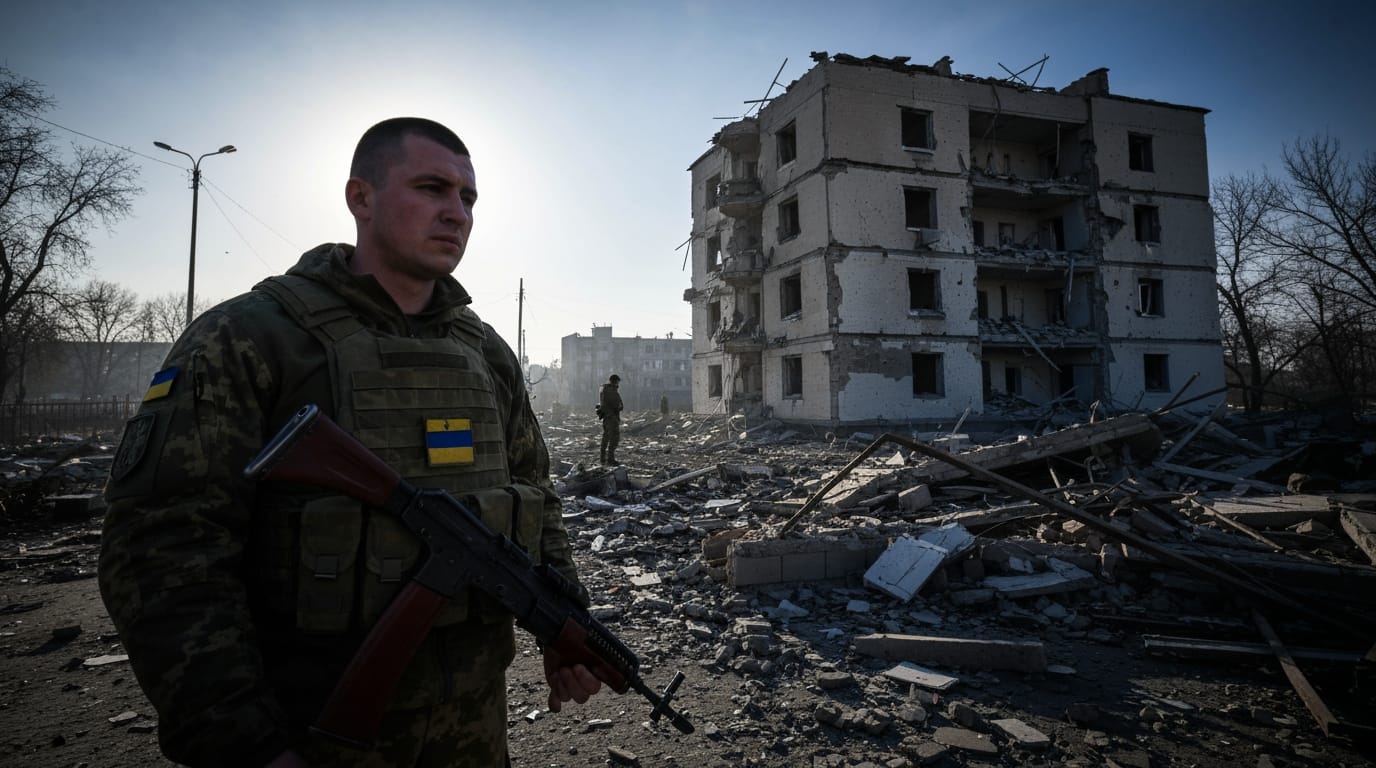
Starobilsk, a town in the Russian-controlled Luhansk region of eastern Ukraine, was the scene of a recent drone strike that resulted in the deaths of at least ten people, with dozens more wounded and several still missing. The incident, which occurred on Friday, May 22, 2026, has ignited a fresh round of accusations and denials between Russian-backed authorities and Ukraine's military, underscoring the relentless and devastating nature of the ongoing conflict.
The attack targeted a facility that Russian-backed officials identified as a college student dorm. Rescuers reportedly worked through the night clearing rubble, with the death toll steadily climbing from an initial six to ten by Saturday. Leonid Pasechnik, the Moscow-installed governor of the Luhansk region, confirmed the revised figures, stating that 38 people were wounded and 11 students remained unaccounted for following the strike. He described the situation as a tragic outcome where hopes for finding survivors were not realized. Russia swiftly condemned the strike, with President Vladimir Putin reportedly ordering his military to prepare options for retaliation.
The Ukrainian military, however, presented a different account of the events. While acknowledging a strike in the area, Ukraine's forces denied targeting a student dorm. Instead, they claimed to have successfully hit an elite drone command unit stationed in the vicinity. Kyiv maintained that its actions comply with international humanitarian law, suggesting the civilian casualties were either accidental or a result of Russian forces misusing civilian infrastructure for military purposes. This conflicting narrative is a common feature of the information war accompanying the direct military confrontation, making independent verification challenging.
Starobilsk, situated within the territory claimed by Russia since its full-scale invasion, holds strategic importance due to its location in the Luhansk region. This area has been a focal point of intense fighting and has remained largely under Russian control for an extended period. The town, like many others in the occupied territories, has been subject to the administrative oversight of Moscow-backed authorities. Incidents like the Starobilsk strike highlight the persistent vulnerability of areas behind the front lines to drone attacks and other long-range weaponry, illustrating that no territory is entirely immune from the conflict's reach. Such strikes in occupied territories often raise concerns about the targeting of civilian areas and the proportionality of military responses, regardless of the intended target.
The increasing prevalence of drone warfare has reshaped the battlefield, enabling strikes with greater precision and often over longer distances. While drones can offer military advantages, their deployment in densely populated or built-up areas inherently carries a higher risk of collateral damage and civilian casualties. The Starobilsk incident serves as a grim reminder of this reality, where a facility described by one side as a student dorm became a site of significant loss of life. The human cost is amplified by the fact that many of the victims were reportedly students, representing a younger generation caught in the crossfire of a brutal conflict. The ambiguity surrounding the exact nature of the target – a student dorm or a military command unit – further complicates the narrative and fuels propaganda efforts from both sides.
The strike in Starobilsk represents another somber chapter in the ongoing conflict, underscoring the severe human toll and the deep-seated divisions that define the war in Ukraine. The differing accounts from Russian-backed officials and Ukraine's military reflect the broader challenges of verifying information in a conflict zone and the struggle for narrative control. As investigations into the incident continue and potential retaliatory actions loom, the event serves as a stark reminder of the devastating consequences of modern warfare, where civilian lives remain tragically intertwined with military objectives. The incident is likely to intensify calls for accountability and adherence to international humanitarian law from both sides of the conflict.