Egypt Navigates Perilous Waters in Iran Conflict: A Delicate Balancing Act
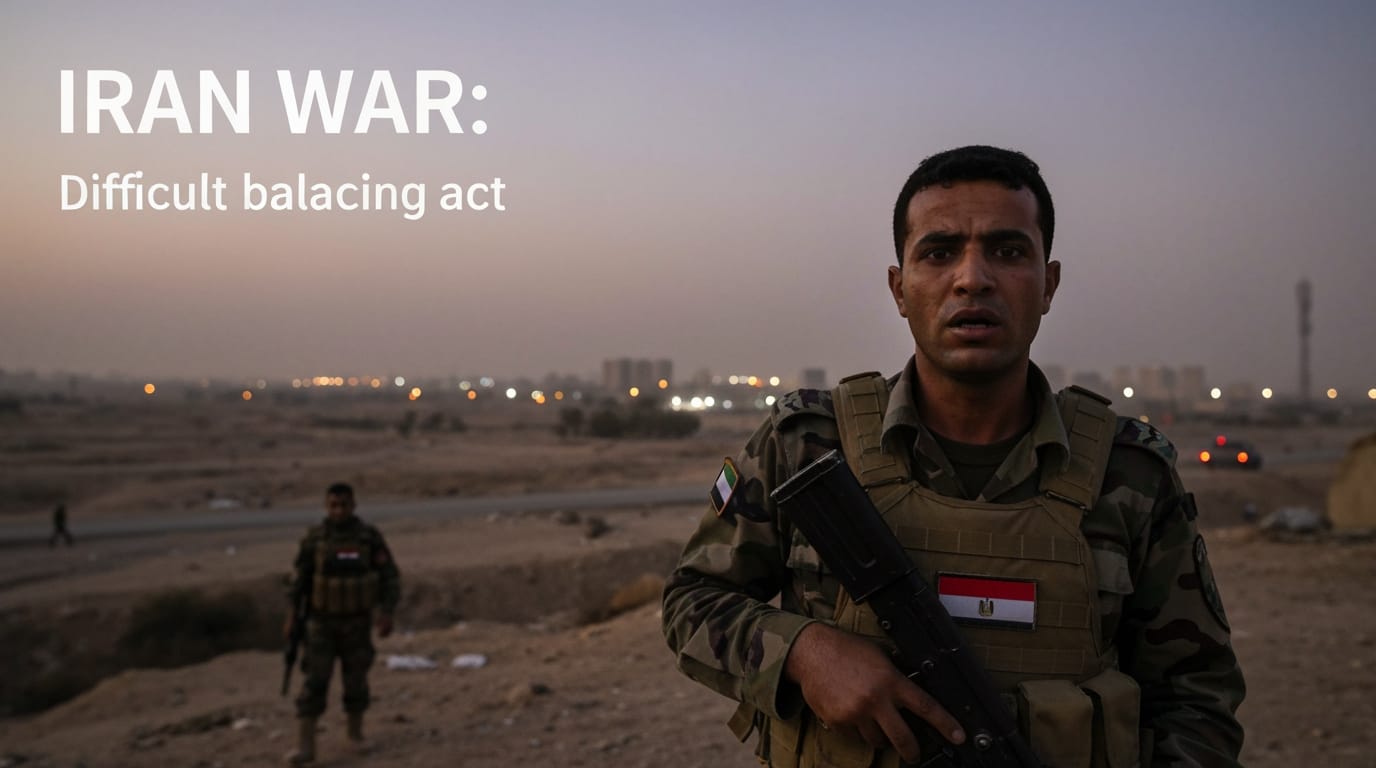
Cairo finds itself ensnared in a complex geopolitical web as tensions escalate in the ongoing conflict involving Iran, necessitating a precarious balancing act between regional alliances, economic imperatives, and national security interests. While actively engaging in diplomatic efforts to de-escalate the broader regional crisis, Egypt simultaneously reinforces its commitments to Gulf allies and safeguards its vital Red Sea maritime routes, all while confronting significant domestic economic pressures exacerbated by the war. This intricate position underscores Cairo's enduring challenge to project stability and protect its strategic assets amidst profound regional volatility.
The Regional Chessboard: Alliances and Divergent Interests
Egypt's foreign policy in the current Iran conflict is deeply rooted in its long-standing relationships and strategic priorities within the Middle East. Historically, Cairo has viewed the security of Gulf Cooperation Council (GCC) states, particularly Saudi Arabia and the United Arab Emirates, as an extension of its own national security. This perspective has been reinforced by substantial financial support from Gulf monarchies, which have provided tens of billions of dollars in aid, loans, and investments crucial for Egypt's economic stability over the years. In the early stages of the conflict, Egypt was quick to condemn Iranian missile and drone strikes on Gulf countries, with President Abdel Fattah el-Sisi publicly labeling Iran's actions as criminal during visits to Saudi Arabia, Bahrain, Qatar, and the UAE. Egypt has also demonstrated its solidarity through concrete military gestures, including the deployment of Rafale fighter jets and air defense systems to the UAE.
However, Egypt's alignment with its Gulf partners is not absolute. While Cairo has expressed solidarity, it has largely refrained from offering direct military support in the confrontation with Iran, a reticence that has drawn criticism from some Gulf intellectuals and social media commentators who question Egypt's commitment despite past financial assistance. This hesitancy stems from a more defensive foreign policy approach that evolved after the 1967 and 1973 wars, prioritizing the protection of revenue streams, securing external financing, and avoiding costly military engagements that Egypt cannot afford. Furthermore, Egypt is part of an informal quadrilateral grouping that includes Pakistan, Turkey, and Saudi Arabia. This bloc shares concerns that a complete collapse of the Iranian regime could upset the regional balance, potentially emboldening Israel, an outcome that runs contrary to Egypt's long-term strategic interests to counterbalance Israeli dominance in the region.
Economic Lifelines Under Threat: The Suez Canal and Beyond
The economic ramifications of the Iran conflict present a significant challenge to Egypt, a nation already grappling with its own financial vulnerabilities. A cornerstone of Egypt's economy is the Suez Canal, a vital global maritime artery linking the Mediterranean and Red Seas. The canal generates substantial revenue, contributing significantly to the country's foreign currency inflows. However, the conflict has severely disrupted shipping in the Red Sea and the Strait of Hormuz, with Houthi attacks in Yemen posing a direct threat to navigation in the Bab al-Mandab Strait, a critical chokepoint leading to the Suez Canal.
Egyptian President Sisi has warned that a prolonged war threatens the Suez Canal, noting that the country had already suffered "very large financial losses" over the past two years, with revenues plunging. Major container shipping companies, including Hapag-Lloyd, have paused plans to return to the Suez Canal, opting instead for longer routes around the Cape of Good Hope, adding weeks to transit times and increasing freight costs. This ongoing disruption not only impacts Suez Canal revenues but also strains other vital economic sectors such as tourism and remittances, further exacerbating inflation and currency depreciation within Egypt. The structural dependence on external financing and "rentier" income streams makes Egypt particularly susceptible to these regional shocks.
Diplomacy as a Shield: Cairo's Mediation Efforts
In response to the escalating crisis, Egypt has adopted a proactive diplomatic posture, positioning itself as a key mediator rather than a direct military combatant. This strategy is driven by a central objective: to end the war and mitigate its destabilizing effects on the region and, crucially, on Egypt itself. Egypt has actively engaged in de-escalation efforts, facilitating backchannel contacts and relaying messages between Washington and Tehran through intelligence-level communications, a method Cairo has employed for decades. These discreet efforts reportedly contributed to the US embracing a more diplomatic approach, leading to a Pakistan-mediated ceasefire agreement.
Egyptian Foreign Minister Badr Abdelatty has been at the forefront of these diplomatic initiatives, coordinating closely with the quadrilateral group, Gulf states, the U.S., and European powers. Cairo's diplomatic objectives extend beyond immediate de-escalation; it also seeks to preserve the safety and freedom of navigation in the Bab al-Mandab Strait and the Red Sea, preventing any single power from establishing hegemony in the Horn of Africa. Furthermore, Egypt aims to redirect international attention from the Iran conflict to other regional issues it deems more pressing, such as conflicts in Sudan and the implementation of a ceasefire deal in Gaza. Egypt has also maintained a strong stance against the "internationalization" or "militarization" of the Red Sea, insisting that security in the strategic waterway should remain the exclusive responsibility of its bordering Arab and African states.
Evolving Stance and Future Challenges
Egypt's balancing act is not without its internal and external pressures. While demonstrating solidarity with Gulf states, Egypt has also sought to maintain channels of communication with Iran, recognizing the strategic necessity of engaging Tehran for regional de-escalation efforts. This dual approach sometimes creates friction with its Gulf benefactors, who may seek a more assertive stance from Cairo. The Abraham Accords also introduce a subtle competition, as Egypt is wary of an emboldened Israel potentially eclipsing its traditional role as a central diplomatic actor in the Arab world.
President Sisi's government faces the challenge of managing these complex relationships while prioritizing Egypt's domestic stability and economic recovery. The ongoing conflict underscores Cairo's predicament: reliant on Gulf investment, yet committed to an independent foreign policy that prioritizes de-escalation and risk management. Should the fragile ceasefire falter or regional tensions further intensify, Egypt's ability to maintain its nuanced position will be severely tested, potentially forcing it to make difficult choices with far-reaching consequences for its economic and geopolitical future.
In conclusion, Egypt's response to the Iran conflict exemplifies a highly complex and calculated foreign policy designed to protect its core national interests. By coupling active diplomacy and mediation with strategic solidarity with its Gulf partners and an unwavering focus on safeguarding its economic lifelines, Cairo endeavors to navigate the perilous regional landscape. However, the inherent tensions between these objectives, coupled with profound economic vulnerabilities and evolving regional power dynamics, ensure that Egypt's difficult balancing act will remain a defining feature of its foreign policy for the foreseeable future.