Elon Musk's Lawsuit Against OpenAI Dismissed in Landmark AI Trial
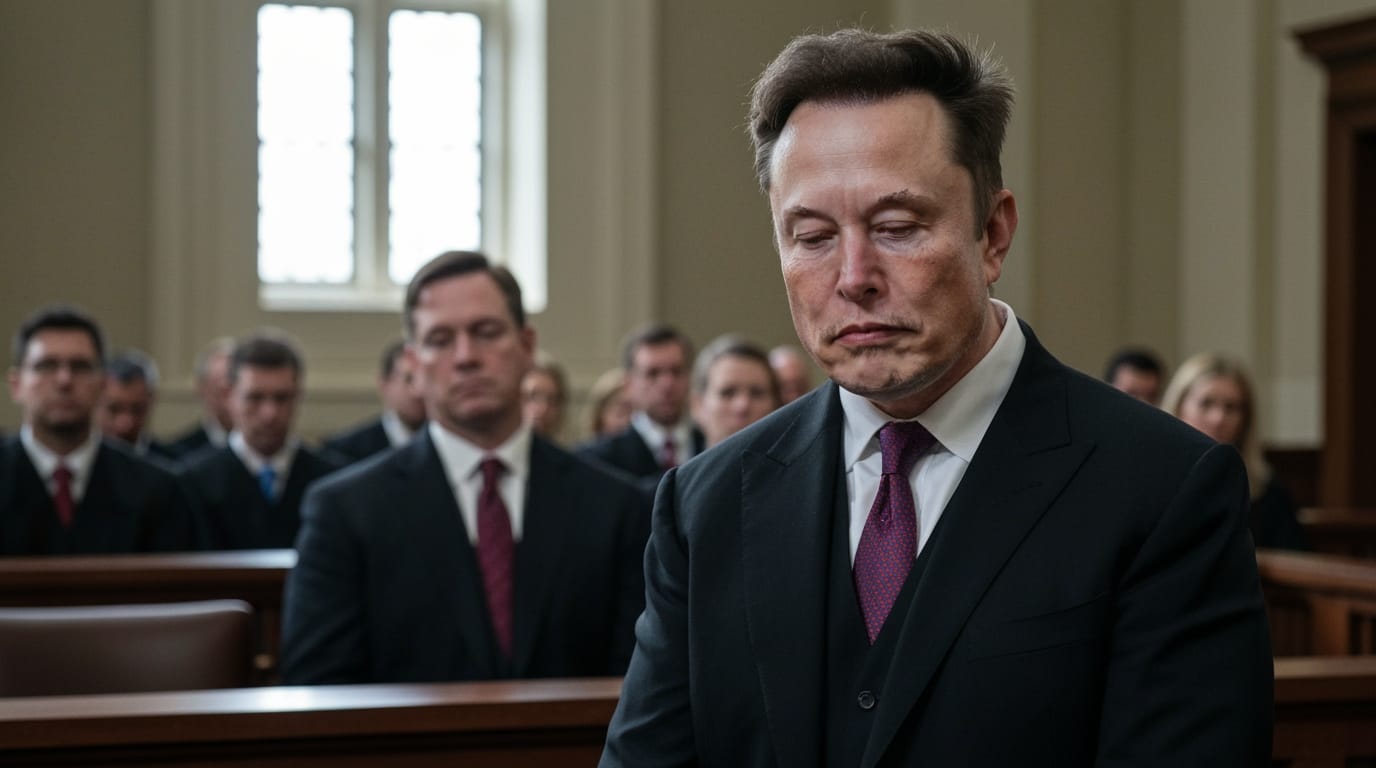
OAKLAND, Calif. – A federal jury has decisively ruled against tech titan Elon Musk in his high-profile lawsuit against OpenAI, the artificial intelligence company he co-founded, effectively dismissing his claims that the firm betrayed its founding non-profit mission. The verdict, delivered Monday, May 18, 2026, hinged on the finding that Musk waited too long to bring his case, exceeding the statute of limitations. This outcome marks a significant victory for OpenAI and its leadership, notably CEO Sam Altman, and closes a contentious legal chapter that illuminated the bitter ideological and commercial divides shaping the burgeoning artificial intelligence landscape.
The Verdict: A Question of Timeliness
After a trial that commenced on April 27 in Oakland, California, a nine-person jury deliberated for a mere two hours before reaching its unanimous conclusion. The jury determined that Musk's lawsuit was filed beyond the legal deadline, thereby absolving OpenAI and its executives of liability in the matter. While the jury's role was advisory, U.S. District Judge Yvonne Gonzalez Rogers accepted their finding as the court's own, leading to the dismissal of all of Musk's claims. This procedural victory for OpenAI sidestepped a deeper examination of Musk's substantive allegations concerning the company's shift from a nonprofit to a profit-driven entity.
Musk had sought substantial damages, reportedly up to $150 billion, which he pledged to direct towards OpenAI's charitable arm. He also demanded the removal of OpenAI CEO Sam Altman and President Greg Brockman from their leadership positions, arguing they had steered the company away from its original benevolent goals. However, the court's decision on the statute of limitations effectively halted these aspirations. The trial, which garnered considerable attention, offered a rare glimpse into the intense rivalries and foundational debates occurring within the AI sector, a field increasingly viewed as critical to future technological and societal development.
The Heart of the Dispute: Mission Divergence
At the core of Musk's legal challenge was the accusation that OpenAI had fundamentally strayed from its initial mission to develop artificial intelligence for the benefit of humanity as a non-profit organization. Founded in 2015 by Musk, Altman, Brockman, and others, OpenAI was initially conceived as a non-profit research lab committed to open-source AI development. Musk, an early investor who contributed $38 million in its formative years, alleged that Altman and other key figures clandestinely transitioned the company into a "moneymaking mode," primarily through its partnership with Microsoft and the subsequent development of commercial products like ChatGPT.
Musk's legal team argued that the company had "stolen a charity," accusing OpenAI of prioritizing investor enrichment over its foundational altruistic principles and failing to adequately prioritize AI safety. They pointed to OpenAI's significant valuation, now estimated at $852 billion, and its potential move towards one of the largest initial public offerings in history as evidence of this departure. Musk's lawyer, Steven Molo, emphasized Musk's crucial role in OpenAI's inception, stating, "Without Elon Musk, there would be no OpenAI." This sentiment underscored the personal nature of the dispute, highlighting Musk's belief that his vision for the company had been fundamentally undermined.
OpenAI's Counter-Narrative: Control and Opportunity
OpenAI vigorously defended itself against Musk's allegations, presenting a counter-narrative that framed his lawsuit as a retaliatory action driven by a desire for control and perceived jealousy. The company argued that Musk was fully aware of and even supported the discussions surrounding the need for a for-profit entity to attract the substantial capital required to build advanced AI systems. According to OpenAI's lawyers, the decision to form a capped-profit entity in 2019 was a necessary strategic move to secure funding on a scale not feasible through a purely non-profit structure, while still maintaining the overarching mission to benefit humanity.
Testimony during the trial suggested that Musk's departure from OpenAI's board in 2018 stemmed from a disagreement over control. OpenAI's legal team contended that Musk sought to merge OpenAI with Tesla or gain unilateral control, proposals that were rejected by other co-founders who feared granting too much power to a single individual. William Savitt, a lawyer for OpenAI, argued that Musk's lawsuit emerged only after OpenAI achieved significant success without him and after he launched his own rival AI company, xAI. This perspective suggested that Musk's legal challenge was a tactic to slow OpenAI's progress and benefit his own competing interests.
The Genesis of a Silicon Valley Rift
The legal battle provided a detailed public account of the growing rift between Elon Musk and OpenAI's leadership, tracing back to the company's early days. OpenAI was established with the ambitious goal of ensuring artificial general intelligence (AGI) would benefit all of humanity. Musk's involvement was pivotal, not only through his initial financial contributions but also in recruiting key talent. However, an internal power struggle in 2017 saw Musk propose taking direct control of OpenAI, either through a majority stake in a for-profit subsidiary or by integrating it into Tesla. These proposals were ultimately rejected by other co-founders, including Sam Altman, Greg Brockman, and Ilya Sutskever, who were wary of centralizing such power.
Musk left the OpenAI board in February 2018, publicly citing a potential conflict of interest with Tesla's own burgeoning AI efforts. However, subsequent reports and trial testimonies indicated the underlying dispute was fundamentally about control and the strategic direction of the organization. OpenAI's decision to form a for-profit arm in 2019, necessary for securing the immense funding required for advanced AI research, further solidified the divergent paths of its founders. This move, which Musk argued violated the terms of his foundational contributions, ultimately led to the lawsuit filed in 2024, setting the stage for the recent trial.
Implications for the Future of AI
The dismissal of Elon Musk's lawsuit against OpenAI carries broad implications for the artificial intelligence industry and the ongoing debates surrounding its governance and commercialization. For OpenAI, the verdict removes a significant legal cloud, potentially clearing the path for its ambitious plans, including a possible initial public offering that could further solidify its position as a dominant force in AI. The outcome also reinforces the company's current operational model, which combines a non-profit foundation with a capped-profit subsidiary, a structure designed to balance mission-driven development with the financial demands of cutting-edge AI research.
Beyond the immediate parties, this case highlighted the intricate challenges of scaling AI development, particularly the tension between altruistic goals and the immense capital requirements. It also underscored the evolving nature of founding agreements in fast-moving technological sectors, and how initial understandings can be reinterpreted or superseded by practical necessities and strategic shifts. While the court did not rule on the merits of OpenAI's mission fidelity, the legal process itself drew critical attention to the ethical considerations and potential societal impacts of advanced AI, a topic Musk frequently emphasizes. The verdict, therefore, not only settles a high-stakes personal and corporate dispute but also contributes to the broader dialogue about the future trajectory and control of artificial intelligence.


