Escalation in Crimea: Deadly Drone Assault Targets Russian Facilities, Civilians Caught in Crossfire
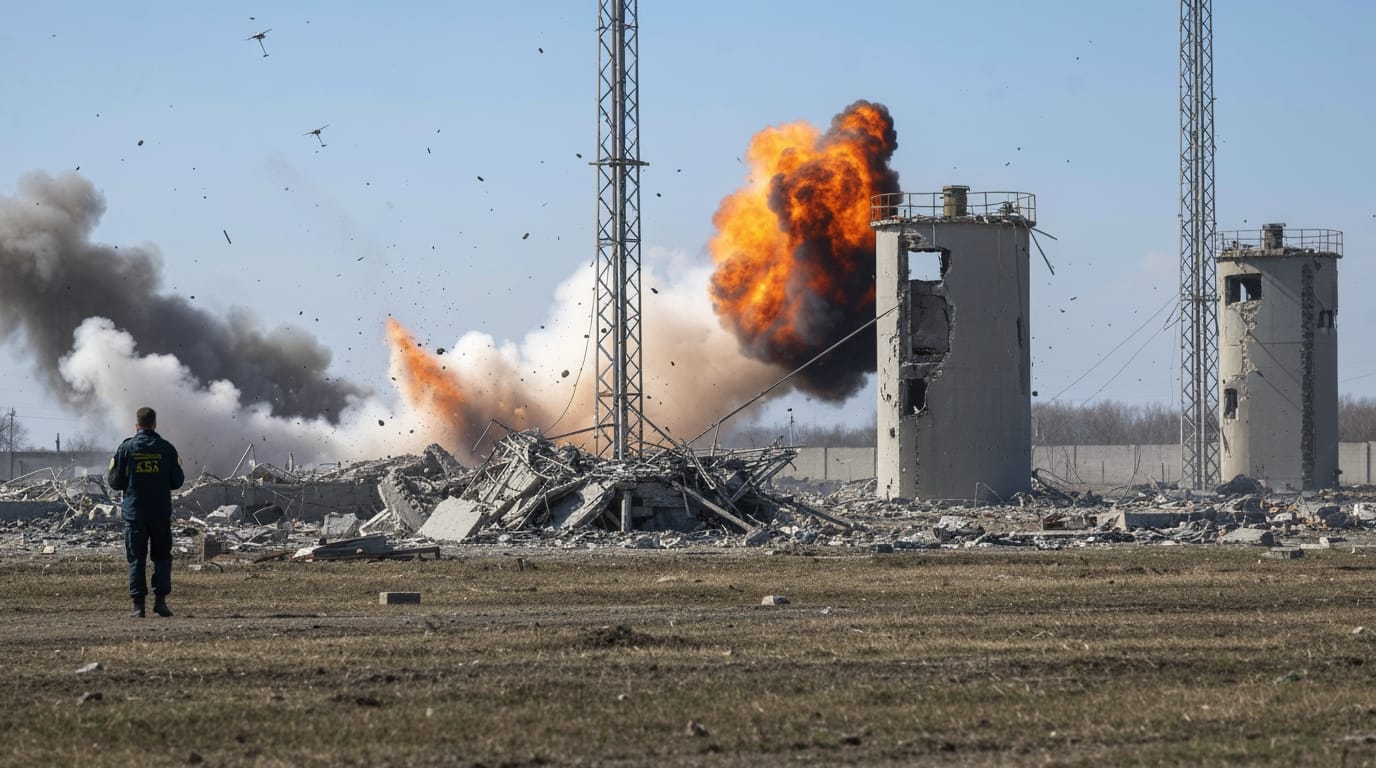
Simferopol, Crimea – A wave of Ukrainian drone attacks struck across the Russian-controlled Crimean Peninsula in the pre-dawn hours of Sunday, June 21, 2026, targeting critical infrastructure and military sites, resulting in at least three fatalities and multiple injuries. The coordinated assault signals a significant escalation in Kyiv's strategy to disrupt Russian logistics and isolate the strategically vital peninsula. Explosions and air defense operations were reported by local residents across various key locations, including Kerch, Sevastopol, and Simferopol, underscoring the widespread nature of the latest offensive.
The audacious attacks mark another chapter in the ongoing conflict, demonstrating Ukraine's expanding drone capabilities and its determination to challenge Russian control over Crimea. Russian authorities swiftly responded by temporarily halting traffic on the Kerch Bridge, a critical supply artery, as emergency services battled fires ignited by the strikes. The civilian casualties, reported in Simferopol, highlight the intensifying human cost as the conflict extends deeper into territories annexed by Russia.
Night of Fire: Targets and Damage Across the Peninsula
The extensive drone assault targeted a range of facilities across Crimea. In Kerch, significant fires erupted at the AEGAZ-Terminal, a liquefied gas complex, and a nearby fuel terminal operated by the TES company. Satellite imagery confirmed thermal signatures near the junction of the Chonhar railway bridge, a structure that had already sustained damage from a previous attack on June 13. Further reports indicated a fire at a Russian Military Unit 98546, housing the 630th Separate Railway Track Battalion, also in Kerch.
Beyond fuel depots and railway infrastructure, the strikes extended to locations suspected of hosting Russian air defense systems. A fire was detected at Cape Zyuk, near the village of Kurortne on the Azov coast of the Kerch Peninsula, an area identified as a deployment site for Russian air defense, including radar stations and S-300 or S-400 surface-to-air missile positions. Explosions and air defense activity were also widely reported in other major Crimean cities such as Bakhchysarai, Sevastopol, and Simferopol, as well as the Nyzhniohirskyi, Krasnohvardiiske, and Krasnoperekopsk districts. The Tavriiska Thermal Power Plant in Simferopol reportedly showed signs of a strike, with smoke seen rising from the area. An electrical substation at Bilohorsk was also reported to be on fire. On the Russian mainland side of the Kerch Strait, a fire was recorded at Port Kavkaz on the Chushka Spit, a crucial logistics hub.
Human Toll and Official Responses
The human toll of the recent attacks became tragically clear with reports from Russian authorities. Sergey Aksyonov, the head of the Crimean region, stated that preliminary information indicated three people were killed and seven others injured in Simferopol due to a strike on non-residential buildings. The specifics of the attack type in Simferopol were not immediately detailed by Aksyonov. These civilian casualties underscore the widening impact of the conflict on residents of the peninsula.
In response to the aerial activity, Russian officials in Crimea issued warnings and implemented temporary measures. Mikhail Razvozhayev, the Russian-appointed "governor" of Sevastopol, confirmed that the city was under drone attack on June 19, reporting that air defenses and mobile fire groups were engaged and that two unmanned aerial vehicles (UAVs) had been successfully intercepted. Following the widespread reports of explosions and fires on June 21, Russian authorities temporarily suspended traffic on the vital Kerch Bridge. Russia's air defense forces claimed to have shot down 96 drones during the night of June 21 across various regions, including those launched from occupied Crimea, alongside missile interceptions.
Ukraine's Deep Strike Strategy and Crimean Isolation
The recent drone offensive is consistent with Ukraine's stated strategy to systematically degrade Russia's military and logistical capabilities in Crimea. Ukrainian military officials have increasingly emphasized what they term a "middle strike" campaign, employing mid-range drones to hit Russian targets at operational depth, typically 25 to 200 kilometers behind the front lines. This approach targets critical infrastructure to disrupt supply chains and troop movements.
Robert Brovdi, commander of Ukraine's Unmanned Systems Forces, indicated that Ukrainian forces struck four gas compressor stations in occupied Crimea on June 20, in addition to targeting a bridge over the Henichesk Strait and 13 other military facilities. Defense Minister Mykhailo Fedorov articulated Kyiv's ambition to turn Crimea "into an island" by severing its connections to the Russian mainland through sustained strikes on logistics routes. This long-term strategy, reportedly part of a "$113 million logistics lockdown" campaign, aims to make the peninsula unsustainable for Russian military operations.
Evidence suggests Ukraine has been systematically targeting Russian air defense networks in Crimea. Between March and May of the current year, Ukraine's General Staff reported damage to 24 radar systems in Crimea alone, with additional air defense systems, including S-400 and S-300V components, engagement radars, surveillance radars, and launchers, being destroyed near Sevastopol, Yevpatoria, and Dalne. Ukrainian intelligence also claims to have disabled a significant portion of Russia's Pantsir-S fleet, a key air defense system, throughout 2025.
Crimea's Enduring Strategic Importance
The Crimean Peninsula holds immense strategic importance for both Russia and Ukraine, making it a persistent flashpoint in the conflict. For Russia, Crimea is a vital military asset, primarily due to the presence of its Black Sea Fleet base in Sevastopol. The peninsula serves as a critical projection of Russian power into the Black Sea and Azov regions, facilitating military operations and supply routes to southern Ukraine. Russia's annexation of Crimea in 2014 deeply entrenched its presence, integrating it into its national identity and strategic planning.
Conversely, Ukraine views Crimea as an inalienable part of its sovereign territory, crucial for its own security and control over Black Sea activities. The ongoing Ukrainian attacks aim not only to reclaim the territory but also to neutralize the substantial military advantage Russia gains from its control. The strikes represent an evolving phase of warfare, where drones are increasingly playing a pivotal role in shaping the battlefield by targeting logistics and air defenses deep behind enemy lines. The ability of Ukrainian forces to strike these targets with growing frequency and effect signals a sustained effort to undermine Russia's hold on Crimea and alter the dynamics of the wider conflict.


