EU Diplomat Warns of Escalation Amidst Tensions During Israel Visit
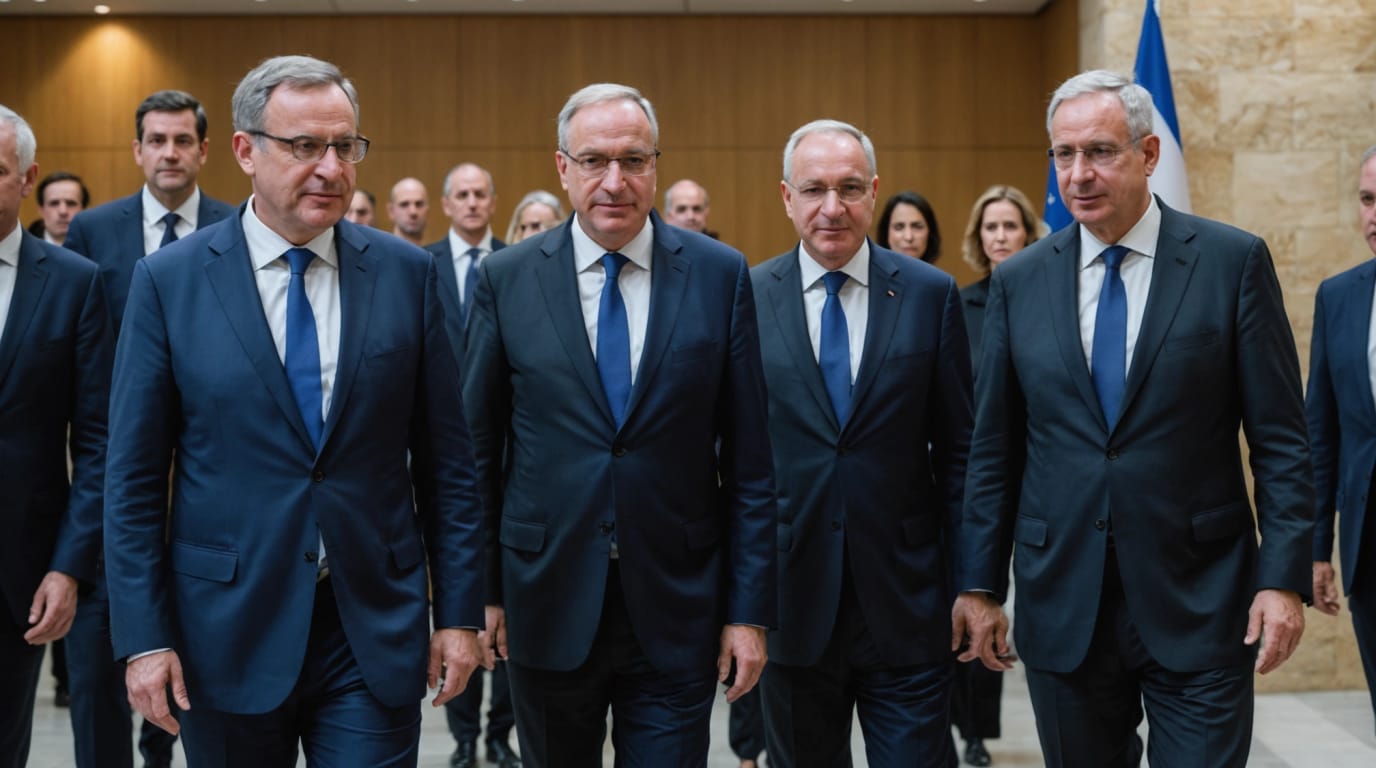
JERUSALEM – European Union foreign policy chief Kaja Kallas voiced concerns Monday over escalating tensions in the region during a visit to Israel, specifically addressing Israeli strikes in Syria and Lebanon. Kallas's visit comes amid renewed conflict in Gaza and ongoing concerns about the humanitarian situation in the Palestinian territories.
Concerns Over Regional Stability
Kallas warned that continued Israeli military actions in neighboring Syria and Lebanon risk further destabilizing the already volatile region. Speaking at a joint news conference with Israeli Foreign Minister Gideon Saar, Kallas emphasized the need for proportionate responses and adherence to international law. "Military actions must be proportionate, and Israeli strikes into Syria and Lebanon risk further escalation," she stated.
The warning follows a recent escalation of violence, including Israeli strikes in Lebanon that resulted in multiple fatalities. Israel claimed the strikes were a response to rocket fire from Lebanon, a claim Hezbollah denies. Kallas urged all parties to exercise restraint and avoid actions that could lead to a wider conflict.
Since Islamist-led rebels overthrew Bashar al-Assad in December, Israel has launched hundreds of strikes on military sites in Syria, claiming its goal is to prevent weapons from falling into the hands of what it considers jihadists. Kallas questioned the necessity of these strikes, stating, "We feel that these things are unnecessary because Syria is right now not attacking Israel and that feeds more radicalization that is also against Israel, which we don't want to see."
Gaza Ceasefire and Humanitarian Crisis
Kallas's visit also focused on the stalled ceasefire agreement in Gaza and the dire humanitarian situation facing Palestinians. She was scheduled to meet with senior Israeli and Palestinian officials to urge an immediate return to the full implementation of the ceasefire-hostage release agreement. The initial phase of the truce, which expired on March 1, had allowed for the entry of vital humanitarian aid and the exchange of Israeli hostages for Palestinians held in Israeli jails.
The EU diplomat was expected to discuss the importance of unimpeded access and sustained distribution of humanitarian assistance throughout Gaza. The United Nations has described the situation in Gaza as a "nightmare" since the resumption of Israeli aerial bombardment and ground operations. Aid workers have warned of a desperate situation exacerbated by earlier decisions to cut off aid and electricity to Gaza.
Meetings and Diplomatic Efforts
During her visit, Kallas was scheduled to meet with Israeli President Isaac Herzog, Foreign Minister Gideon Saar, and opposition leader Yair Lapid. However, she will not meet with Prime Minister Benjamin Netanyahu, who faces an arrest warrant from the International Criminal Court for alleged war crimes and crimes against humanity.
In the occupied West Bank, Kallas planned to hold talks with Palestinian Authority President Mahmoud Abbas and Prime Minister Mohammad Mustaf. These meetings aimed to address the stalled negotiations between Israelis and Palestinians regarding the ceasefire and the overall peace process.
Displacement and Humanitarian Concerns in the West Bank
The situation in the West Bank is also a major concern, with reports of significant displacement and destruction of camps. Médecins Sans Frontières (MSF) reported that the scale of forced displacement and destruction of camps "has not been seen in decades" in the West Bank. The organization stated that people are unable to return to their homes due to blocked access by Israeli forces, who have allegedly destroyed homes and infrastructure.
MSF has called on Israel to halt these actions and for a scaled-up humanitarian response to address the needs of the displaced Palestinians, who are reportedly without proper shelter, essential services, and access to healthcare. The organization also highlighted the alarming mental health situation among the affected population.
The Israeli military (IDF) has stated that it is operating "against all terrorist organizations, including Hamas, in a complex security reality" and that it follows international law and takes precautions to mitigate harm to uninvolved individuals.
Implications and Future Outlook
Kallas's visit underscores the EU's concern over the escalating tensions and humanitarian crises in the region. Her warnings about the risks of further escalation and her calls for a renewed ceasefire reflect the international community's desire for a peaceful resolution to the conflicts.
The EU's role in mediating and providing humanitarian assistance remains crucial, but the path forward is uncertain. The stalled negotiations, the ongoing violence, and the complex political landscape pose significant challenges to achieving lasting peace and stability in the region. The EU's continued engagement and diplomatic efforts will be essential in addressing these challenges and promoting a more secure and prosperous future for all.