EU Funding Halt Threatens Rwandan Troop Presence in Mozambique Amidst Rising Costs and Geopolitical Tensions
Kigali, Rwanda – The future of Rwanda's crucial military intervention in Mozambique's restive Cabo Delgado province hangs in the balance as European Union financial support is set to expire in May 2026, with no immediate plans for extension. This development has brought into sharp focus the significant financial burden Rwanda has shouldered in combating an Islamic State-linked insurgency, prompting calls for more equitable international funding for the vital security operation.
Rwanda's deployment of thousands of troops has been credited with stabilizing parts of the gas-rich region, allowing displaced populations to return and major energy projects to contemplate resumption. However, the impending cessation of EU contributions, coupled with broader geopolitical complexities, signals a critical juncture for both Mozambique's security and the model of international support for African-led peace efforts.
Rwanda's Decisive Intervention in Cabo Delgado
Rwanda dispatched its forces to Cabo Delgado in July 2021 at the urgent request of the Mozambican government. The province had been grappling with a brutal insurgency waged by the Al Sunna Wa Jama (ASWJ) group, which had resulted in thousands of civilian deaths and widespread displacement. The militants had captured strategic towns, including Mocímboa da Praia, and launched attacks near significant natural gas projects in Palma.
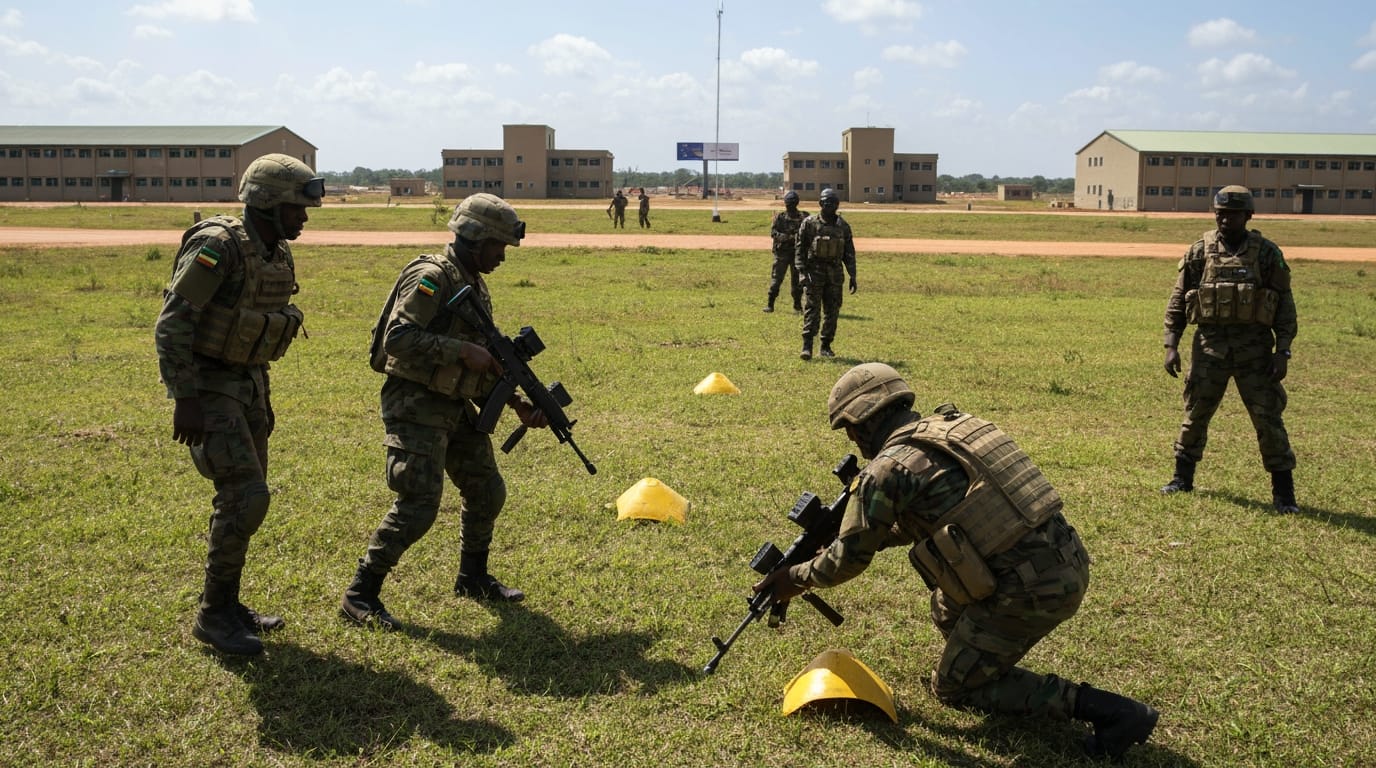
The initial deployment of approximately 1,000 Rwandan troops, later expanded to over 6,300, proved highly effective. Rwandan forces, working alongside Mozambican troops, swiftly retook key insurgent strongholds and established a measure of stability in areas critical for energy infrastructure. This decisive action not only secured the region but also instilled confidence in international energy companies, such as TotalEnergies, which had halted operations on a multi-billion-dollar liquefied natural gas (LNG) project. The success of the Rwandan mission contrasted with slower-moving multilateral responses, leading to the return of over 250,000 displaced people to their homes.
The European Union's Role and Impending Withdrawal
The European Union has been a key financial contributor to the Rwandan mission in Mozambique through its European Peace Facility (EPF). The EU disbursed an initial €20 million around December 2022 to support the Rwanda Defence Force (RDF) operations. This was followed by an additional €20 million approved in November 2024, bringing the total EU contribution to €40 million. These funds were specifically allocated to cover the costs of personal equipment and logistics for the Rwandan troops.
However, the EU's financial support is slated to conclude in May 2026. Sources within the EU have indicated that there are currently no plans to extend this specific funding mechanism beyond the agreed-upon period. An EU spokesperson confirmed that the current assistance measures, adopted in 2022 and 2024, will expire, and no further measures under this facility are planned. This decision underscores a potential shift in the funding landscape for security operations in Cabo Delgado.
Rwanda's Financial Strain and Calls for Equitable Support
Rwandan officials have openly articulated the substantial financial commitment their nation has made to the Mozambique mission. Government spokesperson Yolande Makolo stated that Rwanda has expended "at least ten times more" on the deployment than the €40 million received from the EU. She emphasized that while the initial intervention was driven by solidarity with a fellow African nation, the long-term sustainability of the mission necessitates reliable and predictable international support.
While earlier reports indicated Rwanda's Foreign Minister Olivier Nduhungirehe had suggested a potential troop withdrawal due to "non-payment," Makolo later clarified that Rwanda is not actively seeking additional funds from the European Peace Facility. Instead, she highlighted that the financing from the EPF is "a matter for Mozambique" and advocated for a "more equitable funding" model, particularly given the significant resources Rwanda has already committed. This stance suggests Rwanda is seeking broader international burden-sharing, potentially involving Mozambique and its other international partners, to sustain the costly operation. The increase in Rwandan troop presence in 2024, partly to fill the void left by the withdrawal of the Southern African Development Community (SADC) mission, further intensified the financial strain on Kigali.
Geopolitical Crosscurrents and Regional Implications
The situation in Cabo Delgado is intertwined with a complex web of geopolitical considerations. The US Treasury recently sanctioned the Rwanda Defence Force, accusing it of supporting the M23 rebel group in the eastern Democratic Republic of Congo (DRC). This development adds a layer of scrutiny to Rwanda's military engagements abroad and has sparked controversy, even within the EU. Belgium, for instance, abstained from a vote on EU funding for Rwanda due to concerns about the RDF's alleged activities in the DRC.
Despite these concerns, the strategic importance of Mozambique's vast gas reserves remains a significant factor. The gas-rich province is home to some of the largest US investments in Africa, and the potential for a stable LNG supply from Mozambique has increased, especially in light of disruptions in other major exporting regions. Analysts suggest that despite the sanctions, there might be reluctance from international actors, including the US, to see a significant disruption to Rwanda's stabilizing role in Mozambique. The prospect of a security vacuum in Cabo Delgado, following a potential withdrawal of Rwandan forces, could have profound consequences for regional stability and international energy markets.
An Uncertain Path Forward
As the May 2026 deadline for EU funding approaches, the future of the Rwandan mission in Mozambique faces considerable uncertainty. Rwanda's demonstrated effectiveness in combating the insurgency has come at a substantial cost, and its call for more balanced international support underscores the need for a sustainable funding mechanism. The interplay of regional security imperatives, international financial commitments, and complex geopolitical dynamics surrounding the RDF's other engagements presents a formidable challenge. The international community, particularly the European Union and Mozambique's other partners, must navigate these intricate factors to ensure the hard-won gains in Cabo Delgado are not jeopardized, and the region can continue its fragile journey toward lasting peace and recovery.