EU Poised to Designate Iran's Revolutionary Guards as Terrorist Entity, Signaling Major Policy Shift
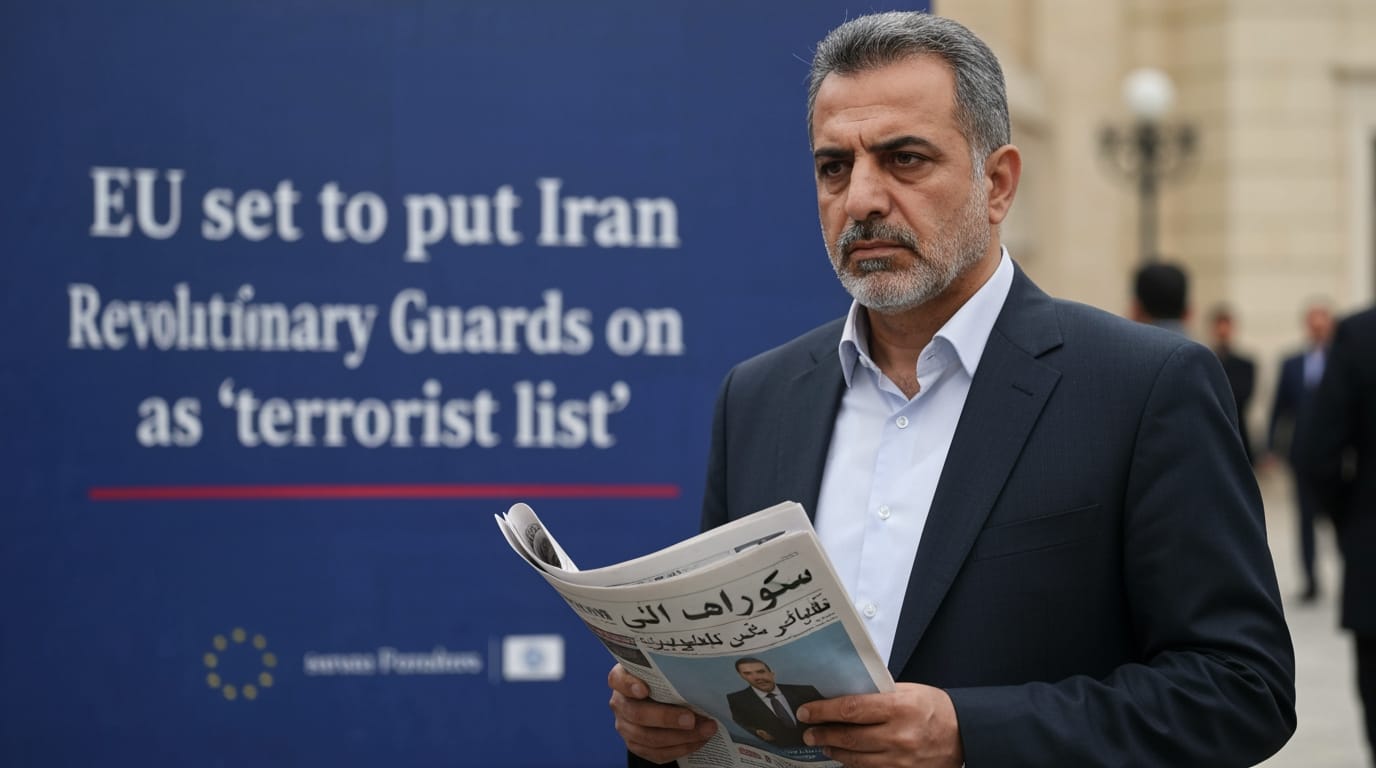
BRUSSELS — The European Union stands on the brink of a landmark decision, poised to officially designate Iran's Islamic Revolutionary Guard Corps (IRGC) as a terrorist organization. This move, expected to receive political approval from EU foreign ministers on Thursday, January 29, 2026, marks a significant escalation in the bloc's stance towards Tehran and aligns its policy more closely with that of the United States, Canada, and Australia. The designation would place the IRGC in the same category as groups such as Al-Qaeda and the Islamic State, triggering substantial legal and economic consequences.
A Unified Stance Emerges in Brussels
For years, the prospect of blacklisting the IRGC remained a contentious issue within the EU, with several member states expressing reservations over potential diplomatic fallout. However, a notable shift in consensus has paved the way for the impending decision. France, a key player that previously hesitated due to concerns about severing ties with Tehran and complicating negotiations, has now thrown its full support behind the designation. French Foreign Minister Jean-Noel Barrot announced this policy reversal, citing the "unbearable repression of the peaceful uprising of the Iranian people" as a primary motivator, emphasizing that such actions "cannot go unanswered." Spain and Italy have also signaled their readiness to back the measure, effectively dismantling the opposition that once prevented the unanimous agreement required for such a listing. Countries like Germany and the Netherlands have consistently advocated for the designation for an extended period.
The European Parliament has been a vocal proponent of this measure, having repeatedly called for the IRGC's inclusion on the terrorist list since early 2023. Most recently, on January 22, 2026, the Parliament adopted a comprehensive resolution condemning the "brutal repression and mass murders" carried out by Iranian authorities against nationwide protests and urged more stringent actions against Tehran, including the full terrorist designation of the IRGC.
The Weight of Accusations: Why the Designation?
The impetus for this decisive action stems from a confluence of factors, primarily centered on the IRGC's alleged involvement in severe human rights abuses, regional destabilization, and suspected terrorist activities. European officials point to the IRGC's brutal crackdown on widespread protests across Iran, which began in late 2025 and escalated into one of the most significant challenges to the Iranian regime in decades. This repression has reportedly resulted in thousands of deaths and arrests, with documented instances of state violence against women and children, and the use of the death penalty as a tool of suppression.
Beyond domestic repression, the IRGC is accused of a long history of destabilizing actions across the Middle East, including providing support to various proxy groups. Furthermore, the organization has been implicated in the planning and execution of numerous operations, assassinations, and terrorist attacks on European soil over the past three decades. These alleged incidents range from the 1992 Mykonos Plot in Berlin to an attempted arson attack on a synagogue in Bochum, Germany, in 2022, and the murder of Iranian dissidents in the Netherlands.
A crucial development that addressed previous legal hurdles for the EU was a 2023 ruling by the Higher Regional Court of Düsseldorf. This judgment established that a state Iranian body had commissioned the attempted arson attack on the Bochum synagogue. This judicial finding has been deemed to provide the necessary legal basis for the EU designation, a requirement previously emphasized by EU foreign policy chief Josep Borrell. An analysis by the legal service of the Council of the EU confirmed that this ruling could serve as a sufficient foundation for the listing.
Implications of a Terrorist Label
The designation of the IRGC as a terrorist organization would carry significant practical and symbolic weight. Practically, it would impose severe restrictions on the group and its affiliates, including asset freezes on IRGC-linked entities and individuals within EU jurisdiction, comprehensive travel bans prohibiting IRGC members from entering European territory, and a strict prohibition on providing funds or economic resources to any listed entities. This would aim to disrupt the IRGC's operational capabilities and its financial networks, further isolating it from the international financial system.
Symbolically, the move would send an unequivocal message of condemnation to Tehran, indicating the EU's firm resolve to hold the Iranian regime accountable for its actions. It represents a strategic shift from previous approaches, which sometimes prioritized diplomatic engagement over punitive measures. The designation would also harmonize the EU's policy with that of key allies like the United States, which designated the IRGC a foreign terrorist organization in 2019.
However, the designation is not without its complexities and potential drawbacks. Critics and some cautious member states have warned that such a move could severely jeopardize diplomatic channels with Tehran, potentially impacting ongoing efforts to revive the nuclear agreement (JCPOA) and complicating negotiations for the release of EU citizens arbitrarily detained in Iran. EU foreign policy chief Kaja Kallas, however, expressed an estimation that diplomatic channels would likely remain open even after the IRGC's listing. Another inherent challenge lies in the nature of the IRGC itself, which is an official component of Iran's military and economic infrastructure. Classifying all its members, including those conscripted, as terrorists could create diplomatic and legal dilemmas.
Iran's Veiled Threats and Regional Ripples
Anticipation of the EU's decision has already drawn sharp condemnation and warnings from Tehran. Iranian officials have consistently maintained that the IRGC is a legitimate, sovereign organization vital to Iran's national security, dismissing the potential listing as a "hostile act" that would illicit a "swift and comprehensive" response. Iranian Foreign Minister Hossein Amir-Abdollahian previously warned that such a step would cause the EU to "shoot itself in the foot." The Iranian government has also characterized the IRGC as the "world's largest counterterrorism institution," implying that a designation would violate the United Nations Charter.
These warnings suggest that Iran could retaliate with reciprocal designations against European armed forces or interests, and escalate tensions in the already volatile Middle East region. The IRGC plays a multifaceted role in Iran, extending beyond military functions to include extensive control over various sectors of the Iranian economy and significant influence in regional proxy conflicts. Any action against it by a major international bloc is therefore perceived by Tehran as a direct challenge to its sovereignty and security architecture.
A New Chapter in EU-Iran Relations
The impending decision to designate Iran's Revolutionary Guard Corps as a terrorist organization signals a fundamental recalibration of the European Union's foreign policy towards Iran. Driven by increasing concerns over human rights abuses, regional destabilization, and alleged terrorist activities, the EU appears to be embracing a more assertive stance. This move, long debated and now solidified by shifts in key member state positions and legal precedents, underscores a growing international impatience with Tehran's conduct.
While the designation is poised to deliver a powerful message of condemnation and impose tangible restrictions, it also ushers in a new era of unpredictable challenges for EU-Iran relations. The balance between demonstrating resolve and preserving avenues for future diplomatic engagement will be critical as the EU navigates the inevitable repercussions of this historic decision. The international community will closely watch the immediate aftermath, as both sides weigh their next steps in a relationship set to undergo profound transformation.


