EU Rallies in Emergency Summit as Greenland Standoff Jolts Transatlantic Alliance
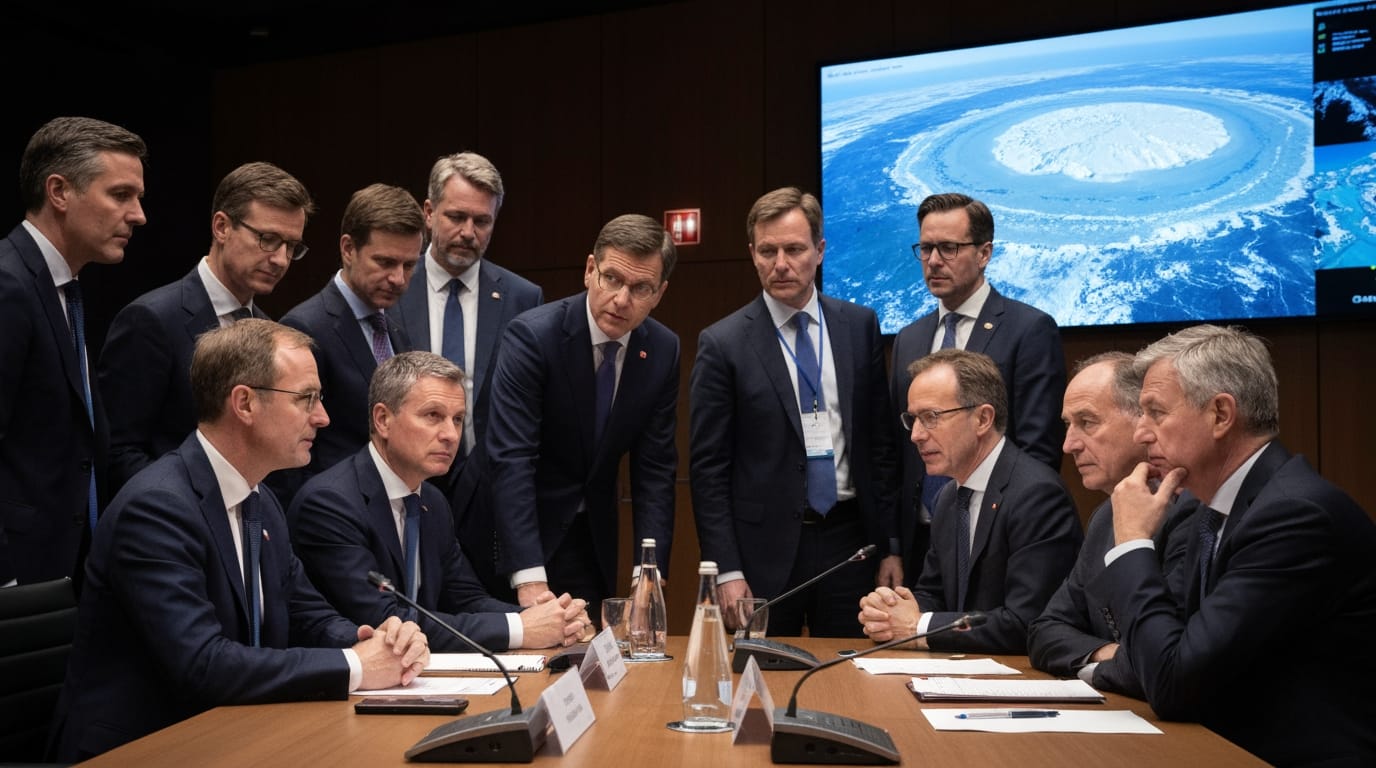
Brussels, Belgium – European Union leaders convened an emergency summit today in Brussels, grappling with an unprecedented geopolitical crisis sparked by intensified U.S. pressure on Greenland and a subsequent threat of tariffs against several European nations. The extraordinary meeting underscores the gravity of the situation, as the continent confronts a challenge to sovereignty and international norms within its extended neighborhood. The uproar began with U.S. President Donald Trump's renewed assertions of acquiring Greenland, a self-governing territory of Denmark, which he deemed vital for American security.
The unfolding "Greenland upheaval" has seen Washington not only reiterate its desire to purchase the vast Arctic island but also resort to economic coercion. On January 17, President Trump announced a 10% tariff, set to begin February 1, 2026, on imports from Denmark, the United Kingdom, and six other European countries: Finland, France, Germany, the Netherlands, Norway, and Sweden. These tariffs, he stated, would escalate to 25% by June 1, 2026, and remain in effect "until such time as a Deal is reached for the Complete and Total purchase of Greenland." This declaration sent shockwaves through European capitals, igniting a fierce defense of international law and sovereign integrity.
Escalation of a Geopolitical Gambit
President Trump's renewed campaign for Greenland has its roots in his long-standing interest in the territory, which he views as a critical asset for U.S. security and strategic positioning in the Arctic. Initial suggestions from the U.S. administration had previously been met with unequivocal rejection from both Nuuk and Copenhagen. However, the latest escalation, featuring explicit tariff threats against key European allies, transformed what was once seen as an eccentric proposal into a full-blown diplomatic and economic confrontation. President Trump had initially refused to rule out using military force to acquire the territory, a stance that drew particular alarm across Europe and among NATO allies, given Denmark's membership in the alliance.
The President has publicly argued that Greenland's acquisition is necessary to protect it from perceived Russian and Chinese threats, though this assessment has been questioned by some analysts and Nordic diplomats. The unprecedented nature of a NATO ally imposing tariffs on fellow members over a territorial claim has deeply unsettled the transatlantic relationship.
Europe's United Front Against Coercion
In response to what European Council President Antonio Costa described as "developments linked to Washington's plans regarding Greenland," the EU swiftly moved to demonstrate a united front. European Commission chief Ursula von der Leyen engaged in urgent talks with key European leaders and NATO Secretary-General Mark Rutte. A joint statement issued on January 6, 2026, by five larger EU states, along with Denmark and the UK, underscored the principles of "sovereignty, territorial integrity and the inviolability of borders," affirming that the future of Greenland rests solely with its people and Denmark.
At the emergency summit, leaders discussed potential retaliatory measures, with EU Economy Commissioner Valdis Dombrovskis stating that "nothing is off the table," including a pending tariff package and the Anti-Coercion Instrument. This instrument, which came into force in December 2023, was designed precisely for situations where economic pressure is exerted to force political change, highlighting Europe's readiness to defend its interests and principles against what it perceives as economic blackmail. Despite general consensus, some internal divisions emerged, notably from Hungary's Foreign Minister Péter Szijjártó, who characterized the issue as a bilateral matter between the U.S. and Denmark, rather than a collective EU concern.
Greenland's Strategic Value and Firm Rejection
Greenland, the world's largest island, holds immense strategic value, particularly due to its location in the rapidly changing Arctic and its vast, largely untapped deposits of critical minerals. The island is rich in rare earth elements, graphite, copper, lithium, and other materials essential for global high-tech industries, renewable energy technologies, and defense applications. The European Union has already established a strategic partnership with Greenland to develop sustainable raw material value chains, recognizing its potential to bolster European supply chain resilience.
Despite this growing international interest, leaders in both Greenland and Denmark have consistently and emphatically rejected any notion of a sale. Greenland's Prime Minister and the Danish Prime Minister issued a joint statement on January 13, 2026, decrying the "unacceptable pressure" campaign and affirming that Greenland is "not under any circumstances for sale." Danish Prime Minister Mette Frederiksen has previously called the U.S. proposition "an absurd discussion" and stressed that "you can't buy another people." In a clear demonstration of resolve, Denmark has also bolstered its military presence in Greenland, deploying hundreds of elite combat soldiers trained in Arctic warfare.
A Tense De-escalation at Davos
Amid mounting global tension, President Trump, during an appearance at the World Economic Forum in Davos on January 21, announced a partial de-escalation. Following talks with NATO Secretary-General Mark Rutte, President Trump stated he would delay the imposition of tariffs scheduled for February 1 and ruled out the use of military force. He spoke of a "framework of a future deal" that would involve military cooperation and mineral development, asserting that the U.S. would achieve "total access" to the Arctic territory and greater investment opportunities in its mineral resources.
However, this supposed "deal" was swiftly disputed by Greenlandic politicians, who characterized President Trump's statements as "completely crazy" and denied any such agreement. European officials, while acknowledging the immediate easing of tariff threats, remained cautious. They indicated that upcoming negotiations would likely focus on expanding the U.S. military presence and access to mineral investments, framing these discussions as a potential off-ramp to address U.S. concerns without compromising Greenland's sovereignty. The episode at Davos, while defusing immediate tensions, highlighted the fragility of transatlantic relations and the ongoing complexities surrounding Greenland's geopolitical future.
Sovereignty, Autonomy, and the Future of Transatlantic Ties
The Greenland crisis has profoundly impacted the transatlantic alliance, forcing Europe to confront the implications of assertive unilateralism from its long-standing partner. It has accelerated the EU's push for "strategic autonomy," underscoring the need for the bloc to strengthen its own economic and security capabilities. The deployment of the Anti-Coercion Instrument demonstrates a newfound resolve to protect European interests.
For Greenland, this period of heightened international attention has further underscored its evolving role on the global stage. As it prepares to take on a more prominent leadership role in the Arctic Council on behalf of the Kingdom of Denmark from 2025-2027, Greenland is increasingly asserting its autonomy and advocating for its indigenous rights and sustainable development. While the immediate threat of tariffs has receded, the underlying tensions persist. The crisis serves as a stark reminder of the delicate balance between geopolitical ambitions, economic leverage, and the fundamental principles of national sovereignty in an increasingly contested Arctic.


