EU to Host Syria Conference Amidst Fragile Transition
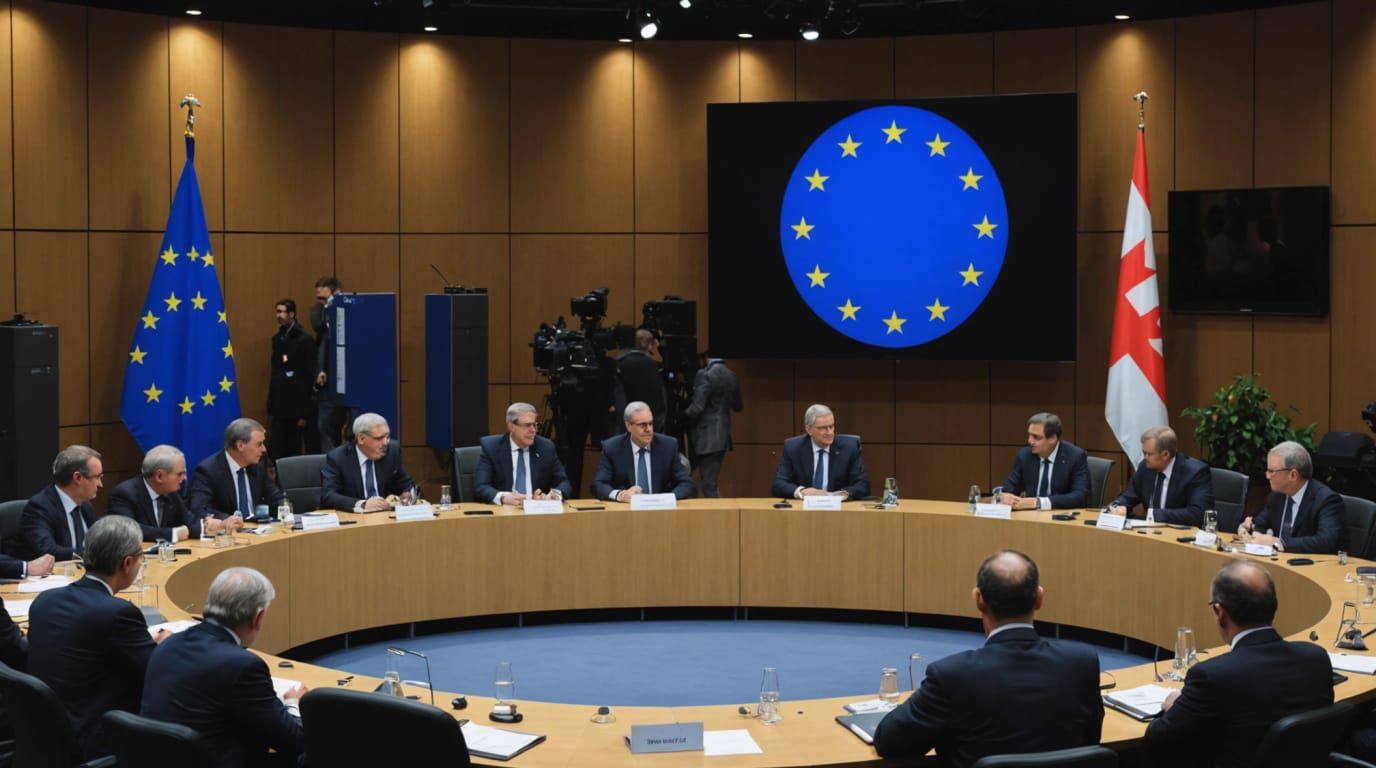
Brussels, Belgium - The European Union is set to host its 9th international conference in support of Syria on March 17, 2025, in Brussels. This year's conference arrives at a pivotal moment, following the ouster of Bashar al-Assad in December 2024 and the rise of a caretaker government, offering the Syrian people an opportunity to rebuild their country. However, significant challenges remain, including a fragile security situation and a dire humanitarian crisis.
A Historic Opportunity
The conference, titled "Standing with Syria: Meeting the Needs for a Successful Transition," aims to garner international support for a Syrian-owned, inclusive transition, focusing on assistance and socio-economic recovery. For the first time, Syrian interim authorities have been invited to participate, alongside representatives from the United Nations, Syria's neighboring states, and other regional partners. High Representative/Vice-President Kaja Kallas, Commissioner Dubravka Šuica, and Commissioner Hadja Lahbib will co-chair the ministerial event. The EU hopes to support a meeting of Syrian civil society from across Syria and the diaspora, in Damascus, at a later date.
The fall of the Assad regime after more than 50 years of rule marks a watershed moment for Syria, presenting both opportunities and challenges. The end of the brutal conflict, which has claimed an estimated 500,000 lives and displaced over 13 million people, could pave the way for a new, more inclusive Syria.
Addressing Immediate Needs
The conference will address the developments in Syria, the initial steps of the transition, and the international community's potential support. It will also focus on the immediate needs of the Syrian people, with an emphasis on socio-economic recovery while continuing to address the country's persistent humanitarian needs. The regional dimension of the conference will highlight the EU's sustained support to Syrians and host communities in neighboring countries during this transition period.
The humanitarian crisis in Syria remains immense, with 16.7 million people in need of humanitarian assistance and protection. The EU has pledged €235 million in humanitarian aid to Syrians in 2025, both within Syria and in neighboring countries. This funding will provide emergency assistance, including food, protection, shelter, clean water, cash, healthcare, and education. The EU is also working to boost humanitarian aid delivery through Humanitarian Air Bridge flights.
Navigating a Fragile Landscape
Despite the change in leadership, the situation in Syria remains fragile. Recent violence against civilians and attacks on security forces underscore the instability in the country. The security landscape is fragmented, with numerous armed groups maintaining varying degrees of autonomy. Clashes continue between Turkish forces and the Turkish-backed Syrian National Army (SNA) on one hand, and the U.S.-backed Syrian Democratic Forces (SDF) on the other.
In February 2025, UN Special Envoy for Syria Geir Pedersen warned that the situation in northeastern Syria is "extremely concerning," with "daily front-line hostilities impacting civilians." Since December 2024, more than 627 people have been killed in Syria, including 56 civilians.
The Path to Transition
Syria's caretaker authorities have announced steps toward a transitional process that will lead to elections in four to five years. Following the appointment of Ahmed al-Sharaa as Syria's interim president in January 2025, the caretaker leadership pledged to create an inclusive transitional government representing Syria's diversity. A Preparatory Committee for the National Dialogue Conference was established, leading to the National Dialogue Conference in February 2025, which laid the groundwork for a new constitution.
The conference concluded with a statement calling for a "temporary constitutional declaration," the preservation of Syrian unity and sovereignty, respect for human rights, advancing transitional justice and accountability, and economic development policies. Sharaa also announced the formation of a transitional justice body. However, the conference faced criticism for being hastily organized and underrepresented.
Regional and International Dynamics
The fall of the Assad regime has realigned power dynamics across the region. Turkey and the Gulf states are poised to gain influence, while Iran faces a strategic setback. Syria's regional neighbors have accepted the new political realities and are maneuvering to influence the new leadership and pursue their interests.
Turkey is uniquely positioned to help Syria's economic revival and infrastructure rebuilding. Stability in Syria would benefit Turkey economically and politically. However, Ankara could hinder Syria's recovery if it prioritizes its own economic interests or seeks military victory over Kurdish armed groups without pursuing political reconciliation.
Challenges and Concerns
Despite the pledges for an inclusive transition, concerns remain about the role of Hayat Tahrir al-Sham (HTS), the Security Council-listed terrorist group that led the offensive against Assad. Sharaa's leadership and the influence of HTS raise questions about the future of Syria and its relationship with the international community.
The EU has partially lifted sanctions on Syria's oil, gas, electricity, and transport sectors to support the transition, economic recovery, and reconstruction. However, this sanctions relief is contingent on an inclusive political transition. The United States has also eased some restrictions on humanitarian aid but has not lifted sanctions.
Looking Ahead
The EU's 9th international conference in support of Syria represents a critical opportunity to mobilize international efforts and assist Syrians in their path to recovery and rebuilding their country. The conference will address the immediate humanitarian needs, support the transition process, and foster regional and international cooperation.
The success of the transition in Syria hinges on several factors, including the ability of the caretaker authorities to consolidate control, integrate armed groups into the new government's security forces, ensure the inclusion of minorities in governance structures, and address the threat of terrorism. The international community must remain engaged and provide sustained support to help Syria overcome these challenges and build a stable, inclusive, and prosperous future.