European Union Trade Chief Opens Talks in Beijing to Reduce Deficit
Surging Chinese imports and industrial subsidy disputes have prompted Brussels to seek urgent market concessions to prevent a wider trade conflict.
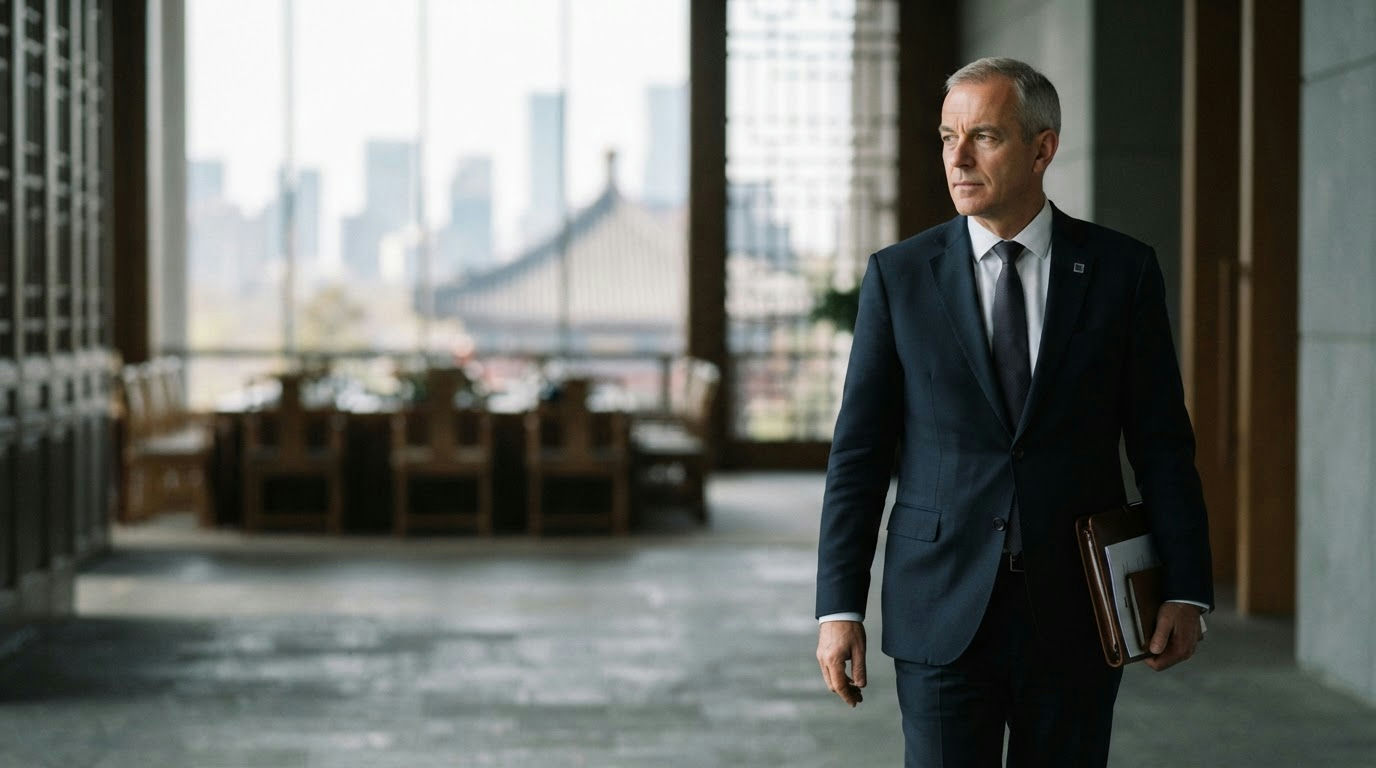
EU Trade Commissioner Maros Sefcovic arrived in Beijing on Thursday, Oct. 8, 2026, for two days of trade talks. Sefcovic met Chinese Commerce Minister Wang Wentao under the bilateral Trade and Investment Consultations mechanism to ease tensions and avoid a trade war.
The discussions centered on reducing the European Union's goods trade deficit with China. Negotiators also addressed Chinese industrial subsidies, European market access, and Chinese export limits on critical minerals and rare earths.
Sefcovic opened the mission by speaking with European business leaders in China about market barriers. He stated on social media that the trade deficit was unsustainable. He added that his goal was to rebalance bilateral trade and protect European economic security.
After the meeting with Wang, Sefcovic said three months of intensive consultations must deliver concrete results to narrow the gap. European Commission President Ursula von der Leyen warned that the trade imbalance had reached a tipping point. She asserted that the bloc would deploy every available defense tool.
Trade data reflects contrasting figures between the two partners. Reuters reported the EU deficit at 360.6 billion euros for 2025, up 15% from the previous year. AFP and Arab News cited Commission figures near 360 billion euros, while Chinese data estimated the gap at approximately 292 billion dollars.
Chinese customs records showed exports to the EU grew by 15.3% across the first eight months of the year. Meanwhile, Chinese imports from the EU rose 6.2%. EU trade enforcement officer Denis Redonnet stated that troubling import surges affect nearly a quarter of EU imports, specifically machinery, textiles, metals and chemicals.
Automobile shipments expanded rapidly. European imports of Chinese plug-in hybrid electric vehicles jumped 86% in the year to September as prices fell 20%. Battery electric vehicle imports rose 40%, despite EU duties of up to 35.3% imposed in 2024.
Chinese Foreign Ministry spokesperson Mao Ning stated that trade differences must be addressed through equal dialogue and mutual respect. China's Ministry of Commerce cautioned that European protectionism would not improve competitiveness and warned that market closures would backfire. Beijing also opened an anti-dumping investigation into European p-nitrotoluene exports before the talks.
European leaders show varying approaches toward Beijing. French President Emmanuel Macron and German Chancellor Friedrich Merz sent a joint letter requesting a fast retaliatory trade instrument. Spanish Prime Minister Pedro Sanchez favored a conciliatory approach to protect bilateral investments.
The European Parliament voted 454 to 86 on Oct. 7 to demand countermeasures if China denies fair market access. EU negotiators are seeking voluntary Chinese export curbs on plug-in hybrid vehicles and easier licensing for rare earths. Sefcovic will present the negotiation results to European leaders at an EU summit on Oct. 15–16 before further proposals in December.