Europe's LGBTQ+ Rights at a Crossroads: 2026 Rainbow Map Reveals Mixed Progress

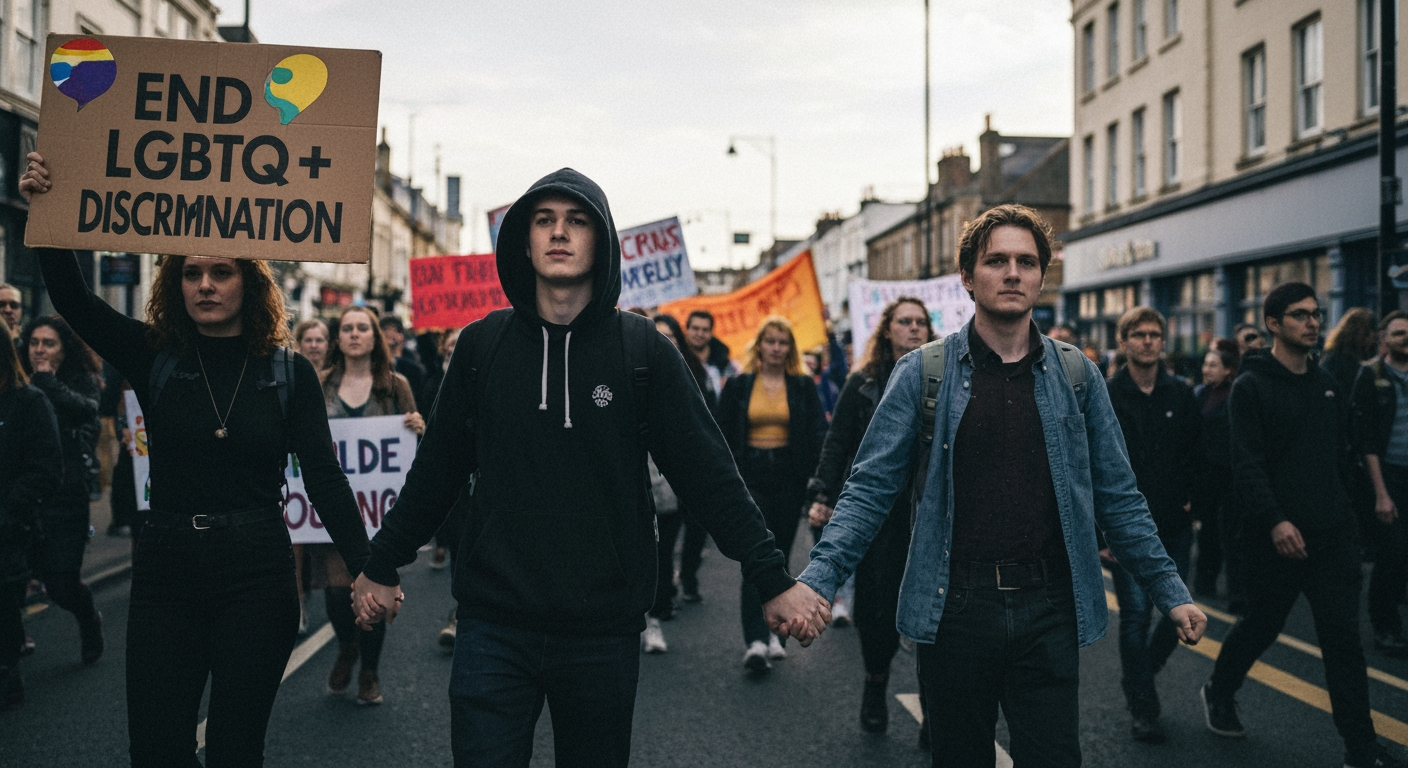
Brussels, Belgium – The landscape of LGBTQ+ rights across Europe presents a complex and often contradictory picture in 2026, according to the latest annual Rainbow Map published by ILGA-Europe. While some nations have demonstrated remarkable political courage by advancing equality through legislative reforms, others are experiencing concerning reversals, leading to a stark "two stories at once" narrative for the continent. This year's assessment highlights significant progress in countries like Spain, which has claimed the top spot for the first time, yet it also underscores a growing trend of legislative backsliding and increased hostility in numerous regions.
Shifting Tides: Spain Ascends, Malta Cedes Top Spot
For the first time in a decade, Spain has emerged as the leading country in Europe for LGBTQ+ rights, dethroning Malta, which had held the top position for ten years. Spain's ascent to number one is largely attributed to a series of comprehensive legislative and political advancements. These include the implementation of robust legal protections, the adoption of national equality strategies for LGBTQ+ and trans rights, and significant reforms within the healthcare system to fully depathologize trans individuals. Furthermore, Spain established an independent authority dedicated to equal treatment and fully recognizes trans parenthood. This concerted effort by the Spanish government showcases what ILGA-Europe's Deputy Director, Katrin Hugendubel, described as the power of "political courage" in advancing equality even amidst continental pressures on democratic institutions and minority rights.
Malta, now in second place with a score of 88%, saw its lengthy reign at the summit conclude. While still a strong performer, Malta's slight drop reflects a period of stagnation in continuous reform compared to Spain's rapid legislative improvements. Iceland maintains its strong position, placing third, benefiting from the renewal of its equality action plan. Belgium and Denmark round out the top five, illustrating a cluster of nations committed to upholding and enhancing LGBTQ+ protections. The Rainbow Map, an essential benchmarking tool since 2009, evaluates 49 European countries based on 76 criteria spanning seven thematic categories, including equality and non-discrimination, family rights, hate crime, legal gender recognition, intersex bodily integrity, civil society space, and asylum.
Pockets of Progress: Legislative Gains Across the Continent
Beyond Spain's leading example, several other European nations have recorded notable progress in their legal and policy frameworks for LGBTQ+ individuals. Albania, for instance, climbed to 24th place after introducing new legislation that specifically recognizes discrimination based on gender identity and expression, thereby strengthening its overall anti-discrimination framework. This move signifies a proactive step towards more inclusive legal protections.
In Eastern Europe, Czechia and Latvia made important strides by allowing legal gender changes without requiring sterilization, a significant reform that aligns with international human rights standards regarding bodily autonomy. Austria introduced alternative gender markers for non-binary people, acknowledging a broader spectrum of gender identities within its legal system. Even in countries often viewed with skepticism regarding LGBTQ+ rights, such as Croatia and Poland, administrative procedures for gender recognition saw improvements, indicating small but meaningful steps forward. Poland also notably repealed its final "LGBTI-free zone" resolution, a controversial designation that had previously drawn widespread condemnation. These examples, though varied in scope, collectively demonstrate a continued push for equality in certain areas of the continent.
Alarming Reversals: A Wave of Legislative Backsliding
Despite the positive developments, the 2026 Rainbow Map paints a grim picture for many other countries, where LGBTQ+ rights are either stagnating or actively being rolled back. Russia remains entrenched at the bottom of the ranking, alongside Azerbaijan, both scoring a mere 2%, with Turkey not far ahead at 5%. Russian authorities have intensified restrictions, designating LGBTQ+ organizations as "extremist" and using expanded "gay propaganda" laws to suppress any public expression, exposing individuals to criminal risk.
Within the European Union, Romania holds the unenviable position of the lowest-ranked member state with 19%, followed closely by Bulgaria (20%) and Poland (22%). Slovakia has taken a particularly regressive step by amending its constitution to define sex as fixed at birth, effectively blocking any future possibility of legal gender recognition. Concerns are also mounting over proposed rollbacks in Portugal and restrictions on freedom of assembly in Italy, while a looming referendum in Albania threatens to overturn recently introduced equality laws.
The United Kingdom, once a leader in LGBTQ+ rights, has continued its downward trend, now placed 22nd. This reflects a significant stagnation in policy development compared to its European counterparts, and an impact from Supreme Court rulings concerning gender. Campaigners note a widening gap between legal progress and the lived reality, with assaults against LGBTQ+ people in Spain, for example, having risen by 15% since 2024, despite the country's top ranking. Even Belgium, a traditionally strong performer, slipped from third to fourth place, as progress in some areas stalled while other nations introduced new protections. The lack of legal recognition for non-binary people and unpunished online hate speech remain significant challenges in Belgium.
Thematic Focus: Legal Gender Recognition, Family Rights, and Hate Crimes
The 2026 Rainbow Map highlights critical disparities in specific thematic areas. Legal gender recognition, particularly based on self-determination, remains a significant hurdle. Only 12 European countries currently allow trans individuals to change their legal gender without medical requirements or court orders. In stark contrast, countries like Bulgaria, Georgia, Hungary, Russia, Slovakia, and the United Kingdom maintain explicit bans or legal limitations that make such recognition practically impossible. Belarus has even introduced new rules requiring medical interventions for legal gender recognition, adding to existing abusive requirements.
Regarding family rights, marriage equality is now available in 22 European countries. However, 18 countries still offer no legal protection for same-sex couples, and in several states, including Slovakia, Hungary, Poland, Bulgaria, Romania, and Lithuania, marriage is constitutionally defined exclusively as between a man and a woman. Protection against conversion practices is also notably sparse, with only 10 countries having outright prohibitions. On the issue of intersex bodily integrity, only six countries—Germany, Greece, Iceland, Malta, Portugal, and Spain—prohibit unnecessary surgical or medical interventions on intersex minors.
The issue of hate crime and hate speech continues to be a major concern. While some countries, including Belgium, Denmark, Greece, Iceland, Malta, and parts of Spain and the UK, have legal prohibitions against hate crimes based on sexual orientation, gender identity, and sex characteristics, the enforcement and societal impact vary widely. A survey by the EU Fundamental Rights Agency (FRA) revealed a significant 18 percentage point increase in hate-motivated harassment targeting LGBTQ+ individuals since 2019, with 55% reporting such experiences. This growing hostility underscores the gap between legal protections and lived experience, a point ILGA-Europe frequently emphasizes.
A Call for Sustained Commitment Amidst Volatility
The 2026 Rainbow Map serves as a powerful reminder that progress in LGBTQ+ rights is neither linear nor guaranteed. While the exemplary legislative efforts in Spain and other nations offer a beacon of hope, the pervasive backsliding and continued legal and social challenges in many parts of Europe signal a precarious environment for LGBTQ+ individuals. The average score across Europe stands at a modest 43%, rising to 52% within the European Union, indicating that much work remains to be done.
ILGA-Europe's assessment highlights a continent grappling with fundamental questions about democratic values and minority protections. As Deputy Director Katrin Hugendubel asserted, every government in Europe must now decide "which story they want to be part of" – one of genuine courage and advancement, or one of regression and risk. The ongoing struggle for LGBTQ+ equality calls for sustained political will, robust legal frameworks, and vigilant advocacy to ensure that the human rights of all individuals are protected and respected across Europe.