Explosion Rocks Major Nigerian Oil Pipeline, Disrupting Production
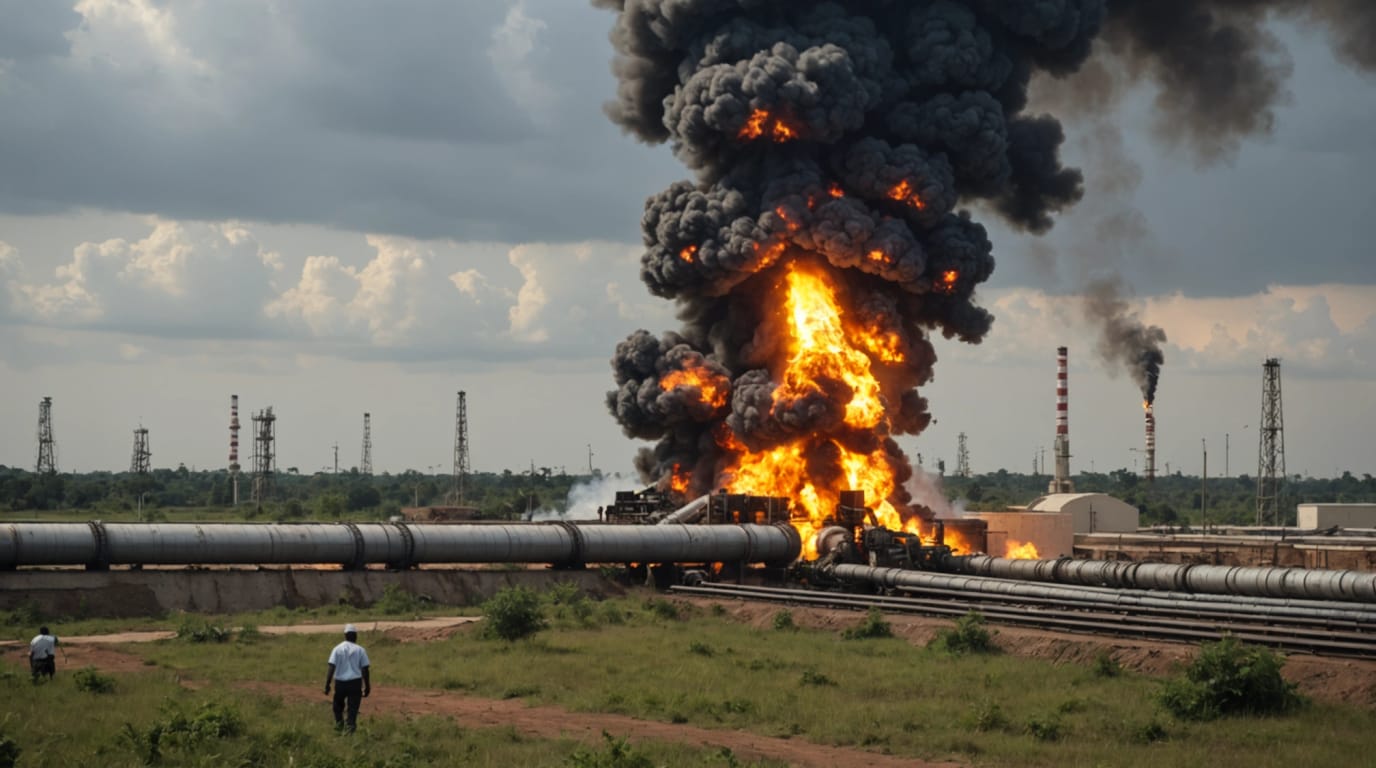
An explosion struck the Trans-Niger Pipeline (TNP), one of Nigeria's largest and most critical oil pipelines, late Monday, causing significant disruption and raising concerns about environmental damage and economic losses. The incident occurred in the Bodo community of Gokana Local Government Area, Rivers State, sending plumes of thick smoke into the sky, visible for miles.
Incident Details and Immediate Aftermath
The explosion occurred near the Bodo-Bonny Road, which is currently under construction. Local residents reported hearing a loud blast followed by intense heat and flames. Videos circulating Tuesday morning showed a raging fire spreading rapidly into the surrounding mangrove area, exacerbating environmental concerns. Emergency services were deployed to combat the blaze. As of Tuesday morning, the cause of the explosion remained unconfirmed. Grace Iringe-Koko, the Police spokesperson in Rivers State, stated that she would provide further details after investigation, but had yet to do so at the time of reporting.
Trans-Niger Pipeline: A Vital Artery
The Trans-Niger Pipeline is a crucial component of Nigeria's oil infrastructure. It serves as a federal transport line, carrying crude oil to the Bonny Export Terminal in Rivers State. The TNP has a capacity of around 450,000 barrels per day (bpd), though recent shipments have been closer to 180,000 bpd. Bonny crude output jumped 70% last year, averaging 171,253 bpd. Any disruption to the TNP has the potential to significantly impact Nigeria's oil production and export capabilities.
Potential Causes and Security Concerns
While the exact cause of the explosion is still under investigation, several possibilities are being considered. Sources suggest potential causes include sabotage, vandalism, or equipment failure. The incident comes amid recent threats by militant groups in the area to target oil installations. These threats are reportedly linked to the Federal Government's decision to withhold funding from Rivers State due to the ongoing political crisis in the state. The security of oil infrastructure in the Niger Delta has long been a concern, with frequent incidents of theft, vandalism, and attacks.
Impact on Oil Production and Economy
The explosion poses a threat to Nigeria's oil production, which has recently seen an upswing. The government has been working to crack down on theft and attacks on oil infrastructure, leading to a five-year high of 1.5 million bpd at the start of the year. The disruption caused by the TNP explosion could hinder these efforts and impact the nation's revenue. Nigeria relies heavily on oil exports for its economy, and any significant decrease in production can have far-reaching consequences.
Environmental Ramifications
Beyond the immediate economic impact, the environmental consequences of the explosion are a major concern. The fire spreading into the mangrove area poses a significant threat to the delicate ecosystem. Oil spills and pollution can contaminate the soil and water, harming plant and animal life. The long-term effects of such environmental damage can be devastating for local communities that depend on the land and water for their livelihoods.
Industry Divestment and Future Outlook
The explosion occurs at a sensitive time for Nigeria's oil industry, with major companies divesting assets in the Niger Delta. Shell recently completed the sale of its 30% stake in the Shell Petroleum Development Company (SPDC), which owns and operates the TNP, to local firm Renaissance for around $1.3 billion. The remaining shares are held by the government-owned NNPC (55%), Total Exploration and Production Nigeria Ltd (10%), and Agip Energy and Natural Resources (Nigeria) Limited (5%). This divestment reflects the challenges and risks associated with operating in the region, including security concerns and environmental liabilities. The incident underscores the need for increased security measures and community engagement to protect vital oil infrastructure and prevent future incidents. It also highlights the importance of addressing the underlying issues that contribute to instability in the Niger Delta, such as poverty, unemployment, and environmental degradation.