Explosives Found on Russian Gas Pipeline in Serbia, Raising Regional Tensions and Energy Security Fears
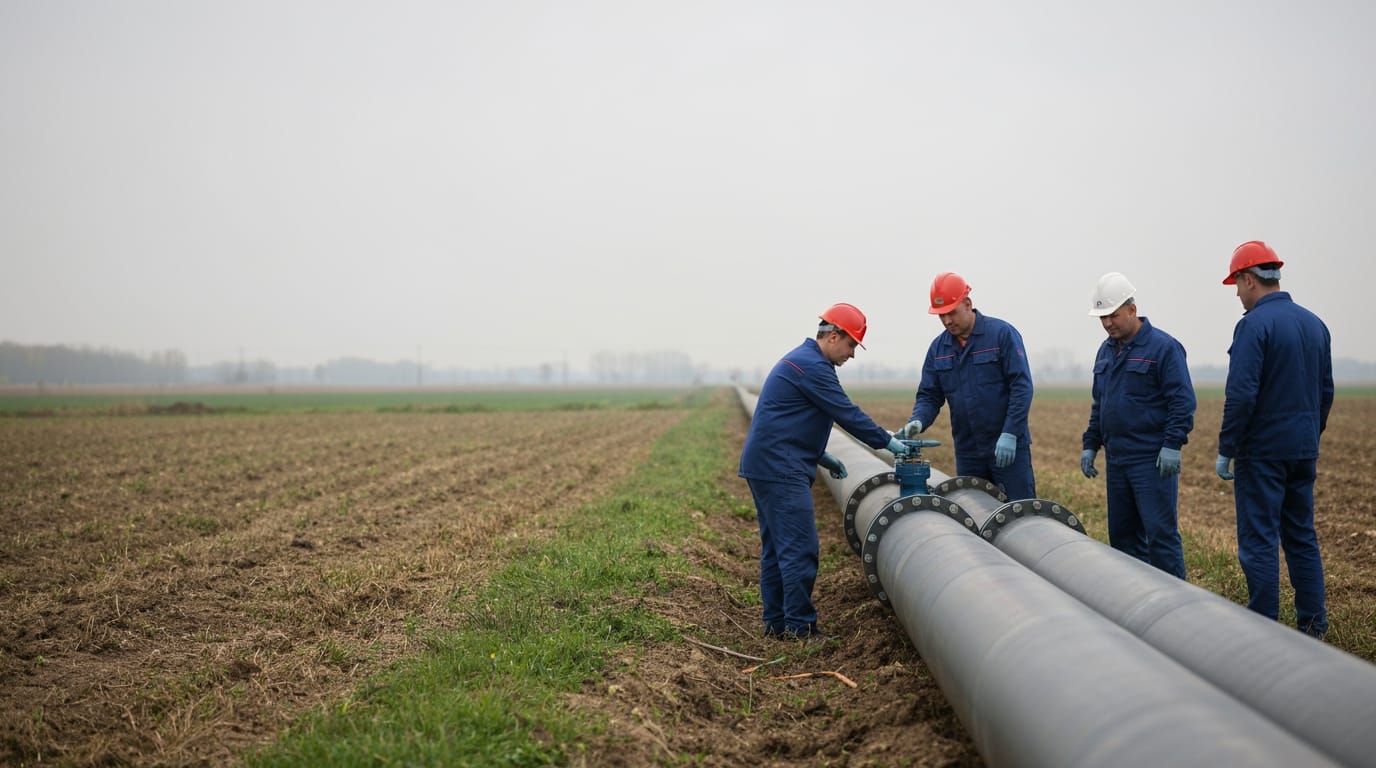
BELGRADE/BUDAPEST – Authorities in Serbia have discovered a powerful explosive device on a segment of the TurkStream natural gas pipeline near the Hungarian border, triggering immediate high-level concerns from both Belgrade and Budapest. The discovery, announced on April 5, 2026, by Serbian and Hungarian leaders, underscores the increasing fragility of critical energy infrastructure in a region already grappling with geopolitical complexities.
The alarming find, consisting of two backpacks containing "devastating power" explosives and detonators, was made by Serbian army and police units in Kanjiza, northern Serbia, just hundreds of meters from the vital gas conduit. The pipeline, an extension of the TurkStream system often referred to as the Balkan Stream in its terrestrial segment, is crucial for transporting Russian natural gas through Turkey and the Balkans to Hungary and other Central European nations. The incident has ignited an urgent investigation and prompted discussions about potential motives and broader implications for European energy security, particularly given the ongoing conflict in Ukraine and heightened tensions between Russia and the West.
The Alarming Discovery and Immediate Response
Serbian President Aleksandar Vucic first disclosed the discovery, stating that military and police investigators had located "two large packages of explosives with detonators" and that he had promptly informed Hungarian Prime Minister Viktor Orban. Vucic emphasized the serious threat posed by the explosives, noting they could have "endangered many lives" and caused substantial damage to the pipeline. He vowed a merciless response against anyone threatening Serbia's critical infrastructure. Following the notification, Prime Minister Orban confirmed that Serbian authorities had indeed found a powerful explosive device along with the necessary equipment for detonation at the critical gas infrastructure linking the two countries. Orban subsequently convened an extraordinary defense council meeting to address the grave security implications. The Serbian state news agency Tanjug reported that a massive search operation involving 140 members of the military and police was immediately launched in the Kanjiza municipality, blocking roads and using aerial coordination with helicopters to sweep the area for further illicit materials.
TurkStream: A Geopolitical Lifeline Under Threat
The TurkStream pipeline has become an increasingly significant conduit for Russian gas supplies to Europe, especially after the disruption of other routes through Ukraine. This pipeline funnels gas from Russia across the Black Sea into Turkey, then extends through the Balkans, providing a vital energy link to Serbia, Hungary, and other parts of Central Europe. Its strategic importance has grown exponentially, making any threat to its integrity a major concern for the energy stability of the region.
The recent discovery in Serbia is not an isolated incident. Russian energy giant Gazprom had previously reported a series of aerial attacks on its energy infrastructure linked to the TurkStream pipeline in southern Russia throughout March 2026. These attacks, described by Russia as acts of "energy terrorism," targeted facilities like the Russkaya compressor station, which supplies gas to the TurkStream pipeline. Ukraine has intensified its strikes on Russian energy assets in recent months, further escalating anxieties about the security of such critical infrastructure. In response to previous threats, Hungarian Foreign Minister Peter Szijjarto had urged preparedness for potential attacks on TurkStream, and Serbian troops have been deployed to guard a key compressor station in Serbia since early March. These preceding events highlight a pattern of escalating vulnerabilities for pipelines in the region, making the latest discovery in Serbia particularly ominous.
Hungarian Elections and Accusations of a "False Flag"
The timing of the explosive discovery has introduced a contentious political dimension, particularly in Hungary, where parliamentary elections are scheduled for April 12. Hungarian Prime Minister Viktor Orban's ruling Fidesz party is reportedly trailing the opposition Tisza party in recent polls, adding a layer of domestic political intrigue to the incident.
Peter Magyar, the leader of the opposition Tisza party and Orban's strongest challenger, quickly voiced skepticism regarding the circumstances of the discovery. Magyar accused Orban of orchestrating or permitting a "false-flag" operation, potentially with Serbian and Russian assistance, to instill fear and influence the upcoming elections. He claimed that warnings of such a provocation involving a gas pipeline in Serbia, timed around Easter and a week before the elections, had circulated for weeks. These accusations underscore the highly charged political atmosphere in Hungary and the deep divisions surrounding its relationship with Russia and its energy policies.
Broader Regional Security and Energy Dependence
Both Serbia and Hungary maintain historically close ties with Moscow and remain heavily reliant on Russian energy supplies, positioning them uniquely among some other European nations seeking to reduce their dependence. Serbia, for instance, imports approximately six million cubic meters of Russian gas daily at a reduced price. Its energy strategy involves a delicate balance between securing domestic supplies and managing strategic relationships with both Russia and Western powers. Hungary, similarly, has faced criticism from the European Union for its continued engagement with Moscow, although its latest national energy plan has, for the first time, officially labeled dependence on Russian energy as a "risk," aiming for a gradual reduction of imports by 2030.
The incident highlights the broader energy vulnerabilities within Europe, even as the European Union strives to diversify its energy sources and reduce reliance on Russian gas. The TurkStream pipeline's role as a critical, and now seemingly vulnerable, artery for Russian gas further complicates the region's energy security landscape. While investigations are ongoing, the discovery of explosives on such a vital piece of infrastructure raises serious questions about potential state or non-state actors' motives, ranging from destabilization efforts to direct sabotage. The geopolitical stakes are undeniably high, with any successful attack having the potential to severely impact energy supplies, economic stability, and regional security.
The discovery of explosives on the TurkStream pipeline in Serbia represents a significant security incident with multifaceted implications. It immediately heightens concerns about the physical security of vital energy infrastructure across Europe, particularly those connected to Russian supply networks. Beyond the immediate threat of disruption, the event casts a long shadow over regional stability, exacerbating geopolitical tensions and fueling domestic political controversies in Hungary. As Serbian authorities continue their investigation, the international community watches closely, aware that the security of such pipelines is paramount for energy stability in a continent striving for greater independence from external energy pressures. The incident serves as a stark reminder of the complex interplay between energy security, regional politics, and international relations in the current volatile global environment.