Fact Check: Did Friedrich Merz Promise to Close the Border Before the Election?
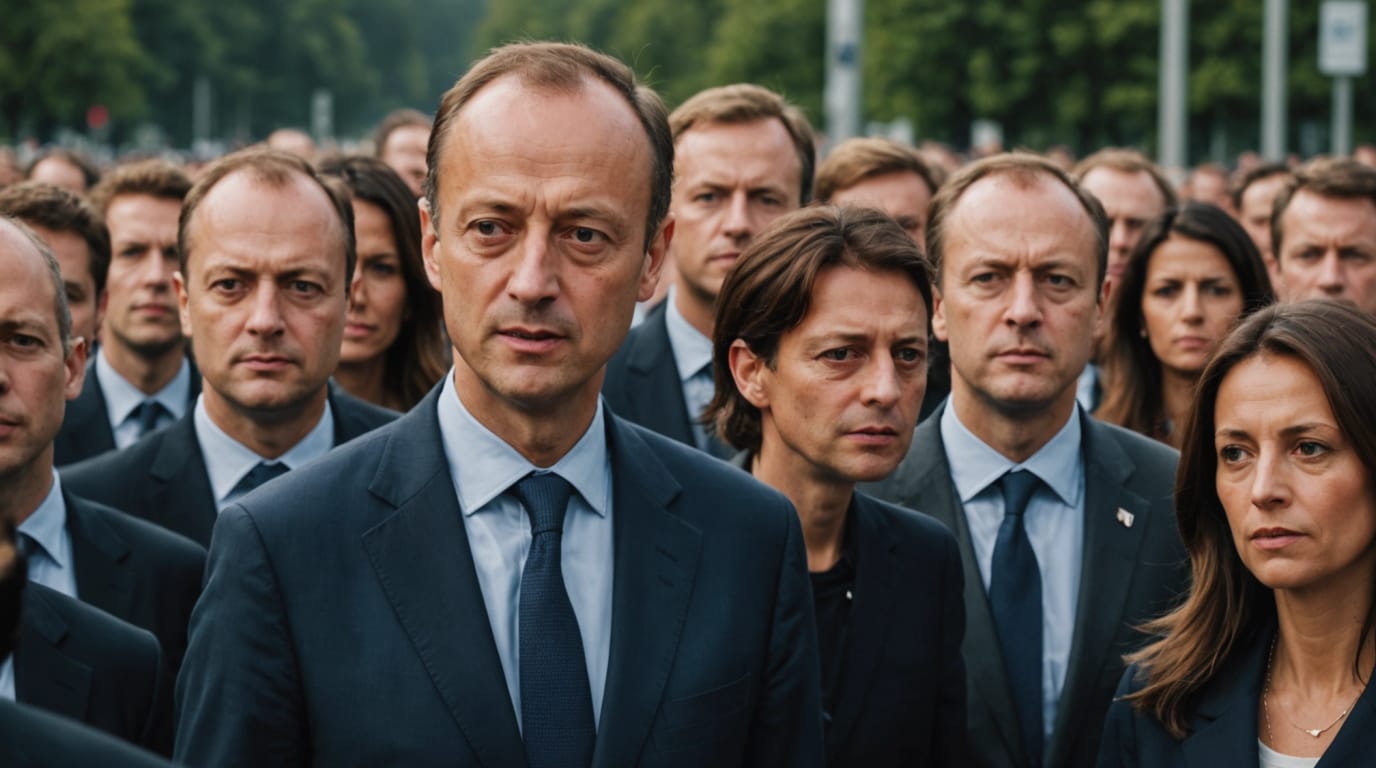
In the lead-up to Germany's recent federal election on February 23, 2025, immigration policy became a central and hotly debated issue. Friedrich Merz, leader of the Christian Democratic Union (CDU) and now likely the next Chancellor, pledged a tougher stance on migration, fueling discussions about border control and asylum procedures. Claims have circulated regarding the specifics of Merz's promises, particularly concerning a commitment to "close the border" immediately upon assuming office. A thorough examination of Merz's statements and the broader context of German immigration policy reveals a more nuanced picture.
Merz's Stance on Border Control
Merz indeed advocated for stricter border controls as a key component of his party's platform. He stated his intention to impose "permanent border controls with all our neighbors and refuse all attempts at illegal entry" on his first day as chancellor. This pledge came in response to rising concerns about irregular migration and crime, particularly following a knife attack in Aschaffenburg allegedly committed by an Afghan asylum-seeker.
However, the phrase "close the border" requires careful interpretation. While Merz promised to implement stricter controls and refuse illegal entry, this does not equate to a complete and total closure of Germany's borders to all individuals. His proposals focused on preventing undocumented migrants from entering the country and expediting the deportation of rejected asylum seekers and criminals.
The Reality of "Permanent Border Controls"
The feasibility and legality of Merz's proposed "permanent border controls" are subject to debate, particularly within the framework of the European Union's Schengen Agreement, which guarantees passport-free travel between most member states. Germany has already implemented temporary border controls with neighboring countries since September 2024, a measure recently extended until September 15, 2025. These controls allow for inspections at land crossings with countries like France, Luxembourg, the Netherlands, and Austria.
While the Schengen Agreement allows for temporary border controls in exceptional circumstances, such as security concerns or during the COVID-19 pandemic, the establishment of permanent controls could face legal challenges from the EU. Merz has suggested invoking Article 72 of the EU Treaty to declare a national emergency, which would allow for prolonged border restrictions. However, proving the existence of such an emergency under current conditions could be difficult.
Fact-Checking the Claim
Several fact-checking organizations have examined claims surrounding Merz's statements on border control. These organizations emphasize the distinction between stricter border management and a complete border closure. While Merz has consistently called for enhanced border security and the prevention of illegal immigration, there is no evidence to suggest that he explicitly promised to "close the border" entirely before the election.
It is important to note that Merz's proposals align with a broader trend towards more restrictive immigration policies across Europe. Facing pressure from the far-right Alternative für Deutschland (AfD), the CDU has adopted a more hard-line stance on immigration in an attempt to regain support from conservative voters.
Implications and Reactions
Merz's stance on immigration has drawn both support and criticism. Supporters argue that stricter border controls are necessary to address security concerns and manage migration flows effectively. Critics, on the other hand, accuse Merz of pandering to far-right sentiment and undermining Germany's humanitarian obligations.
His willingness to consider AfD support for immigration measures in parliament sparked widespread protests and accusations of normalizing far-right politics. Although Merz later distanced himself from the AfD, the incident highlighted the divisive nature of the immigration debate in Germany.
Conclusion
While Friedrich Merz pledged to implement stricter border controls and prevent illegal entry into Germany, claims that he promised to "close the border" before the election are an oversimplification of his actual statements. His proposals focus on enhanced border management within the framework of EU law, but the feasibility and legality of "permanent border controls" remain a subject of debate. The issue of immigration continues to be a central and contentious topic in German politics, with significant implications for the country's relationship with the European Union and its commitment to humanitarian values.