Far-Right Candidate Georgescu Barred From Romanian Presidential Election, Sparking Protests
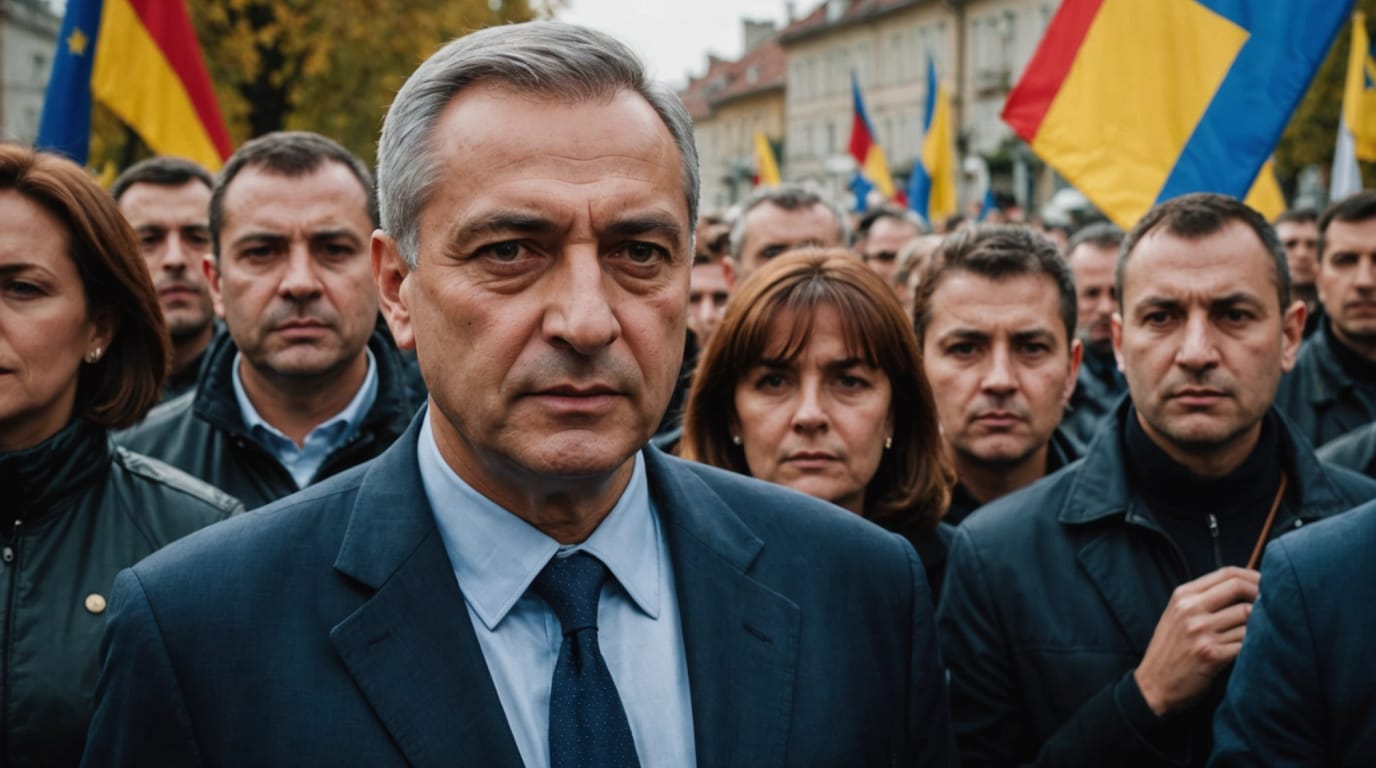
BUCHAREST, Romania – Romania's political landscape was thrown into further turmoil Sunday as the electoral bureau rejected the candidacy of far-right politician Călin Georgescu for the upcoming presidential election in May. The decision ignited immediate protests in the capital, Bucharest, with supporters clashing with police and raising concerns about the integrity of the electoral process.
Controversial Figure Deemed Ineligible
The electoral bureau announced its decision to reject Georgescu's candidacy without providing specific reasons, though they indicated a statement would be posted to their website shortly. Georgescu, an independent candidate, had unexpectedly won the first round of the presidential election last November with approximately 23% of the vote, despite pre-election polls suggesting limited support. The initial election was later annulled by Romania's Constitutional Court in December amid allegations of Russian interference and a "massive" social media campaign promoting Georgescu.
Georgescu, an agronomist by trade, has espoused pro-Russian views, including referring to Ukraine as a "fictional state." He has stated that, if elected, he would ban Ukrainian grain exports through Romania and halt military aid to Ukraine. His platform also includes strong anti-NATO sentiments and a focus on Romanian geopolitical non-alignment. These positions have drawn both fervent support and strong condemnation.
Accusations and Investigations
Following the annulment of the November election, Romanian prosecutors launched a criminal investigation into Georgescu in February, charging him with incitement to actions against the constitutional order, among other offenses. He was briefly detained and faced restrictions, including a ban on leaving the country. Despite these legal challenges, Georgescu submitted his candidacy for the re-run of the election, scheduled for May.
The Romanian Intelligence Service (SIE) reported that "aggressive Russian hybrid attacks, including cyberattacks, information leaks, and sabotage" contributed to Georgescu's unexpected success in the initial election. Accusations have also surfaced regarding undeclared funds exceeding €1,000,000 used in his campaign, and cyberattacks targeting election infrastructure allegedly originating from a state actor. Adding to the international implications, Romania expelled two Russian military attachés earlier this month for breaching diplomatic rules of conduct.
Public Reaction and Political Fallout
The electoral bureau's decision has been met with strong reactions from Georgescu's supporters, who gathered outside the election bureau in Bucharest, chanting "Freedom" and attempting to breach security barriers. Georgescu himself has condemned the decision, accusing Romania of being under tyranny. "Europe is now a dictatorship, Romania is under tyranny!" he wrote on social media.
The disqualification is likely to further inflame anti-government sentiment in Romania and potentially benefit other far-right factions. The decision can be challenged in court, leaving open the possibility of Georgescu's reinstatement as a candidate.
International Attention
The situation has attracted international attention, with tech billionaire Elon Musk criticizing the decision on social media, calling it "crazy!" The annulled November election and the subsequent barring of Georgescu from the re-run have raised concerns about foreign interference in democratic processes and the stability of Romania's political system.
The barring of Georgescu comes after the Constitutional Court dismissed complaints against his candidacy just a day prior. The court stated that the complaints did not meet the legal requirements.
Implications for the Election
With Georgescu's candidacy rejected, the field for the May presidential election is now altered. While he is currently leading opinion polls with about 40 percent of the vote, it is unclear where his supporters will turn. The remaining candidates will likely vie for his voter base, potentially shifting the political landscape and influencing the outcome of the election. The Central Electoral Bureau's decision to exclude Georgescu from the presidential race on May 4 is likely to strengthen anti-government sentiments in Romania and benefit the far-right.
The barring of a leading candidate raises questions about the fairness and transparency of the electoral process, potentially undermining public trust in democratic institutions. The events surrounding Georgescu's candidacy highlight the challenges faced by democracies in combating foreign interference and maintaining the integrity of elections. The Romanian presidential election, already marred by controversy, faces further uncertainty as the country navigates these complex political currents.