Far-Right Surge in Eastern Germany Threatens Nation's Ambitious Energy Transition
Germany's ambitious "Energiewende," its national transformation toward a sustainable energy system, faces a significant challenge in its eastern states, where the far-right Alternative for Germany (AfD) party has garnered substantial support by actively opposing climate policies and renewable energy expansion. With regional elections on the horizon, the AfD's growing influence threatens to disrupt crucial climate goals, particularly the build-out of wind power infrastructure essential for decarbonizing the nation's economy. This political dynamic, fueled by economic anxieties and a historical legacy of industrial change, places eastern Germany at the heart of a contentious battle over the country's energy future.
The Energiewende's Eastern Front: A Critical Juncture
Germany has committed to significantly reducing its greenhouse gas emissions, targeting a 40% reduction by 2020, 55% by 2030, and 80-95% by 2050 compared to 1990 levels. This comprehensive energy transition involves phasing out fossil fuels and nuclear power in favor of renewables, alongside efforts in energy efficiency and industrial transformation. Eastern Germany is particularly crucial to this transition, offering extensive land for wind power development due to its lower population density. Paradoxically, studies suggest that northern and eastern German federal states stand to benefit economically from the Energiewende through investment opportunities and less disruption from declining conventional energy sources. States like Mecklenburg-Western Pomerania and Saxony-Anhalt already exhibit high shares of renewables in their gross power production, at 77.8% and 56.6% respectively. Brandenburg also aims to expand its renewable energy capacity significantly.
However, the region also grapples with a legacy of lignite mining, with thousands still employed in the industry, particularly in areas like Lusatia. The coal phase-out, federally mandated to be completed by 2038, presents both an environmental necessity and a substantial economic shift for these communities. This historical context, combined with economic disruptions and a tendency for East Germans to be more skeptical of specific climate policies, creates fertile ground for political contestation.
The AfD's Anti-Climate Platform and Rising Popularity
The Alternative for Germany (AfD) has positioned itself as the leading voice against Germany's climate and energy policies. The party unequivocally rejects the scientific consensus on human-induced climate change, arguing that carbon dioxide is "not a harmful substance". Its platform calls for an end to wind power expansion, supports fossil fuels—including a vocal advocacy for lignite mining—and nuclear energy, and explicitly seeks to abolish national and European climate laws, including the Green Deal. The AfD has characterized government plans to convert heating systems to renewable energy as a "heating massacre" that risks "impoverishing" citizens. The party also advocates for Germany's withdrawal from the Paris Climate Agreement and a "pragmatic reset with Russia" to regain access to "cheap energy," including repairing and reopening Nord Stream pipelines.
This stance resonates strongly in eastern Germany. Recent polls indicate that the AfD is the strongest party in several eastern states, including Saxony, Thuringia, and Saxony-Anhalt, where regional elections are scheduled for 2024. Nationally, its support has reached 18%, placing it ahead of the Greens in recent surveys. The party's campaign, which often frames climate action as an economic burden and attacks the Green Party's policies, has proven effective.
Political Leverage and Local Obstruction
Even without direct participation in government, the AfD's growing electoral strength provides significant leverage to hinder the energy transition. Mainstream parties have maintained a "firewall" against forming coalitions with the AfD, but its influence on public discourse and policy debates is undeniable. The party has successfully shaped the agenda by exaggerating claims and using strong language to portray climate action as overly far-reaching or ideological, rather than rational.
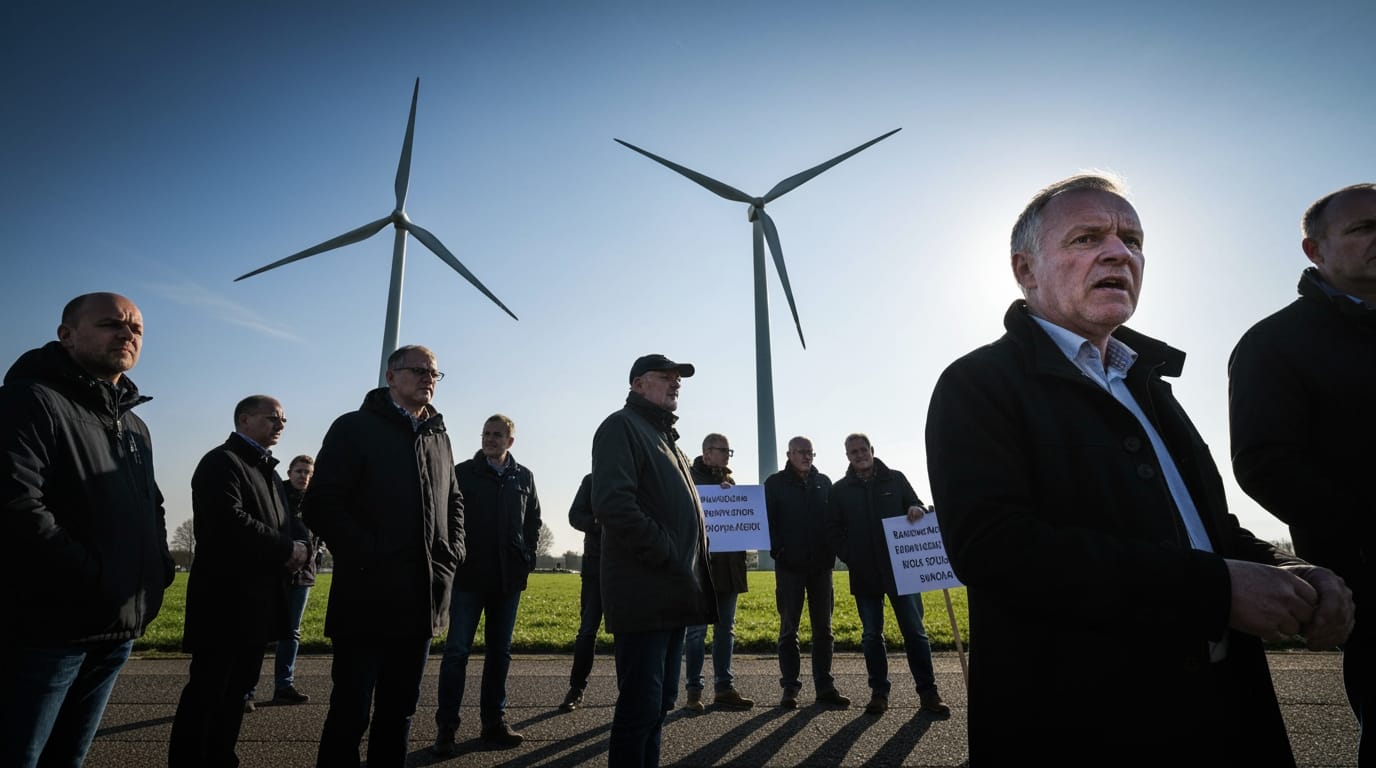
Concrete examples of the AfD's obstructive impact are emerging at the regional level. In Thuringia, a state where the AfD holds considerable sway, the party provided crucial votes that led to an amendment effectively banning wind power in forests. In Saxony, the AfD proposes stringent regulations for wind turbines, such as requiring them to be placed at a distance ten times their height from residential areas, a measure that would severely restrict new projects and delay the approval of hundreds of pending installations. AfD candidates also actively use social media to promote the idea that renewable energy expansion drives up consumer energy bills, a message that finds traction in rural communities already facing energy prices 22% higher than in western Germany, adjusted for purchasing power. This strategic opposition, as researchers note, "will certainly be a challenge for effective climate action in Germany".
A Region Divided: Hopes and Fears for the Future
The energy transition in eastern Germany is a story of stark contrasts, reflecting both immense potential and deep-seated anxieties. While the transition offers substantial economic opportunities, particularly in renewable energy investments and job creation in sectors like construction and electricity generation, the legacy of coal mining casts a long shadow. Communities in coal-dependent regions fear job losses and economic decline, sentiments the AfD adeptly exploits. This exploitation is particularly effective in rural eastern Germany, where AfD support is significantly higher than in urban areas, at 37% versus 20%.
The "East-West" divide in attitudes towards climate policy is also pronounced, with East Germans generally more skeptical of concrete measures to reduce greenhouse gas emissions. This skepticism, coupled with a perceived lack of influence in decision-making and an uneven distribution of transition costs, creates fertile ground for populist narratives. The AfD capitalizes on these sentiments, portraying itself as a protector of local interests against federal policies perceived as detached and burdensome.
Conclusion
The ascendancy of the AfD in eastern Germany introduces a critical obstacle to the nation's ambitious Energiewende. By rejecting climate science, opposing renewable energy development, and capitalizing on economic fears and regional grievances, the AfD's political influence threatens to slow down Germany's progress towards its climate goals. This challenge is not merely a regional issue but has national implications, potentially jeopardizing Germany's commitments under the Paris Agreement and undermining its leadership in climate action. The interplay of regional identity, economic concerns, and political opportunism highlights a complex and contentious path ahead for Germany's energy transition, making eastern Germany a pivotal battleground for the future of the nation's climate policy.