FIFA at a Crossroads: Infantino's Future Whipsaws Between Financial Might and Governance Crisis
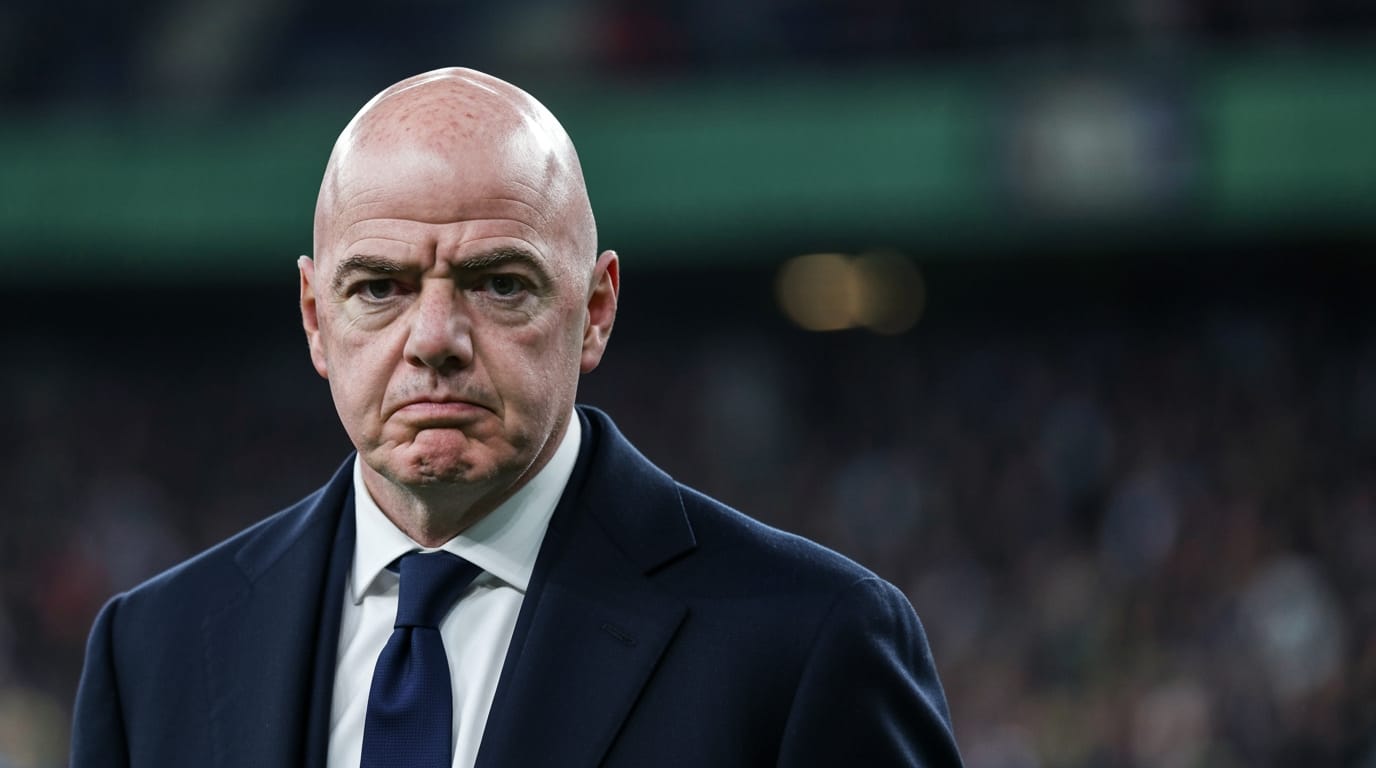
Zurich, Switzerland – The future of FIFA President Gianni Infantino and the global football organization he leads is navigating a turbulent period, marked by both unprecedented financial success and significant governance challenges. While FIFA announced record revenues following the 2026 World Cup, a recent controversial attempt to sell stakes in its marquee competitions to private investors has ignited widespread backlash, casting a shadow over Infantino's leadership ahead of his bid for a fourth term in March 2027. This complex landscape presents a defining moment for FIFA, as it balances commercial ambitions with calls for greater transparency and ethical integrity.
A Shaken Throne: The Investment Backlash and Its Fallout
Gianni Infantino's grip on FIFA's presidency has faced its most severe test yet following his now-abandoned plan to establish the FIFA Forward Enterprise (FFE). This initiative proposed selling minority, non-controlling stakes in FIFA competitions, including the highly lucrative World Cup, to private investment firms, with an aim to raise an estimated $4.2 billion from a valuation of $20 billion. The proposal, which reportedly offered $20 million to each member association that backed it, sparked an immediate and furious reaction from key football confederations.
UEFA, European football's governing body, along with Concacaf (North, Central American, and Caribbean) and the Asian Football Confederation (AFC), voiced fierce opposition, with UEFA even threatening to boycott all future FIFA competitions, including the World Cup. Critics accused Infantino of a lack of transparency and operating with "shabby, back room, opaque" tactics, questioning the need for such external investment given FIFA's robust financial health. The backlash intensified, leading to the resignation of a top FIFA advisor, Carlos Cordeiro, who stated he could not "stand by while FIFA considers selling a stake in the World Cup." Staff members within FIFA also reportedly felt "deceived" by the lack of openness surrounding the plan. Faced with such widespread condemnation, Infantino rescinded the FFE proposal, acknowledging that it had "created divisions of a nature that, regardless of the level of support, are no longer in the interest of the objective." This retraction, while an attempt to quell the storm, has significantly damaged confidence in his leadership. In a notable development, Wales became the first nation to publicly withdraw its support for Infantino's re-election.
Financial Strength and Ambitious Expansion
Despite the recent governance turmoil, FIFA under Infantino's stewardship is projecting unprecedented financial strength. The organization anticipates topping the $15 billion revenue mark for the 2023-2026 cycle, significantly exceeding initial targets, largely driven by the resounding success of the expanded 2026 FIFA World Cup across Canada, Mexico, and the United States. This financial windfall is intended to "unleash the commercial potential and opportunity that FIFA has" to reinvest in global football development across its 211 member associations. Infantino stated that FIFA aims to increase funding to member associations, with the FIFA Forward development program set to receive a record $2.7 billion for the 2027-2030 cycle.
This robust financial position is fueling FIFA's ambitious plans for tournament expansion. The FIFA World Cup itself has already expanded to 48 teams from 2026, featuring 104 matches. Furthermore, the Club World Cup underwent a significant expansion in 2025, transforming into a 32-team tournament held quadrennially in the United States, with potential plans to further expand to 48 teams by 2029. FIFA has also implemented a rotational hosting system for its flagship tournaments, with Morocco, Portugal, and Spain selected for the 2030 World Cup (alongside centenary celebration matches in Argentina, Paraguay, and Uruguay) and Saudi Arabia slated to host in 2034. This strategy aims to distribute hosting opportunities and foster football development globally.
Navigating Re-election Amidst Criticism
Gianni Infantino has declared his intention to seek a fourth and final term as FIFA President in March 2027, having been re-elected unopposed in both 2019 and 2023. Despite the strong opposition from major confederations regarding the FFE scandal, Infantino reportedly has the formal endorsement of over 200 of FIFA's 211 member associations for his re-election. This suggests that while European football powers may be critical, Infantino retains substantial support from a broader base of national federations, particularly those who stand to benefit from increased development funds.
Challenging Infantino's presidency would require significant organizational effort. An emergency FIFA Council meeting could be called if 19 of the 37 council members request it, though such a meeting could only urge resignation, not compel it. A more definitive route would be an extraordinary FIFA Congress, requiring 43 of the 211 member associations to formally request it. A vote of no confidence at such a Congress would need 106 votes to succeed, a threshold that remains challenging despite the recent controversies. The deadline for challengers to declare their candidacy is November 18, 2026, offering a window for potential opposition to coalesce. However, the prospect of multiple federations uniting behind a single challenger against Infantino remains uncertain.
Persistent Governance Questions and Ethical Scrutiny
Underpinning the current leadership crisis are persistent questions surrounding FIFA's governance and ethical standards. Infantino's 2016 election campaign promised improved transparency and governance, yet critics argue that the recent FFE proposal, particularly its lack of consultation, contradicts these pledges. While FIFA has been rated among the best-governed international sporting federations by ASOIF in 2022, citing progress in modernizing its governance structures since 2016, the recent events highlight ongoing challenges in implementing these reforms effectively and ensuring sustainable cultural change.
Beyond the FFE controversy, Infantino's tenure has been marked by several other criticisms. These include drawing criticism for FIFA's approach to human rights records in host countries, notably Qatar for the 2022 World Cup and the recent awarding of the 2034 World Cup to Saudi Arabia. Allegations of political influence have also surfaced, such as the reported intervention by former U.S. President Donald Trump regarding a red card for U.S. striker Folarin Balogun during the 2026 World Cup, a move that stirred disquiet among European football associations. The 2026 World Cup also faced criticism over high ticket prices, logistical hurdles, and visa issues, with Infantino often responding defiantly to critics, urging them to "meditate, pray or watch a football match" and accusing them of being "consumed by hate." These incidents contribute to an ongoing narrative of opacity and questionable decision-making that continues to challenge FIFA's public image and commitment to its stated values.
The path ahead for Gianni Infantino and FIFA is one of continued scrutiny. While the organization stands on solid financial ground, fueled by expanded tournaments and record revenues, the recent governance controversies have undeniably shaken confidence in its leadership. Infantino's re-election bid, despite broad support from member associations, will likely serve as a referendum on his stewardship and FIFA's commitment to transparent, ethical governance. The coming months will determine whether the current turbulence leads to significant internal change or if FIFA's vast financial power and an established support base will allow it to weather the storm, continuing its trajectory of global expansion amidst lingering questions about its operational integrity.