French Authorities Impose Localized Overnight Curfews Following Widespread Weekend Riots
The restrictions follow violent nationwide cost-of-living demonstrations that injured nearly 1,000 security personnel and resulted in more than 2,400 arrests.
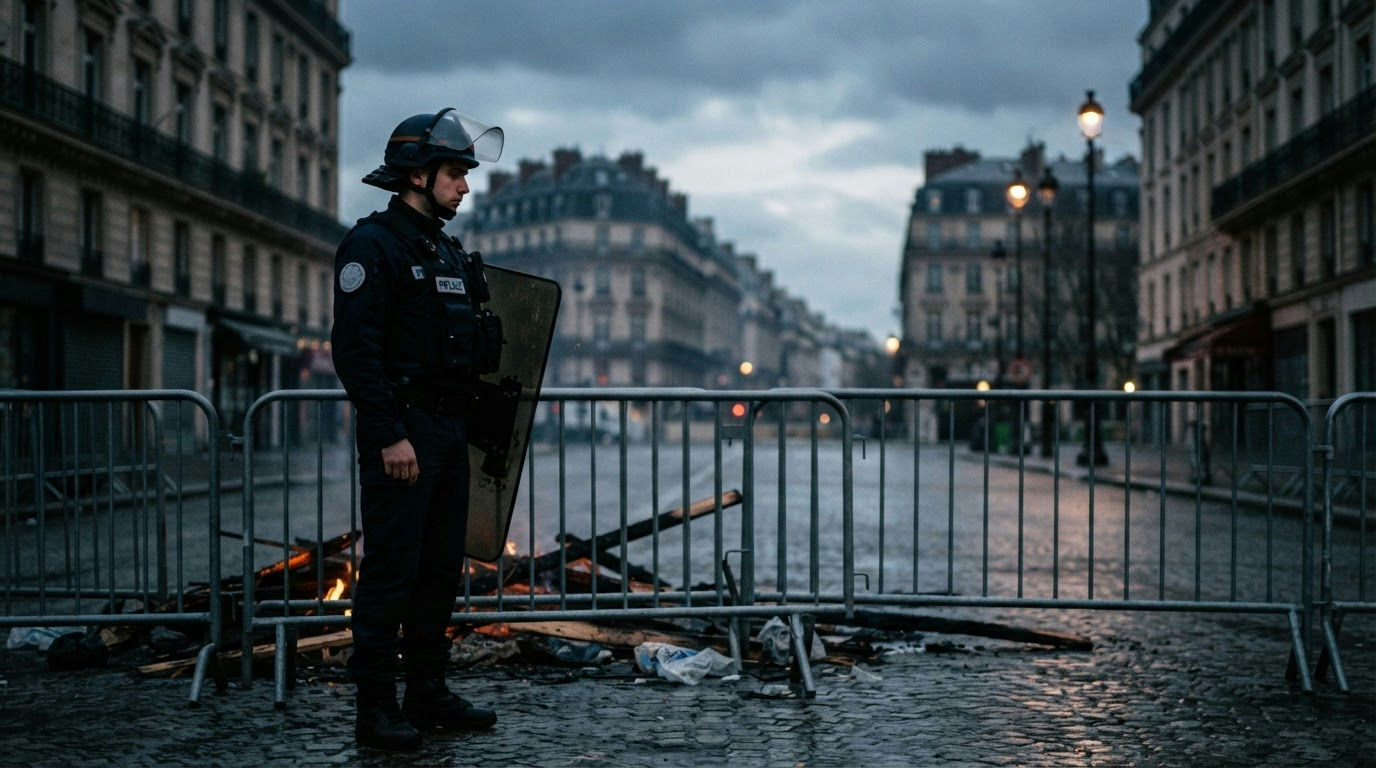
French authorities imposed partial overnight curfews in parts of Paris, Nice, and northern cities on Monday night. The restrictions followed widespread rioting and looting over the weekend.
Paris police banned people from entering Place de la République and the Les Halles shopping area from 11 p.m. Monday to 6 a.m. Tuesday. Officials also barred public gatherings in the capital starting at 8 p.m. In Marseille, administrators banned all public demonstrations on Monday.
The prime minister’s office declared overnight curfews from 8 p.m. to 6 a.m. for Monday and Tuesday in four northern cities, including Lille. In Paris, about a dozen protesters blocked the entrance to the Louvre museum on Monday, forcing it to close.
An estimated 500,000 people demonstrated nationwide on Saturday against the cost of living. The government deployed 60,000 police officers and gendarmes to control the marches. Nearly 1,000 security personnel were injured, and one protester lost a hand to a crowd-control grenade.
Between 2,000 and 3,000 stores were looted or vandalized, while rioters torched several town halls. Justice Minister Gérald Darmanin said police took over 2,500 people into custody and jailed 67. The Guardian separately reported about 2,400 arrests.
Prime Minister Sébastien Lecornu described targeted curfews as appropriate to restore order. He blamed organized far-left groups for instigating unrest before upcoming elections. He added that the government may declare a national state of emergency if conditions worsen.
Interior Minister Laurent Nuñez said security forces lost control in several cities because of crowd sizes. President Emmanuel Macron rejected an offer by Nuñez to resign. Macron condemned the violence, acknowledged operational failures, and ordered a review of security strategies.
The European Union said the violence was unacceptable but defended peaceful assembly. Germany, China, Italy, and Poland warned citizens in France to avoid large crowds.
The unrest began a month ago with student walkouts over school conditions. It expanded into protests over inflation, stagnant wages, and living costs, backed by the Yellow Vests movement. France faces this unrest six months before a presidential election, with widening budget deficits and weak economic growth.
Yellow Vests organizers have called for more nationwide demonstrations on Saturday. French labor unions scheduled coordinated strikes and rallies for Nov. 5. Justice Minister Darmanin said prosecutors will use facial recognition software and social media footage to press charges against rioters.