From UEFA Bureaucrat to FIFA's Apex: The Ascent of Gianni Infantino
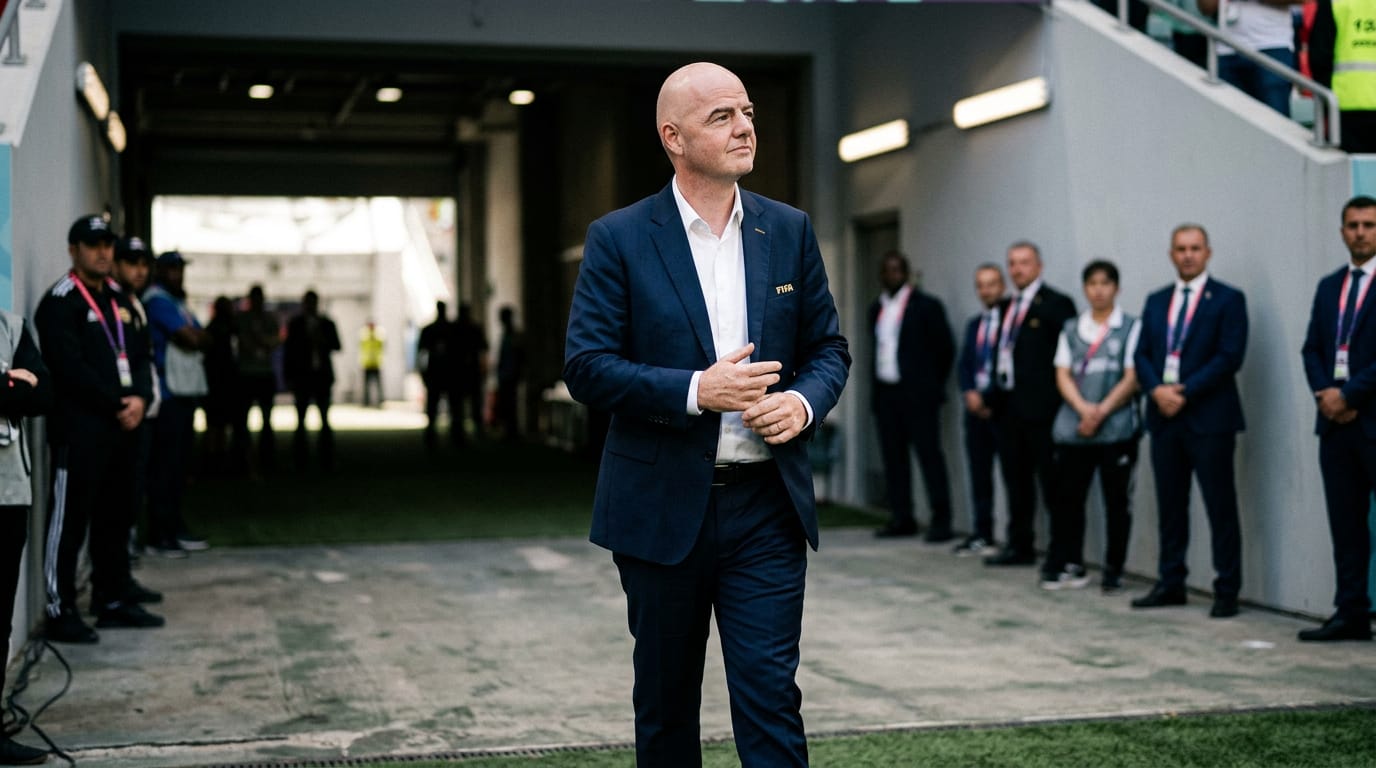
ZURICH, Switzerland – In the turbulent landscape of global football, few figures have navigated the corridors of power with the strategic acumen and relentless drive of Gianni Infantino. Rising from a relatively obscure legal background at UEFA, the Swiss-Italian administrator seized the reins of the world's most powerful football organization, FIFA, at a moment of profound crisis, charting a course that would redefine the sport's commercial and political trajectory. His journey from an organizational "fixer" to the "king of soccer" is a testament to calculated ambition and an understanding of football's intricate global politics.
Infantino's path to the pinnacle of international football began far from the glamour of the pitch. Born on March 23, 1970, in Brig-Glis, Switzerland, to Italian immigrant parents, he pursued a career in law, graduating from the University of Fribourg. His multilingual capabilities—speaking German, French, Italian, English, Portuguese, Spanish, and Arabic—would later prove invaluable in his global engagements. Infantino's initial foray into sports administration saw him serve as legal counsel and general secretary for the International Centre for Sports Studies (CIES) in Neuchâtel. It was in 2000 that he joined the Union of European Football Associations (UEFA), the governing body for football in Europe.
Within UEFA, Infantino steadily climbed the ranks. He became the director of legal affairs and club licensing in 2004, deputy general secretary in 2007, and ultimately, general secretary in 2009. In this influential role, working under then-UEFA President Michel Platini, Infantino played a significant part in key initiatives. He was instrumental in overseeing improved financial support for smaller national football associations in Europe, a move that cultivated widespread goodwill. He also helped introduce the Financial Fair Play regulations aimed at ensuring the long-term profitability and sustainability of clubs. Furthermore, he oversaw significant competition expansions, notably the enlargement of the UEFA European Championship to 24 teams for the 2016 edition, and contributed to the conception of the UEFA Nations League. During this period, Infantino also gained public recognition as the face of UEFA's televised competition draws, a role that brought him into living rooms across the continent.
The opportunity for Infantino to ascend to global leadership emerged from an unprecedented period of scandal that engulfed FIFA. The 2015 corruption crisis led to widespread indictments, the resignation of long-serving FIFA President Sepp Blatter, and the subsequent suspension of Michel Platini, who had been a strong contender to succeed Blatter. This systemic breakdown created a leadership vacuum and a desperate need for a figure who could promise reform and restore the organization's battered reputation. Infantino, initially positioning himself as a loyal placeholder for Platini, eventually threw his hat into the ring as a candidate for the FIFA presidency.
Infantino launched an energetic and global campaign, positioning himself as the candidate for reform and promising a new era of transparency, good governance, and accountability. His strategy involved extensive travel to meet delegates from FIFA's 209 member associations, personally addressing their concerns and aspirations. A cornerstone of his campaign was a pledge to significantly increase financial development support for national federations, famously declaring, "the money of FIFA is your money." He vowed to more than double the development funds dispensed to member associations, a promise that resonated deeply with many smaller federations. He also championed the idea of expanding the FIFA World Cup from 32 to 40 teams, a proposal that later evolved into a 48-team format. This combination of reform rhetoric, financial incentives, and tournament expansion plans proved highly effective. On February 26, 2016, at the FIFA Extraordinary Congress in Zurich, Infantino was elected FIFA President in an upset victory, securing 115 votes in the second round against Bahrain's Sheikh Salman bin Ebrahim al-Khalifa's 88.
Upon assuming the presidency, Infantino immediately set about implementing his ambitious agenda, focusing on repositioning FIFA as a credible, trustworthy, modern, professional, and accountable organization. His early tenure saw the implementation of a wide-ranging reform process, including the establishment of enhanced good governance and compliance functions. A key initiative was the "Forward Programme," which dramatically increased financial investment for member associations, with some receiving up to five times the amount they were allocated in 2015. Under his leadership, FIFA witnessed a significant commercial expansion and a massive rise in revenue. Infantino presided over the 2018 and 2022 FIFA World Cups and oversaw the planning for the expanded 2026 tournament in North America, which will feature 48 teams. He also revitalized the FIFA Club World Cup, transforming it into a 32-team quadrennial tournament starting in 2022, and introduced the FIFA Series in 2024 to enhance international friendlies. His successful consolidation of power was further cemented by his unopposed re-elections in 2019 and 2023.
Despite his stated commitment to reform and transparency, Infantino's presidency has not been without its share of challenges and controversies. Shortly after his election, his name appeared in reports linked to the Panama Papers, concerning contracts signed during his UEFA years. He also faced an investigation by FIFA's own ethics committee. More recently, Infantino has drawn criticism for his stance on human rights issues, particularly concerning the 2022 World Cup in Qatar and the awarding of the 2034 World Cup to Saudi Arabia, both nations with controversial human rights records. Critics have also accused him of centralizing power and weakening scrutiny within FIFA. A significant recent controversy involved a failed plan to sell stakes in the World Cup's commercial profits through a proposed entity called FIFA Forward Enterprise. This plan met with strong opposition, particularly from European federations, leading to a loss of confidence in his leadership and calls for his resignation. Allegations have also surfaced regarding offers of hosting the 2030 World Cup final to Morocco in exchange for political support, claims which FIFA has denied. Even his former boss, Michel Platini, has publicly stated that Infantino's leadership style has become "increasingly authoritarian."
Gianni Infantino's remarkable ascent to the presidency of FIFA marks a pivotal chapter in the history of global football. Inheriting an organization reeling from scandal, he successfully navigated a path to stability and unprecedented commercial growth, transforming FIFA's financial landscape and expanding its flagship tournaments. His tenure has been characterized by a strategic vision for football's global development, underpinned by substantial financial injections into member associations. However, his leadership has also been frequently challenged by questions of governance, transparency, and accountability, demonstrating the persistent complexities inherent in ruling the world's most popular sport. As FIFA continues its evolution under his stewardship, the balance between commercial ambition and ethical governance remains a central narrative of his presidency.