Gender Segregation: A Widening Divide in Israel's Public Sphere
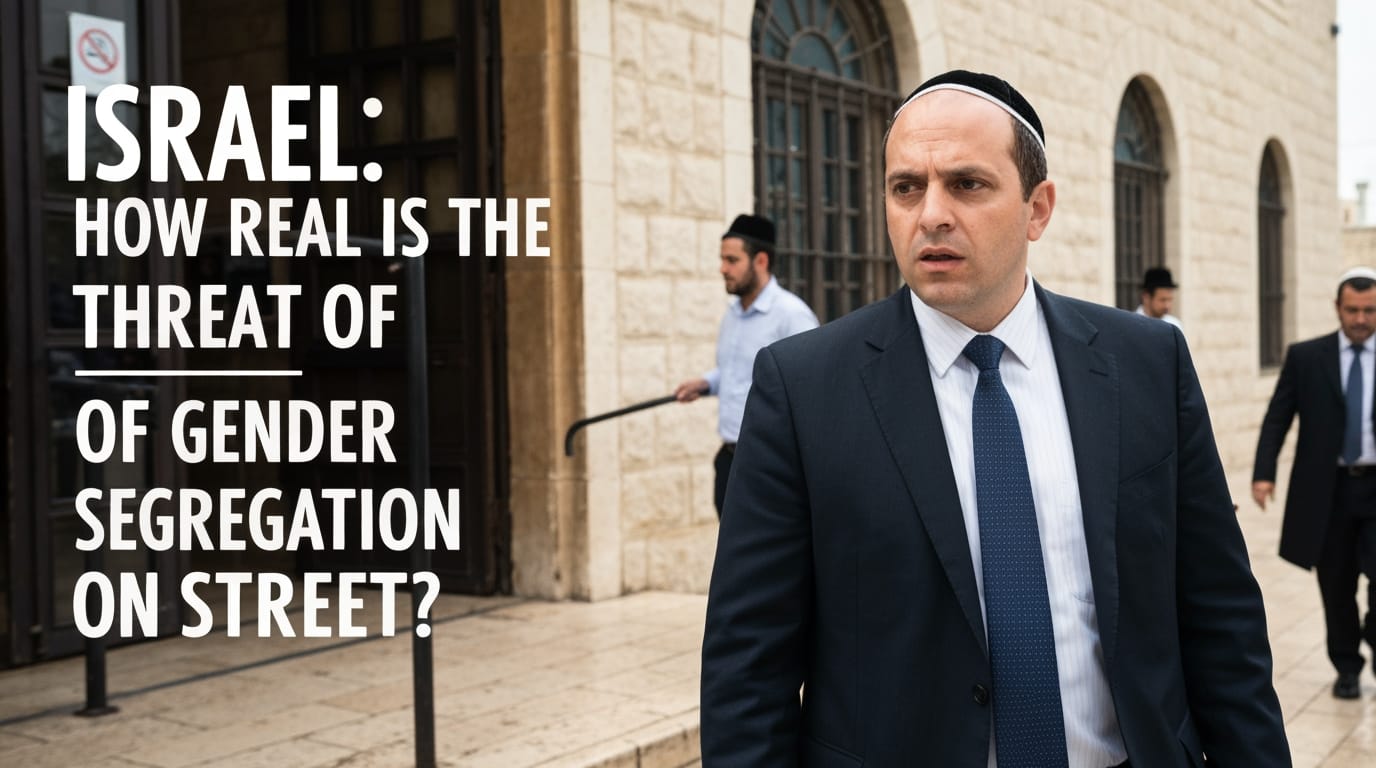
JERUSALEM – A growing trend of gender segregation is reshaping public spaces across Israel, sparking a heated national debate about religious freedom, women's rights, and the core democratic values of the state. What was once largely confined to ultra-Orthodox neighborhoods and private religious functions is now visibly encroaching upon streets, public transportation, and even academic institutions, presenting a complex challenge to Israel's commitment to equality. Recent developments, including the formal introduction of gender-separated sidewalks in Bnei Brak and legislative moves sanctioning academic segregation, underscore the escalating nature of this societal shift, raising alarms among secular Israelis and women's rights advocates.
The Expanding Landscape of Separation
The phenomenon of gender segregation has significantly expanded in Israel over the past few decades, moving beyond traditional religious domains into everyday public life. This expansion is largely driven by the Ultra-Orthodox (Haredi) community, whose growing population and political influence have increasingly shaped public norms in areas where they reside.
One of the most visible manifestations of this trend has been in public transportation. The so-called "Mehadrin" bus lines, which emerged in the late 1990s, gained notoriety for enforcing separate seating, often relegating women to the back of the bus. Although the Supreme Court ruled in 2011 that forced gender segregation on public buses is illegal and a violation of human dignity, allowing only "voluntary" separation, reports of coercion and harassment against women persist. Signs enforcing segregation were ordered removed, replaced by notices affirming passengers' right to sit anywhere. Despite these rulings, the issue remains alive, as evidenced by a recent Tel Aviv court decision to fine a bus company for enforcing "Mehadrin" seating in January 2023, demanding compensation for a 76-year-old female passenger asked to move to the rear.
Beyond buses, segregation has permeated various other public settings. Public events, such as concerts in parks, have seen attempts to divide audiences by gender, leading to legal challenges. Libraries and other public facilities in some Haredi areas have instituted separate operating hours for men and women. Even more recently, in a significant development marking a new frontier for segregation, the predominantly Ultra-Orthodox city of Bnei Brak introduced formally sanctioned gender-separated sidewalks in sections of Shlomo HaMelech Street and Ezra Street in July 2026. This directive, issued by senior rabbis and supported by the municipality, designates specific pavements for men and women, albeit initially intended for managing large crowds during events. Critics quickly condemned this move as a stark violation of equality principles under Israeli law, representing a substantial expansion of gender-segregated public space into daily pedestrian areas.
Legal Challenges and Shifting Sands in Academia
The expansion of gender segregation has consistently clashed with Israel's legal framework, which broadly prohibits discrimination in public spaces and enshrines equality between men and women. The Supreme Court has served as a critical bulwark against mandatory segregation, with Justice Elyakim Rubinstein famously writing in a 2011 ruling, "A public transportation company (like any other person) cannot say, ask or order women where to sit on a bus simply because they are women... I am astounded that there was even a need to write them in the year 2010". However, the distinction between "forced" and "voluntary" segregation often creates a grey area where social pressure effectively mandates separation in Haredi communities.
Adding a new layer to this complex legal landscape, the Knesset recently passed a law in July 2026 that permits gender segregation in Israeli higher education institutions. This legislation expands upon a 2021 High Court ruling that had allowed limited, classroom-only segregation in undergraduate programs specifically for Ultra-Orthodox students, aimed at their integration into higher education and the workforce. The new law, however, extends this permission to master's and doctoral programs across all fields of study and potentially beyond classrooms, explicitly stating that religiously-based gender-segregated study tracks do not constitute discrimination. This move has been met with strong opposition from higher education institutions and women's rights groups, who warn it could undermine academic standards, weaken professional training, and roll back decades of progress toward gender equality. Six Haredi women and ten academics have already petitioned the High Court to strike down or restrict this new law, arguing it dismantles crucial safeguards.
The Ultra-Orthodox Imperative and Societal Ripples
The impetus behind this drive for increased segregation stems primarily from the Ultra-Orthodox community's deep-rooted commitment to tzniut, or modesty, and strict adherence to religious law. Within this worldview, gender separation is seen as essential for maintaining a high level of modesty, preventing illicit thoughts or interactions, and protecting women from unwanted attention. For some Haredi women, these segregated environments can offer access to opportunities, such as higher education or certain public services, that they might otherwise forgo due to modesty concerns. Haredi women often play a crucial economic role in their families, supporting husbands who dedicate themselves to religious study, and vocational training in segregated settings can be vital for their employment.
However, critics argue that this religiously motivated separation, when applied in public spheres, disproportionately affects women by marginalizing them and eroding their equal participation in society. Organizations like the Israel Women's Network (IWN) and the National Council of Jewish Women (NCJW) emphasize that "separate is not equal," contending that gender segregation inherently harms women's right to equality and human dignity. They point out that in practice, segregated spaces and roles often lead to inferior conditions or reduced opportunities for women, pushing them to the periphery of public life.
Public Backlash and the Fight for Equality
The growing prevalence of gender segregation has ignited widespread public concern and triggered strong opposition from a broad spectrum of Israeli society, including secular, religious-liberal, and women's rights groups. Surveys indicate that most Israelis, outside of the Haredi community, reject gender separation in public spaces, viewing it as a breach of fundamental democratic values.
Advocacy groups have been at the forefront of challenging these developments. The Israel Women's Network (IWN), established in 1984, has relentlessly fought against the increasing exclusion and segregation of women in public events, business, academia, politics, and the military. They engage in legal action, lobbying the Knesset, and public awareness campaigns, viewing the spread of segregation as a major threat to women's presence in the public sphere. Their hotline receives numerous calls reporting instances of segregation and exclusion. Similarly, the NCJW has voiced deep concern, particularly over the academic segregation law, warning that it "risks embedding gender discrimination into Israel's institutions and rolling back decades of progress toward equality". These groups assert that Israel's Declaration of Independence explicitly calls for "complete equality of social and political rights to all its inhabitants irrespective of religion, race or sex," a principle they strive to uphold against what they perceive as reactionary forces.
A Nation at a Crossroads
The debate over gender segregation on Israeli streets and in its public institutions reflects a deeper struggle for the soul of the nation. It highlights the inherent tension between the desire for religious communal autonomy and the foundational democratic principle of gender equality. While proponents within the Ultra-Orthodox community view increased separation as a legitimate expression of their religious values and a means to preserve their unique way of life, opponents see it as a dangerous erosion of women's rights and a threat to the inclusive character of Israeli society.
As the lines of gender separation continue to blur and expand across public domains, from sidewalks to universities, the question of how Israel will reconcile these competing visions remains open. The ongoing legal battles, the vocal public opposition, and the legislative pushes indicate that the struggle to define the boundaries of religious practice in a democratic public sphere will continue to be a central and defining challenge for the country's future.


