German Finance Minister Rejects Persistent Accusations Amidst Scrutiny of Financial Dealings
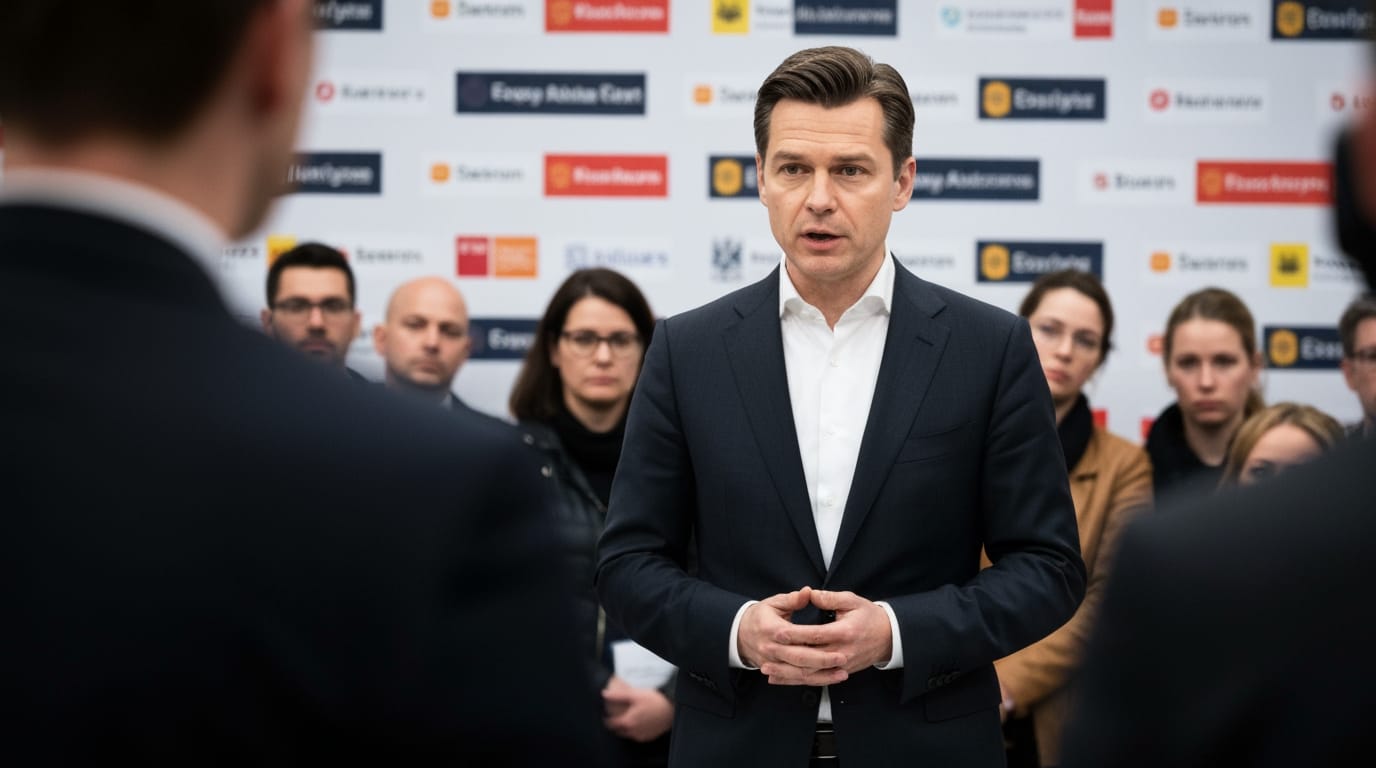
BERLIN – Germany's finance minister has again rejected accusations of money misuse, signaling continued scrutiny over financial dealings and budgetary decisions made during a period of significant political and economic flux. Reports emerging in late March 2026 indicate a renewed focus on past allegations that have shadowed the powerful office, even as the political landscape has shifted significantly since the most contentious episodes came to light.
These recent rejections primarily pertain to events and controversies that unfolded during the tenure of Christian Lindner, the former finance minister and leader of the pro-business Free Democratic Party (FDP). Lindner, who served in the role from late 2021 until his dismissal in November 2024, faced a barrage of criticism ranging from allegations of personal conflicts of interest to disputes over the constitutional legality of his budgetary maneuvers. His consistent stance has been one of defense, asserting the propriety and legality of his actions in the face of persistent questioning.
Allegations of Conflict of Interest: The BBBank Affair
One of the most prominent sets of accusations to surface during Lindner's time as finance minister involved his private financial arrangements with BBBank. In January 2023, media reports detailed a preliminary inquiry by Berlin prosecutors into whether Lindner had a conflict of interest related to a mortgage he received from the bank.
The allegations centered on Lindner’s acquisition of a luxury villa in Berlin for €1.65 million in January 2021. To finance renovations, he reportedly took out a mortgage totaling €2.35 million with BBBank. The situation gained scrutiny when it emerged that Lindner delivered a video address for the bank's 100th anniversary in May 2022. Critics questioned the timing and alleged lack of disclosure, especially after he reportedly secured a further loan from the same institution. Before assuming his ministerial post, Lindner had also received payments for making speeches at various evening events hosted by BBBank as a party leader and Member of Parliament.
In response to these allegations, Lindner's legal counsel, Christian Schertz, vehemently dismissed any wrongdoing. Schertz asserted that the process of financing Lindner's property commenced well before he took office as finance minister. He emphasized that "all the conditions were always in correspondence with existing market terms," thereby refuting any suggestion of preferential treatment or undue influence. Furthermore, Schertz clarified that Lindner's address to the bank for its anniversary was "in keeping with the regular exercise of a minister's duties" and that his prior speaking engagements and related payments were transparently reported and published in accordance with Bundestag's financial disclosure rules. While Berlin prosecutors initiated a preliminary investigation to ascertain whether Lindner’s parliamentary immunity should be lifted, they concurrently underscored that the inquiry did not imply suspicion of a criminal act. This move is considered a standard procedural step in Germany to allow for a comprehensive examination of such claims.
Budgetary Maneuvers and Constitutional Challenges
Beyond personal financial dealings, Lindner's approach to Germany's national budget also drew significant "money-misuse" accusations, albeit on a larger, more systemic scale. A central point of contention emerged in late 2021 and early 2022 concerning a supplementary budget that proposed reallocating 60 billion euros. These funds had initially been authorized in 2021 for pandemic response measures but remained unused. Lindner's plan was to redirect this substantial sum to Germany's energy and climate fund, aiming to finance the new government's ambitious climate and energy objectives.
This decision immediately triggered sharp criticism from opposition parties and, crucially, from Germany's Court of Auditors. The auditors deemed the reallocation "constitutionally questionable," arguing that the budget proposal failed to coherently explain the link between coronavirus pandemic recovery measures and long-term climate and energy expenditures. Their core argument was that global warming, while a critical challenge, does not constitute a sudden and unforeseen development that would warrant the use of emergency funds. Instead, they maintained that such a systemic issue should be addressed through regular budgetary measures, with emergency credit being a last resort.
Lindner, as finance minister, staunchly defended the supplementary budget. He clarified that the funds were not intended for "general projects" but specifically for "transformative investments" in climate protection and digitalization, emphasizing their role in mitigating damage stemming from the COVID-19 pandemic. His strategy also aimed to allow Germany to adhere to its constitutionally enshrined "debt brake" in subsequent years, a mechanism limiting new government borrowing, while still funding essential climate action measures. The "debt brake" had been temporarily suspended during the peak of the pandemic, and Lindner’s FDP consistently advocated for its strict re-enforcement, making the reallocation a complex balancing act between fiscal discipline and pressing investment needs.
The Broader Context of Coalition Tensions and Dismissal
While the BBBank and supplementary budget controversies represent specific instances of "money-misuse accusations" and Lindner's rejections, his broader tenure was characterized by significant disagreements over fiscal policy within the ruling coalition. These disputes ultimately led to his dismissal in November 2024, an event that triggered the collapse of Chancellor Olaf Scholz's three-party government.
Lindner, representing the FDP's fiscally conservative stance, consistently championed stringent adherence to the "debt brake" and advocated for tax cuts and reduced public spending. This position often clashed with the Social Democrats (SPD) and the Green Party, who sought greater state investment in social programs and environmental initiatives. Weeks of intense negotiations over the 2025 federal budget highlighted these irreconcilable differences, with Lindner's FDP rejecting proposed tax increases and pushing for cuts to welfare programs.
Chancellor Scholz, in announcing Lindner's dismissal, accused him of repeatedly blocking legislative efforts, engaging in "petty party political tactics," and ultimately eroding trust within the government. Scholz stated that Lindner had "broken my trust too often" and had shown no willingness to compromise for the good of the country. In his own defense following the dismissal, Lindner maintained that Scholz had failed to grasp the necessity of a "new economic awakening" for Germany and had downplayed the economic concerns of its citizens. He criticized the Chancellor's economic proposals as "dull, unambitious," and insufficient to address Germany's fundamental growth weaknesses.
Conclusion: An Ongoing Legacy of Scrutiny
The continued reports in March 2026 regarding "Germany's finance minister rejecting money-misuse accusations" underscore the enduring nature of political and financial accountability in German public life. While Christian Lindner is no longer at the helm of the Finance Ministry, the controversies that marked his time in office – from questions surrounding his personal financial dealings to the constitutional debates over budget reallocation – remain subjects of public interest and, for some, unresolved concerns. His consistent and firm rejections of these accusations throughout his tenure and beyond reflect a deeply ingrained political imperative to defend one's integrity and policy decisions. The narrative of these rejections, therefore, is not merely a historical footnote but a recurring theme in the ongoing discourse on transparency, fiscal responsibility, and ethical governance within Germany's political system. The exacting standards applied to the finance minister, regardless of who holds the office, ensure that every decision impacting the national purse is met with rigorous oversight and, frequently, significant public debate.