German Foreign Minister Concludes Pivotal Africa Tour in South Africa, Reinforcing Strategic Partnerships
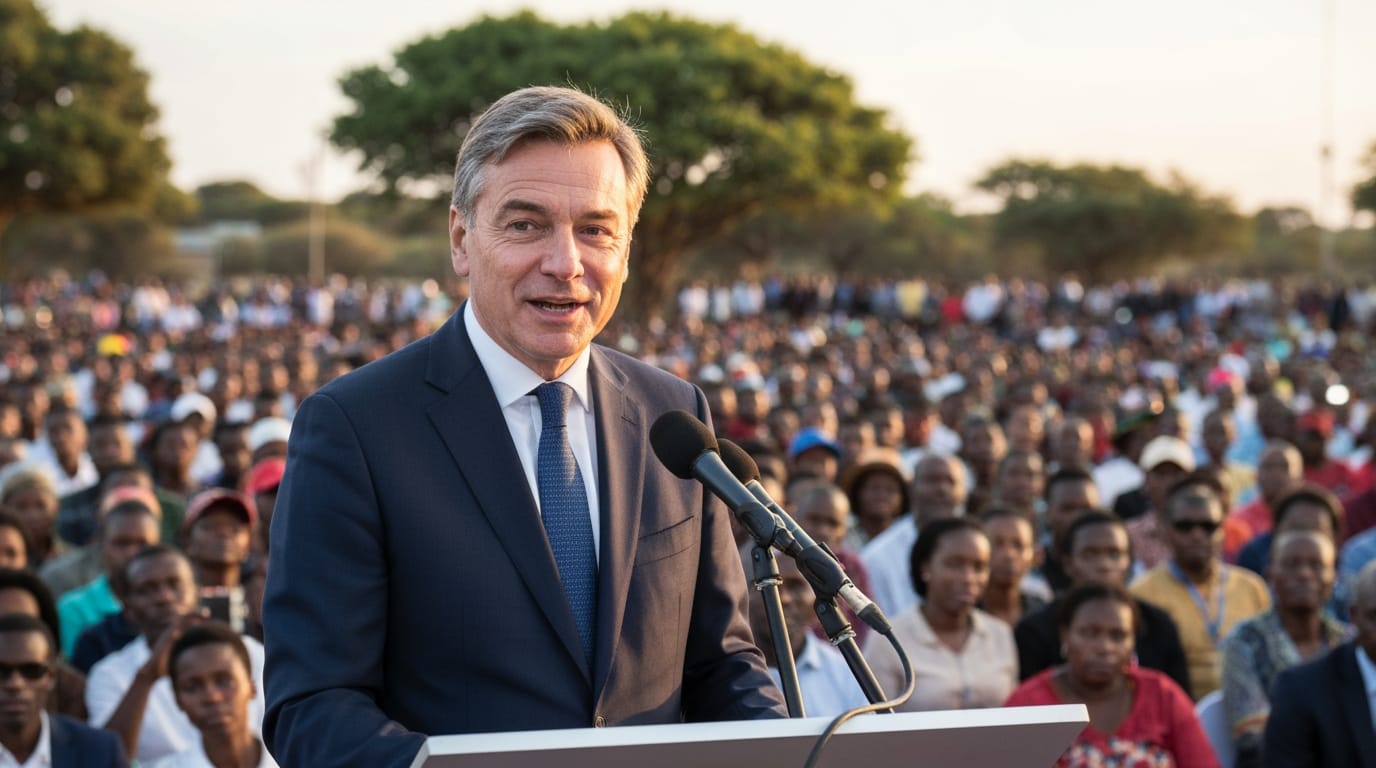
Pretoria, South Africa – German Foreign Minister Johann Wadephul has wrapped up a significant three-nation tour of Africa, culminating in high-level discussions in South Africa aimed at deepening political, economic, and security ties amidst a shifting global geopolitical landscape. The visit, which also included stops in Mauritania and Nigeria, marks Wadephul's third diplomatic engagement with the continent this year, underscoring Germany's intensified commitment to fostering robust and equitable partnerships with African nations. Berlin's renewed focus comes as Europe seeks to recalibrate its international alliances and diversify trade relationships in response to evolving global dynamics, including the protectionist policies emanating from the United States.
Germany's Strategic Re-Anchoring in Africa
Minister Wadephul's repeated visits to Africa, following earlier trips to Kenya, Ethiopia in January, and Morocco in April, highlight a strategic imperative for Germany and the broader European Union. Ahead of the tour, the German Foreign Office emphasized the close geographical, political, economic, and security linkages between Europe and Africa. This approach signals a deliberate shift, with Berlin now viewing Africa not merely as a recipient of development aid, but as a strategic political actor and essential partner in addressing global challenges. The tour's overarching objectives included strengthening multilateral cooperation, diversifying trade relationships, and fostering joint efforts on global governance, energy security, and critical raw materials.
Accompanying Minister Wadephul was a robust German business delegation, tasked with identifying new commercial opportunities and promoting private investment across the continent. This emphasis on private sector involvement underscores Germany's intent to support sustainable growth in Africa while simultaneously creating avenues for German companies. Minister Wadephul articulated this vision, stating that Europe and Africa are united by more than mere proximity, but by shared interests in stable global order, fair trade, and secure supply chains.
South Africa: A Cornerstone of German-African Relations
The final leg of Minister Wadephul's tour in South Africa underscored the nation's pivotal role in Germany's Africa strategy. As the continent's most industrialized economy and a significant member of the G20, South Africa stands as Germany's largest trading partner in Africa. Approximately 600 German companies operate within South Africa, making it a crucial hub for German business interests on the continent. This advanced and diverse economy, coupled with its status as Africa's primary manufacturing center, presents attractive opportunities for foreign investors, promising long-term benefits for both sides.
During his stay, Minister Wadephul was slated to meet with South African Foreign Minister Ronald Ozzy Lamola and President Cyril Ramaphosa. Discussions were expected to focus on expanding cooperation in burgeoning sectors such as green energy and critical minerals, as well as reinforcing a commitment to rules-based multilateralism. The German delegation also planned to visit a German energy company, symbolizing the tangible investment and collaboration already underway. Beyond high-level political and economic talks, Minister Wadephul engaged directly with the younger generation, delivering a speech at the South African Institute of International Affairs at the University of the Witwatersrand in Johannesburg. This dialogue aimed to understand the aspirations of Africa's youth and how they envision the future of Europe-Africa partnerships.
Broadening the Scope: Engagements in Mauritania and Nigeria
Before arriving in South Africa, Minister Wadephul's itinerary included significant engagements in Mauritania and Nigeria, each highlighting distinct facets of Germany's comprehensive African strategy. His initial stop in Mauritania emphasized stability and security in the Sahel region, a critical concern for European partners. In Nouakchott, Minister Wadephul met with President Mohamed Ghazouani and Foreign Minister Mohamed Merzoug, addressing issues of counter-extremism and deradicalisation. A visit to the UN Office on Drugs and Crime further underscored Germany's commitment to supporting Mauritania, which is viewed as a "relative bastion of stability" in a volatile area and currently hosts over 320,000 refugees from neighboring Mali. The discussions also explored Mauritania's potential in renewable energies, particularly green hydrogen production.
In Nigeria, Africa's most populous nation and largest economy, Minister Wadephul engaged in talks covering trade, energy transition, migration, and regional security. He met with Nigerian Foreign Minister Bianca Odumegwu-Ojukwu and the President of the ECOWAS Commission, Omar Touray, to review existing bilateral agreements and explore new avenues for cooperation. The discussions aimed to deepen business opportunities, especially in Nigeria's vibrant information technology and start-up sectors, which saw bilateral trade grow by approximately 10 percent last year. Nigeria has also emerged as a key source of jet fuel for European markets, highlighting its growing strategic importance in energy supply. Minister Wadephul also engaged with young influencers in Lagos, mirroring his approach to youth engagement in South Africa. Across all three countries, a consistent theme was the focus on political, economic, and security issues, alongside dedicated dialogue with the continent's youthful populations.
Charting the Future: Implications and Challenges
Minister Wadephul's extensive tour signals Germany's firm belief in Africa's "destiny and opportunity" for Europe, positioning engagement with the continent as a strategic necessity. The German approach seeks to establish genuinely equal partnerships, moving away from a traditional donor-recipient dynamic. As one German parliamentarian noted, the aim is to "learn from you," acknowledging that Europe, facing its own fragilities, requires strong African partnerships.
While the tour highlighted significant economic cooperation, including Germany's substantial direct investment in South Africa which reached €7.99 billion in 2023, challenges remain. Global geopolitical pressures, including the expanding influence of Russia and China across Africa, underscore the competitive landscape for international partnerships. Issues such as lingering security challenges and internal complexities, like recent xenophobic incidents in South Africa, also factor into the broader context of engagement.
Ultimately, Minister Wadephul's third Africa tour this year solidifies Germany's commitment to a multifaceted engagement with the continent. By prioritizing shared interests in human security, sustainable development, and economic growth, Germany aims to forge enduring relationships that transcend traditional frameworks. The emphasis on dialogue with diverse stakeholders, from heads of state to young influencers and business leaders, reflects a comprehensive strategy to navigate a complex world and build robust alliances for mutual prosperity and stability.