Germany Establishes New Drone Research Hub Amid Heightened Security Concerns
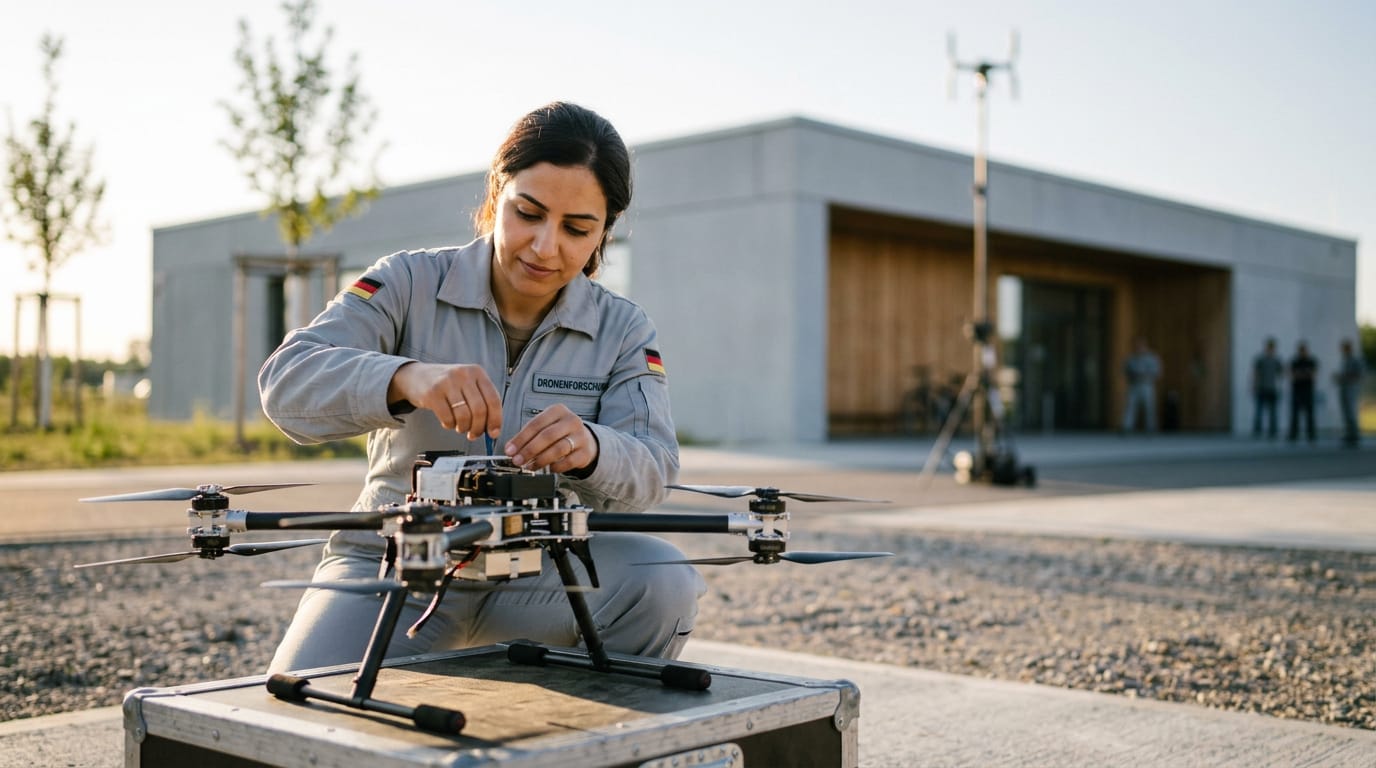
Cochstedt, Germany – Germany is set to officially open a new, specialized drone security research center on August 18 at the German Aerospace Center's (DLR) test airport in Cochstedt, Saxony-Anhalt. The launch comes as the nation grapples with an increasing array of drone-related security challenges, underscored by recent incidents, including the discovery of an explosive-laden drone at Leipzig/Halle Airport. Federal Interior Minister Alexander Dobrindt emphasized the critical need for dedicated research to keep pace with the rapid evolution of drone technology and counter emerging hybrid threats.
This strategic initiative aims to fortify Germany's defenses against unmanned aerial systems (UAS) and marks a significant step in the country's broader commitment to advancing drone capabilities, both for security and civilian applications. The center is envisioned to become a unique facility in Germany, integrating scientific expertise, technological innovation, and the practical requirements of security agencies to develop, test, and implement advanced counter-drone systems under realistic conditions.
Responding to an Evolving Threat Landscape
The decision to establish the new research center follows a series of alarming drone incidents that have heightened security concerns across Germany. Most notably, between August 4 and 5, an explosive-laden drone was discovered near Ukrainian cargo aircraft at Leipzig/Halle Airport, leading to the airport's temporary closure. A second incident involved a mid-air collision between a Boeing 757 and a drone at the same airport. Federal Interior Minister Dobrindt characterized these events as a "hybrid" attack by "foreign powers," stating their "clear strategic objective" is to politically and socially destabilize Germany.
Further incidents have included the sighting of two drones over a Bundeswehr military base in Mechernich, near the Belgian border, which reportedly houses personnel maintaining U.S. Patriot air defense systems. These occurrences have underscored vulnerabilities in critical infrastructure, including airports, military installations, and industrial sites, highlighting the urgent need for robust drone defense mechanisms. The government's accelerated focus on drone security research is not a direct, immediate response to the Leipzig Airport incidents but rather the culmination of years of planning and work by the DLR.
Cochstedt: A Hub for Drone Innovation
The new drone security research center will be situated at the DLR test airport in Cochstedt, Saxony-Anhalt, a site that has been a focal point for UAS research since 2021. The DLR's National Experimental Test Center for Unmanned Aircraft Systems, opened in March 2021, already provides a unique European infrastructure for cutting-edge research in unmanned aviation, facilitating technology development, certification, and the formulation of new regulations.
This existing framework at Cochstedt, which began with a decision in 2020 to establish a Competence Center for Unmanned Aircraft Systems, offers an ideal foundation for the new security-focused facility. It serves as a network for DLR's extensive UAS research portfolio, which includes projects on automated low-altitude air delivery for cargo, testing shape-shifting wings for efficiency, and developing advanced airspace procedures for drone integration. The center is designed to be accessible to a wide range of users, from startups to established aviation companies, fostering a collaborative environment for innovation. The expansion into dedicated drone security research at Cochstedt will leverage this established infrastructure and expertise to develop systems for detecting, intercepting, and neutralizing drones in realistic operational settings.
Germany's Broadening Drone Strategy and Investment
Beyond counter-drone technologies, Germany is significantly bolstering its overall drone capabilities and investment. The German government plans to equip its military forces with one-way attack drones, committing an initial €540 million, with potential contracts reaching billions of euros. This forms part of a larger €16 billion investment in drone capabilities for the Bundeswehr, spanning reconnaissance platforms, offensive systems, and defense against inbound threats. The aim is to integrate drone warfare capabilities into the military by 2027, with plans to equip six units with loitering munitions by 2029. Startups like Stark Defence and Helsing are poised to be key suppliers for these initiatives.
This military focus is complemented by a thriving domestic defense tech sector. In 2025, German defense startups attracted €1.16 billion in venture capital, a 42% increase from the previous year. Companies such as Munich-based Quantum Systems, a supplier of reconnaissance drones to Ukraine and the German military, recently raised $1.2 billion in funding, doubling its valuation to $8 billion. Other startups like TYTAN and Alpine Eagle are developing counter-drone solutions, with TYTAN planning to produce up to 3,000 autonomous interceptors monthly. This push reflects a broader strategy to become a leading hub for drone development and production, aiming to support Ukraine and strengthen Germany's own defense capabilities.
In the civilian sector, Germany's drone market is also experiencing rapid growth, with the number of commercially used drones projected to increase by 40% between 2022 and 2030. Drones are finding applications in monitoring power plants, infrastructure maintenance, logistics, and firefighting. Efforts are also underway to integrate UAS safely into existing airspace, involving projects to test and coordinate efficient drone air traffic management.
Cultivating Innovation and Collaboration
The new research center embodies Germany's commitment to fostering innovation through collaboration between science, industry, and government. The DLR's work with skyzr, a subsidiary of Frequentis, to develop advanced airspace procedures for safe drone integration exemplifies this cooperative approach. Furthermore, institutions like the Fraunhofer Institute for Digital Media Technology (IDMT) are contributing significantly to drone defense, developing intelligent acoustic sensing systems that use machine learning to detect and locate drones by their unique sound patterns, even beyond visual line of sight. This acoustic detection technology complements traditional methods like radar and cameras, enhancing overall security systems, particularly in complex environments.
The Bundeswehr itself has opened an innovation center in Erding to rapidly integrate new technologies from startups and researchers, aiming for "eighty-percent solutions" that can be quickly deployed rather than waiting for lengthy, perfect developments. This shift towards faster procurement and development cycles is crucial for addressing dynamic threats.
Conclusion
The opening of the new drone security research center in Cochstedt represents a pivotal moment for Germany's national security and technological sovereignty. By focusing dedicated research on counter-drone technologies, Germany aims to address immediate threats highlighted by recent incidents, while simultaneously positioning itself at the forefront of drone innovation. This initiative, coupled with substantial investments in military and civilian drone applications and a vibrant defense tech industry, signals Germany's determination to adapt to a changing global security landscape. The collaborative efforts between research institutions, industry, and government agencies will be crucial in ensuring that Germany remains prepared for the complex challenges and vast opportunities presented by the age of unmanned aerial systems.