Germany Unveils Sweeping Reforms to Reignite Stagnant Economy
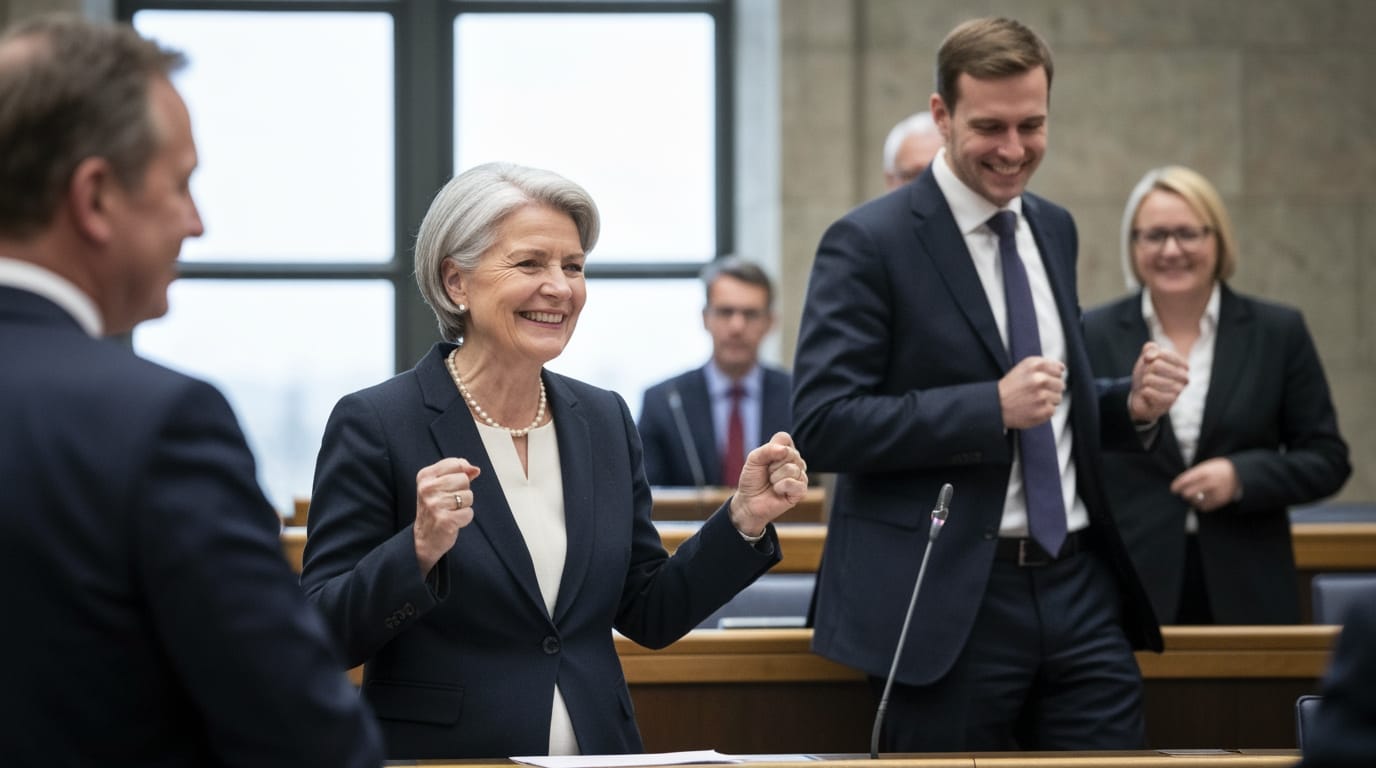
Berlin, Germany – In a critical move to revitalize its struggling economy, Germany's ruling coalition today unveiled a comprehensive package of economic reforms designed to boost growth, ease the burden on citizens and businesses, and counter mounting political pressures. Announced by Chancellor Friedrich Merz, the measures aim to inject dynamism into Europe's largest economy, which has been grappling with subdued growth and persistent challenges since the pandemic.
The agreement, a culmination of intensive negotiations between Chancellor Merz's center-right CDU party and their center-left SPD coalition partners, signals a concerted effort to overcome internal disputes and build momentum behind a long-awaited reform agenda. The package includes an annual €10 billion ($11 billion) in tax relief for lower-income earners, significant changes to the pension system that will see the retirement age rise to 67, and initiatives to increase affordable housing.
A Challenged Economic Landscape
Germany's economy has faced considerable headwinds in recent years, prompting urgent calls for structural reforms. Since the COVID-19 pandemic, the nation has recorded one of the weakest recoveries among advanced economies, with economic growth held back by weak exports, intense competition from China, and persistently high energy costs. Initially driven by the war in Ukraine and more recently exacerbated by the conflict involving Iran, these elevated energy prices have strained Germany's export-dependent economic model.
The government had previously halved its 2026 growth forecast to a mere 0.5% and cut its 2027 projection to 0.9%, down from an earlier estimate of 1.3%. Key economic indicators, such as industrial output, new orders, and retail turnover, have shown declines, indicating a loss of momentum at the start of 2026 despite some recovery at the end of last year. Business lobbies, such as the DIHK, have expressed significant concern, noting that while other major economies have seen substantial growth since 2019, Germany's economy has largely stagnated. This fragile recovery is further imperiled by external risks and ongoing geopolitical uncertainties, which continue to weigh on consumer and business sentiment.
Core Pillars of the Reform Package
The newly agreed-upon reforms are multifaceted, addressing various aspects of the German economy and society. Central to the package is the pledge for €10 billion in annual tax relief, primarily targeting lower and middle-income households. This relief will be financed by raising the top income tax rate from 45% to 47% for the highest earners, specifically those with annual incomes exceeding €280,000. This progressive approach is intended to ease the financial burden on the majority of the population, with an average family expected to be approximately €600 better off per year.
Beyond taxation, the coalition has tackled the critical issue of pension sustainability. Changes to the pension system will gradually increase the retirement age to 67, a measure aimed at securing the long-term viability of social welfare in an aging society. Affordable housing is another priority, with the package including specific measures designed to boost construction and availability, addressing a persistent societal challenge.
To enhance efficiency and reduce bureaucracy, the reforms also include an action plan to combat benefit fraud and the elimination of the ability for workers to obtain sick notes by telephone. Furthermore, the government aims to cut staffing in federal ministries by 8% through increased digitization, streamlining administrative processes and reducing operational costs. Corporate reporting obligations will also be reduced, a move intended to alleviate administrative burdens on businesses and foster a more conducive environment for economic activity.
Political Impetus and Expert Outlook
The urgency of these reforms is underscored by both economic necessity and political pressures. Chancellor Merz's government has been under intense scrutiny to deliver tangible results amidst persistent economic struggles and internal coalition disagreements. The ruling parties are also keen to demonstrate their capacity to address the nation's problems, particularly in light of the rising popularity of the far-right Alternative for Germany (AfD), which has been leading national opinion polls. Upcoming key regional elections in September, particularly in AfD strongholds in eastern Germany, add further political weight to the need for demonstrable progress.
Economists have largely reacted positively to the coalition's breakthrough. Marion Mühlberger, a senior economist at Deutsche Bank, lauded the package, noting it demonstrates the coalition partners' willingness to compromise and embark on structural reforms to be implemented by year-end. She expressed optimism that this development "should bode well for sentiment and dovetails with our forecast that growth will pick up in the second half of the year," calling it "one of the most significant reform packages in decades." This sentiment aligns with earlier forecasts from institutions like Goldman Sachs, which projected a 1.1% growth for Germany in 2026, largely driven by expansionary fiscal policy designed to boost domestic demand.
Broader Context of Investment and Innovation
This new reform package is not an isolated effort but rather builds upon broader strategic initiatives. In the past year, Germany has also announced a substantial €500 billion infrastructure fund, signaling a significant shift from its traditionally conservative fiscal approach. This long-term fund, intended to be deployed over several years, aims to address structural weaknesses by modernizing transport, energy, and digital infrastructures, as well as bolstering defense capabilities. Investments in areas like high-tech, artificial intelligence, quantum technologies, and cybersecurity also form part of the nation's strategy to enhance competitiveness and innovation. While the immediate package focuses on tax and social reforms, these larger investment frameworks underscore a comprehensive approach to securing Germany's future economic prosperity.
Conclusion
The German coalition's agreement on this comprehensive reform package marks a pivotal moment for the nation. Faced with a complex array of economic challenges, from global competition and high energy costs to internal stagnation and rising political discontent, the government has responded with a plan designed to provide immediate relief and foster long-term growth. By combining targeted tax cuts for lower earners with structural adjustments to the pension system, bureaucratic streamlining, and broader infrastructure investments, Chancellor Merz's government is attempting to steer Germany towards a more resilient and dynamic future. The success of these reforms, and their ability to translate into tangible economic improvement and renewed public confidence, will be closely watched both domestically and across Europe.