Germany Unveils World Cup 2026 Squad: Neuer Returns to Guard the Goal
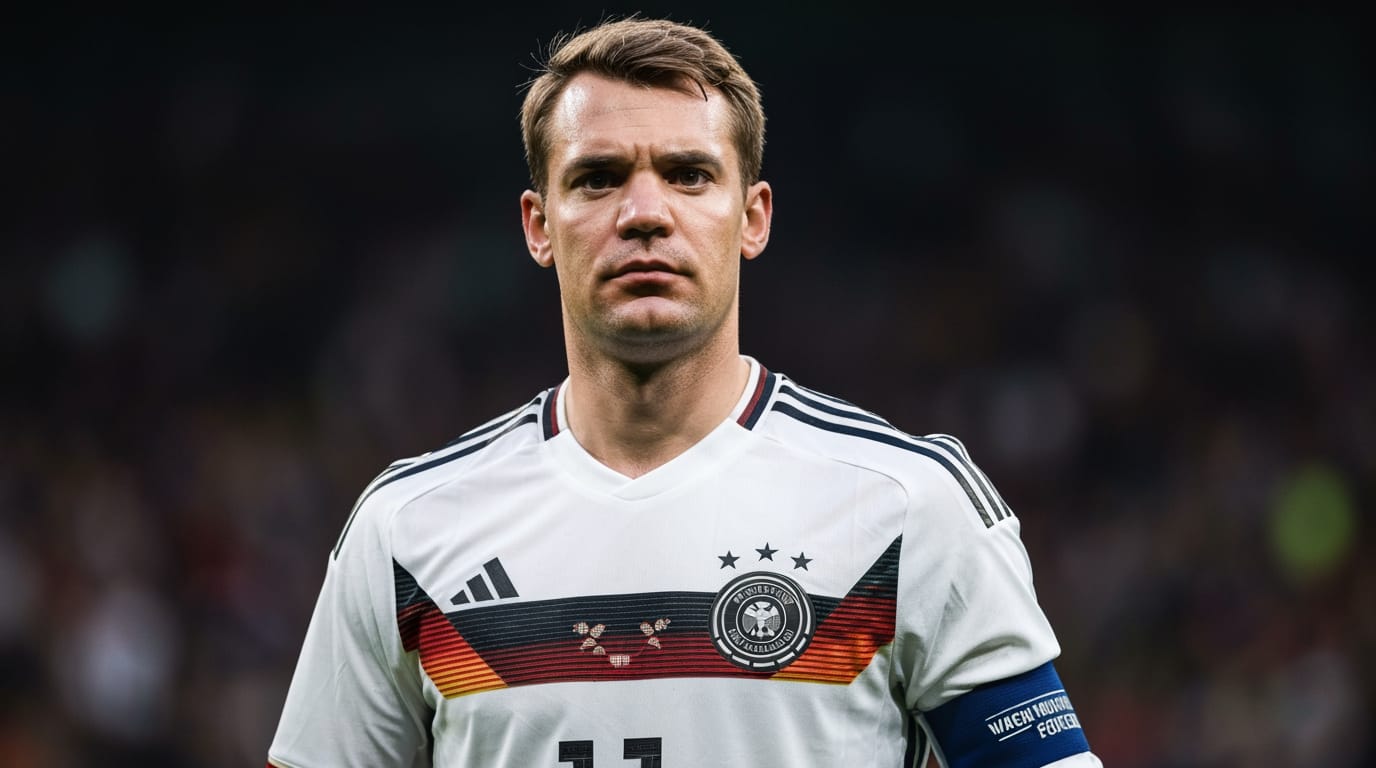
Germany's hopes for a record-equalling fifth FIFA World Cup title in 2026 have been dramatically shaped by the surprising return of veteran goalkeeper Manuel Neuer, who at 40 years old, has been named the team's starting number one. The announcement by national coach Julian Nagelsmann on Thursday sent ripples through the football world, signaling a bold strategy that blends seasoned leadership with emerging talent as Germany prepares for the tournament in the United States, Canada, and Mexico. Neuer's comeback from international retirement, just two years after his departure, underscores a relentless pursuit of glory and a reliance on unparalleled experience between the posts.
The Shock Return of a Legend
The unveiling of Germany's 26-player roster for the 2026 World Cup confirmed weeks of swirling speculation regarding Manuel Neuer's potential return. The Bayern Munich captain, who turned 40 in March, had officially retired from international football after Euro 2024, stating at the time that it was "exactly the right time to end my chapter in the national team." However, his exceptional form for Bayern Munich, which saw him win another Bundesliga title and reach the Champions League semi-finals, evidently proved too compelling for Nagelsmann to ignore.
Nagelsmann confirmed that Neuer, a 2014 World Cup winner, would reclaim his position as the undisputed number one goalkeeper, a decision that supplants Oliver Baumann, who had capably served as Germany's first-choice during the World Cup qualifying campaign, maintaining four consecutive clean sheets. The coach's decision reportedly followed "around 62 phone calls" made to players, including a necessary conversation with Baumann. Neuer’s impressive club performances, coupled with his recent contract extension with Bayern Munich until 2027, indicate a player defying age and maintaining peak physical condition. His international career, which began in 2009 and saw him earn 124 caps before his temporary retirement, now adds another chapter, highlighting a formidable resolve to contribute to his national team once more.
A Blend of Experience and Emerging Talent
Beyond the headline-grabbing return of Neuer, Nagelsmann's squad is a deliberate mix of established stars and promising young prospects. Bayern Munich midfielder Joshua Kimmich will captain the side, providing crucial leadership in the midfield. The attacking lineup boasts creative flair and firepower with talents like Jamal Musiala, Florian Wirtz, Kai Havertz, and Leroy Sané expected to spearhead Germany's offensive efforts. Sané's inclusion comes after an impressive season with Galatasaray, where he registered seven goals and five assists, following his free transfer from Bayern Munich.
The squad also marks the return of midfielder Leon Goretzka, following a strong campaign with Bayern, and Borussia Dortmund forward Maximilian Beier, who earned a recall after a productive end to the season. Nagelsmann also included some unexpected names who have impressed in the Bundesliga. Mainz midfielder Nadiem Amiri secured a spot after an outstanding season, scoring 17 goals from midfield, while Stuttgart striker Deniz Undav also made the cut after another prolific year in front of goal.
A strong Premier League contingent features prominently, with Arsenal's Kai Havertz, Liverpool's Florian Wirtz, and Newcastle's Malick Thiaw and Nick Woltemade making the grade. Defensively, the team will rely on the experience of Antonio Rüdiger and Jonathan Tah, complemented by Nico Schlotterbeck and Malick Thiaw. Emphasizing a long-term vision, several young talents have also been integrated into the squad, including Nathaniel Brown, Aleksandar Pavlović, Jamie Leweling, and 18-year-old Lennart Karl, demonstrating Nagelsmann's commitment to blending experience with the future of German football. Notably, Nagelsmann opted for three goalkeepers, a departure from some managers who select a fourth, with Oliver Baumann and Alexander Nübel supporting Neuer, and Jonas Urbig expected to travel as a standby option.
Germany's Path to Redemption
Germany enters the 2026 World Cup with the weight of recent tournament disappointments firmly on its shoulders. Early exits in the 2018 and 2022 World Cups, coupled with a premature departure from Euro 2020, have intensified the pressure on the national team to reassert its dominance on the global stage. The selection of a squad that balances the proven quality of veterans like Neuer with the dynamism of younger players reflects a strategic attempt to rectify past shortcomings and reclaim their status as a footballing powerhouse.
Drawn in Group E, Germany will face Curaçao, Ivory Coast, and Ecuador in the initial stages of the tournament. While the group stage presents its own challenges, the ultimate goal remains the pursuit of a fifth World Cup trophy, which would draw them level with Brazil as the most successful nation in the competition's history. The team’s qualification campaign, though successful, saw a rotation of goalkeepers, with Baumann primarily featuring before Neuer's sensational comeback. The focus now shifts to how this assembled squad, under Nagelsmann's guidance, will perform under the immense scrutiny of a World Cup.
The Legacy and the Future
Manuel Neuer's decision to unretire for the 2026 World Cup is a testament to his enduring passion for the game and his unwavering belief in his ability to perform at the highest level. Widely regarded as one of the greatest goalkeepers of all time, Neuer revolutionized the role with his "sweeper-keeper" style, characterized by his aggressive positioning and exceptional ball-playing ability. His leadership was instrumental in Germany's 2014 World Cup triumph, where he also earned the Golden Glove award.
This fifth World Cup appearance for Neuer represents a significant addition to an already illustrious career. His journey back, marked by consistent high-level performances for Bayern Munich and a recent contract extension, highlights a player in relentless pursuit of excellence, defying the conventional timeline for professional footballers. While previous reports noted a calf injury concern, his official inclusion confirms his fitness and readiness for the challenge. His presence offers not only invaluable experience and shot-stopping prowess but also a formidable psychological boost for a team eager to leave its mark on the tournament.
The inclusion of both seasoned World Cup winners and fresh, hungry talent creates an intriguing narrative for Germany in 2026. The blend of eras, epitomized by Neuer's return and the rise of young stars, sets the stage for a compelling campaign. As the world watches, Germany will aim to navigate its group, build momentum, and ultimately contend for the sport's most coveted prize, with the 40-year-old legend once again at the heart of their ambitions.