Germany's 2026 Harvest Plunges Amidst Relentless Drought, Igniting Fears of Soaring Food Prices
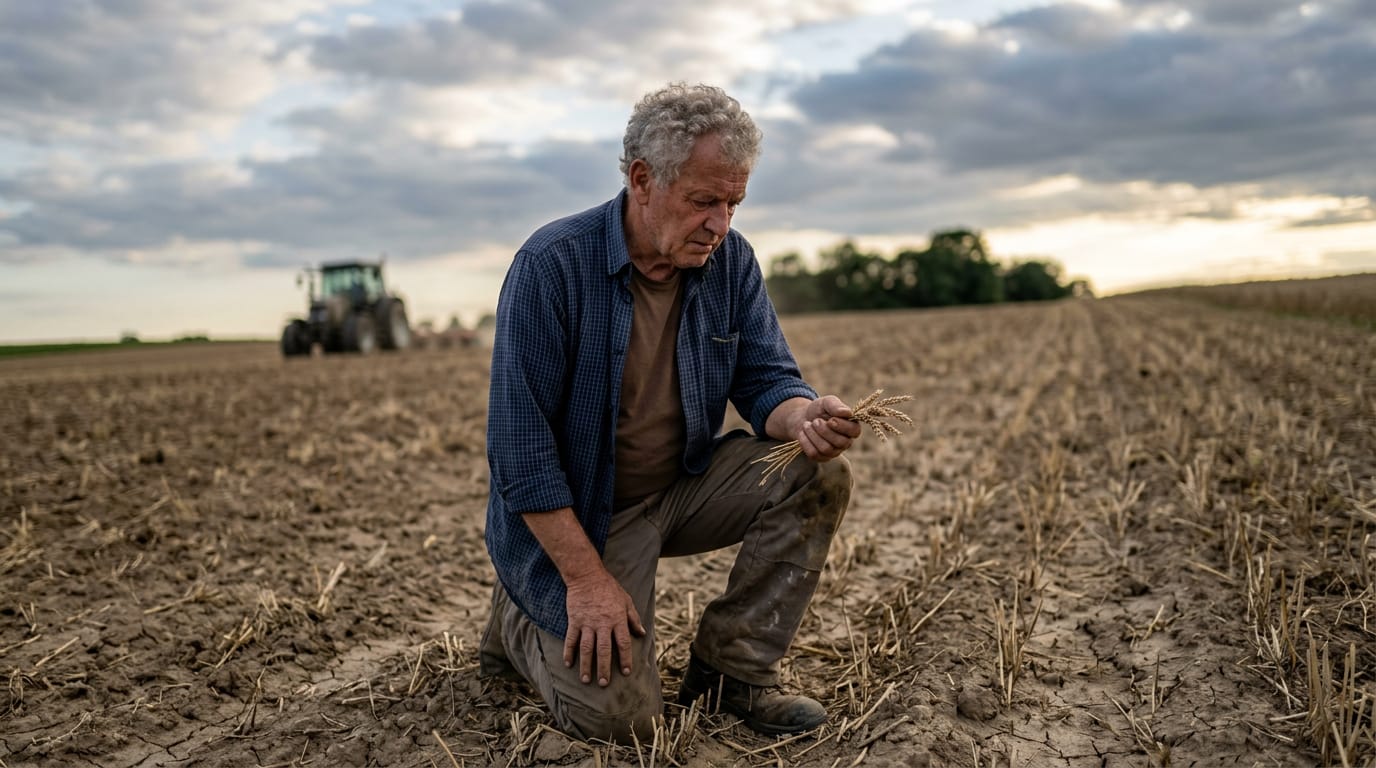
Berlin, Germany – Germany's agricultural sector is grappling with a significantly diminished 2026 harvest, as prolonged drought, intense heatwaves, and persistent pest pressures have severely impacted crop yields across the nation. The drastic reduction in output, particularly for staple grains and rapeseed, is intensifying financial strain on farmers and raising considerable alarm about a potential surge in consumer food prices in the coming months, a development that could further exacerbate inflationary pressures.
The German Farmers' Association (DBV) reports a projected 7 percent decline in the overall grain harvest compared to 2025, with average yields expected to plummet by 9 percent to 68.9 decitons per hectare. This substantial shortfall underscores a challenging agricultural year, characterized by an overly dry spring followed by a severe heatwave in late June and continued precipitation deficits. In some southern and western regions, conditions have been so dire that farmers are reporting "total yield failure," painting a grim picture for the season's agricultural output.
The Harsh Reality: Extent of Crop Losses
The backbone of Germany's agricultural production has been particularly hard hit. Winter wheat, the country's most crucial crop cultivated on approximately 2.9 million hectares, is forecast to yield 20.9 million tons, a 7 percent decrease from the previous year. Its average yield is expected to fall by 9 percent to 72.1 decitons per hectare, although quality variations exist regionally. The situation is even more critical for winter rapeseed, which faces an anticipated 20 percent drop in yield, resulting in a mere 3.3 million tons of production. This crop was significantly affected not only by heat and drought but also by heavy pest pressure, compounded by a scarcity of effective treatments.
Beyond grains and oilseeds, autumn crops such as potatoes, vegetables, sugar beet, maize, and soybeans are also experiencing "considerable yield losses," with some southern German areas facing the risk of complete crop annihilation. Even apple harvests are projected to decline significantly, dropping by 17.9 percent from last year's unusually large crop and 5.4 percent compared to the decade's average. While northern regions, having received more rainfall, fare somewhat better, their yields are still anticipated to be below average. This widespread reduction in agricultural output signals a challenging period for both producers and consumers alike.
Farmers on the Brink: Economic Strain and Urgent Calls for Aid
The weak harvest arrives at an already precarious economic juncture for German farmers. They are contending with a confluence of low producer prices for their goods and persistently high input costs for essential resources like diesel, fertilizers, and crop-protection products. This imbalance is placing immense pressure on farm liquidity, with some agricultural businesses requiring interim or special financing merely to sustain operations and prepare for the next planting cycle. The acute shortage of feed for livestock, resulting from diminished grassland yields, has even forced some farmers to resort to earlier-than-planned slaughter of their animals, a desperate measure to cope with the crisis.
In response to the mounting challenges, the German Farmers' Association (DBV), led by President Joachim Rukwied, is urgently appealing to the government for a comprehensive package of emergency assistance. Key demands include faster disbursement of payments, enhanced liquidity support, and a significant increase in EU fertilizer assistance from the current €60 million to the maximum €180 million, with payments ideally commencing in September. Farmers are also advocating for a temporary reduction in diesel taxation, at least until the end of November, and an earlier payout of 80 percent of EU direct payments to alleviate immediate financial burdens. Furthermore, the DBV has called for the introduction of a tax-free reserve fund, a measure designed to allow farmers to build savings to weather future difficult years and invest in more resilient crop varieties.
Agriculture Minister Alois Rainer (CSU) has acknowledged the severity of the situation, emphasizing the need for a coordinated response and sufficient financial capacity for farms to procure animal feed and other necessary inputs. The government is exploring several relief measures, including a €200 million liquidity-support program administered via Landwirtschaftliche Rentenbank and deferrals of social-security contributions through the Social Insurance for Agriculture, Forestry and Horticulture. Discussions are also underway regarding deferring lease payments owed to the state-owned BVVG.
Ripple Effect: Broader Economic and European Implications
While current German food inflation in July 2026 stood at a moderate 0.4% year-on-year, significantly lower than the overall inflation rate of 2.8% which was primarily driven by energy costs, experts are issuing strong warnings about impending price hikes. The modest current food inflation masks underlying pressures, with meat and confectionery prices already showing increases, while some edible fats, oils, and dairy products have seen declines. However, the severe harvest losses are expected to translate into higher consumer prices for many agricultural products in the coming months, with some experts predicting a 10 to 20 percent increase for certain fruits and vegetables. The delay in consumers feeling the price impact is attributed to existing supermarket contracts and stock, but the delayed effects are deemed "inevitable" as retailers eventually restock with the costlier new harvest.
The challenges extend far beyond Germany's borders, impacting the broader European agricultural landscape. Persistent heat and drought conditions are affecting agricultural production across the continent, leading to concerns about reduced harvests and elevated food prices throughout Europe. Countries like Austria, France, and Romania are also reporting significant crop losses, with the European Union and the United Kingdom collectively expected to lose approximately 9 million tonnes of grain compared to earlier forecasts, representing an estimated €2 billion in lost production value. This widespread climate stress across major growing regions could tighten market supply and sustain price pressures for consumers across the continent.
Climate Change and the Future of Agriculture
This year's agricultural crisis is not an isolated incident but rather a stark manifestation of accelerating climate change. Germany, like much of Europe, has experienced repeated droughts and heatwaves in recent summers, with 2026 being described as a year of "extreme heat." The increasing frequency and intensity of these extreme weather events are fundamentally altering growing seasons, leading to earlier harvests and greater vulnerability to climate-induced stresses.
The long-term implications are profound. Experts warn that extreme heat is no longer a short-term weather phenomenon but a "structural economic shock" with significant financial consequences. An insurer has estimated that extreme heat could cost the German economy around €112 billion by 2030, impacting worker productivity and energy costs simultaneously. For the agricultural sector, the continued pace of climate change threatens to outstrip adaptation efforts, with potential consequences for production capacity, food prices, and the economic viability of farms in the years ahead. The current crisis serves as a urgent call for long-term strategies, including investment in heat-resistant crop varieties and robust risk management systems, to safeguard food security and support the resilience of the farming community against an increasingly volatile climate.
The intertwined challenges of a weakened harvest, financial strain on farmers, and the looming threat of higher food prices highlight a critical moment for Germany and Europe. Addressing these issues will require a combination of immediate relief measures and sustained, forward-looking policies to build a more resilient and sustainable agricultural future in the face of an undeniable climate crisis.