Germany's Construction Conundrum: A Nation Grapples with Persistent Delays and Budget Overruns
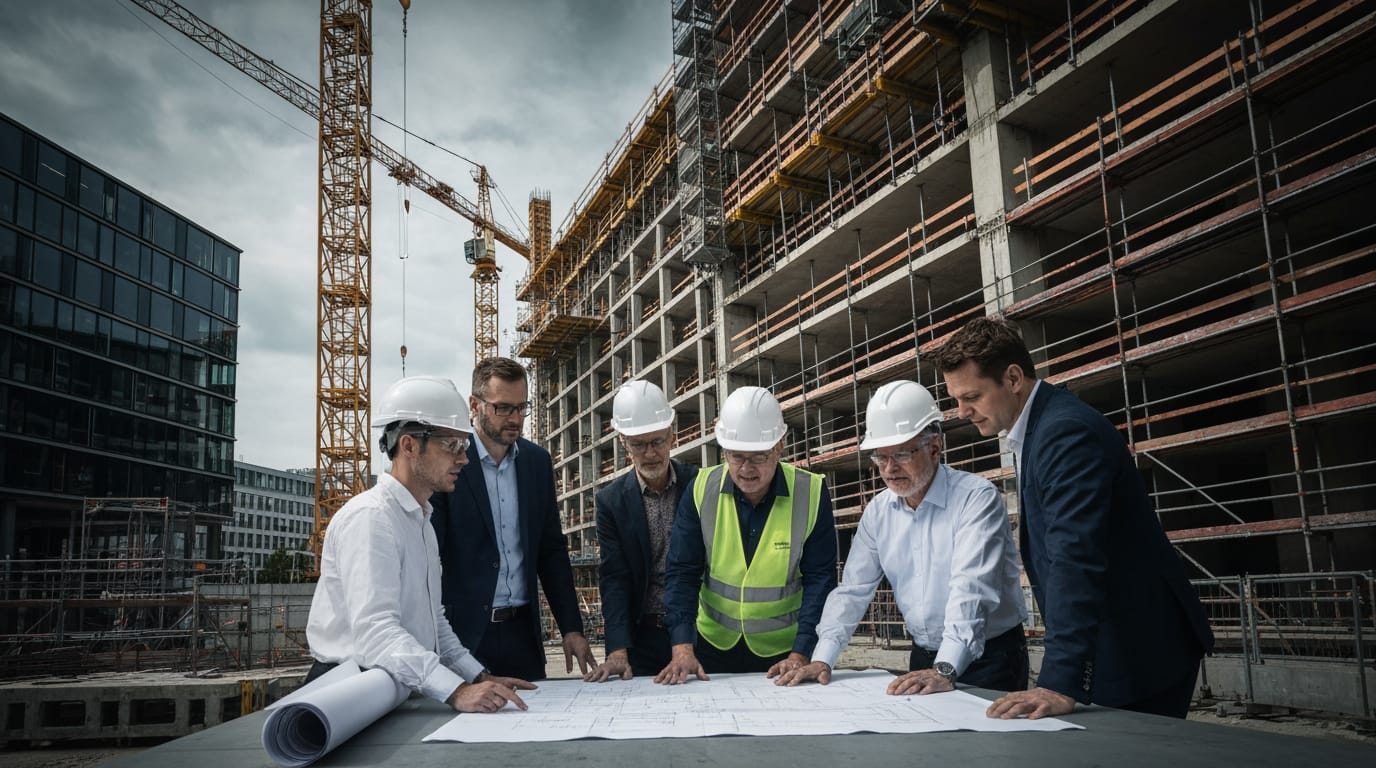
Germany, a nation long synonymous with efficiency and engineering prowess, finds its reputation challenged by a persistent and costly issue: an epidemic of delayed and over-budget construction projects. From major infrastructure endeavors to crucial residential developments, the country's building sector is plagued by a confluence of complex regulations, acute labor shortages, soaring material costs, and entrenched planning deficiencies, leading to significant economic strain and public frustration. The challenges are systemic, turning once-routine projects into multi-year sagas that drain public coffers and exacerbate critical housing shortages.
The Regulatory Labyrinth: Bureaucracy's Heavy Toll
At the heart of Germany's construction woes lies an intricate web of regulatory compliance and bureaucratic processes. The nation's stringent building regulations, coupled with an estimated 3,700 DIN standards, create a legal and administrative maze that significantly impedes project timelines and inflates costs. These extensive rules, often more comprehensively applied than comparable European directives, contribute to lengthy approval procedures, complex zoning requirements, and strict building codes. Between 2010 and 2024, federal legislation in Germany expanded by approximately 60%, despite political promises to reduce red tape. Experts note that around a quarter of the increase in construction costs since 2000 is directly attributable to additional standards and regulations, rather than to rising wages or material prices. This regulatory intensity, while ensuring high quality and safety, often sacrifices speed and cost-efficiency, creating an environment where a project approved without issue in one federal state might face significant hurdles in another due to minor details.
Workforce Shortages and Material Cost Volatility Create Bottlenecks
Beyond the regulatory framework, the German construction industry grapples with severe labor market constraints and volatile material costs. An aging workforce and insufficient numbers of young people entering vocational training programs have led to an acute shortage of skilled workers. The job vacancy rate in the construction sector reached 6.8% in Q2 2023, indicating a substantial gap between demand and supply. Projections suggest that Germany's construction sector could face a shortfall of 100,000 workers by 2030. This scarcity not only prolongs construction timelines, increasing the average construction time from 20 to 26 months since 2020, but also drives up labor costs.
Compounding the labor challenge are the significant increases in material prices and persistent supply chain issues. The cost of construction services has surged by 35% since 2020. High prices for energy and raw materials, including wood, steel, and insulation, have seen substantial jumps, with some timber prices increasing by over 77% in 2021 compared to 2020. Delivery bottlenecks, exacerbated by global events and domestic demand, force builders to either absorb higher costs or pass them on to clients. The Ifo Institute for Economic Research reported that over a third of companies experienced delivery problems in late 2021. These economic pressures have led to declining investments and, particularly in the housing sector, have rendered many projects unprofitable, resulting in postponements and cancellations.
Planning Flaws and Project Management Deficiencies
Germany's large-scale construction projects have become infamous for their planning flaws and managerial shortcomings, turning ambitious blueprints into cautionary tales of delay and expense. Prominent examples include the Berlin Brandenburg Airport (BER), Stuttgart 21 railway project, and the Elbphilharmonie concert hall. The BER airport, for instance, suffered from poor planning, execution, and management, pushing its opening from 2010 to 2019 and escalating costs from an initial €2.5 billion to €6.9 billion by 2016. Stuttgart 21, a complex railway and urban development project, saw its estimated costs balloon from €2.5 billion in 1995 to €8.2 billion by 2025, with its completion date repeatedly pushed back. The Elbphilharmonie, initially projected at €241 million, ultimately cost €789 million.
These high-profile failures often stem from inadequate initial planning, where design details are left unresolved until construction begins, leading to costly alterations and domino effects. Poor administrative structures and vaguely defined responsibilities further exacerbate problems, with clients often responsible for entire designs but lacking internal or external control mechanisms for the design and construction processes. Furthermore, a strict interpretation of European procurement law often compels public bodies to select the cheapest bidder, a practice that can lead to initial underestimation of costs and subsequent explosions as project complexities unfold. Attempts to integrate digital solutions have often failed, contributing to inefficiencies.
External Pressures: Political Shifts and Financial Headwinds
Beyond internal industry challenges, German construction projects are frequently buffeted by external pressures, including political interference and shifting financial landscapes. Political influence can introduce late design changes, incurring additional time and costs. Large-scale infrastructure projects, in particular, are susceptible to political shifts, such as the election of new officials or changes in party power, which can lead to revised priorities and prolonged disputes. Public opposition and legal challenges from citizens, wary of the environmental or social impact of major developments, can also cause significant delays and contribute to cost overruns, as seen with Stuttgart 21.
Moreover, the financial environment has become less favorable for construction. Elevated interest rates, currently ranging from 3.5% to 4%, a substantial increase from rates below 1% before 2021, have made project financing more expensive and many ventures unprofitable. This has led to a decline in building permits and a slowdown in residential construction, particularly affecting the government's ambitious target of 400,000 new housing units annually, a goal consistently missed. The tightening of lending standards and rising borrowing costs further restrict access to capital, impacting developers, especially small and medium-sized enterprises.
Conclusion: A Path Towards Reconstruction and Efficiency
Germany's construction sector is at a critical juncture, facing a complex interplay of internal and external factors that have undermined its historical efficiency. The cumulative effect of an overburdened regulatory system, a strained labor market, escalating material costs, and persistent planning and management deficiencies has resulted in chronic project delays and budget overruns, impacting everything from housing availability to national infrastructure. While recent political initiatives, such as the "Construction Turbo Mode" and the Building Type E Act, aim to streamline permitting and simplify regulations, and the government has pledged significant investment in infrastructure, the path to recovery is fraught with challenges. Addressing these deep-seated issues will require a multi-faceted approach, including significant investment in vocational training, aggressive digitalization of planning processes, continued regulatory simplification, and a fundamental reassessment of project management and procurement strategies. Only then can Germany hope to rebuild its reputation for efficiency and deliver critical projects on time and within budget, serving the needs of its economy and its people.