Germany's Economic Engine Stalls as Rhine River Levels Threaten Stagnation
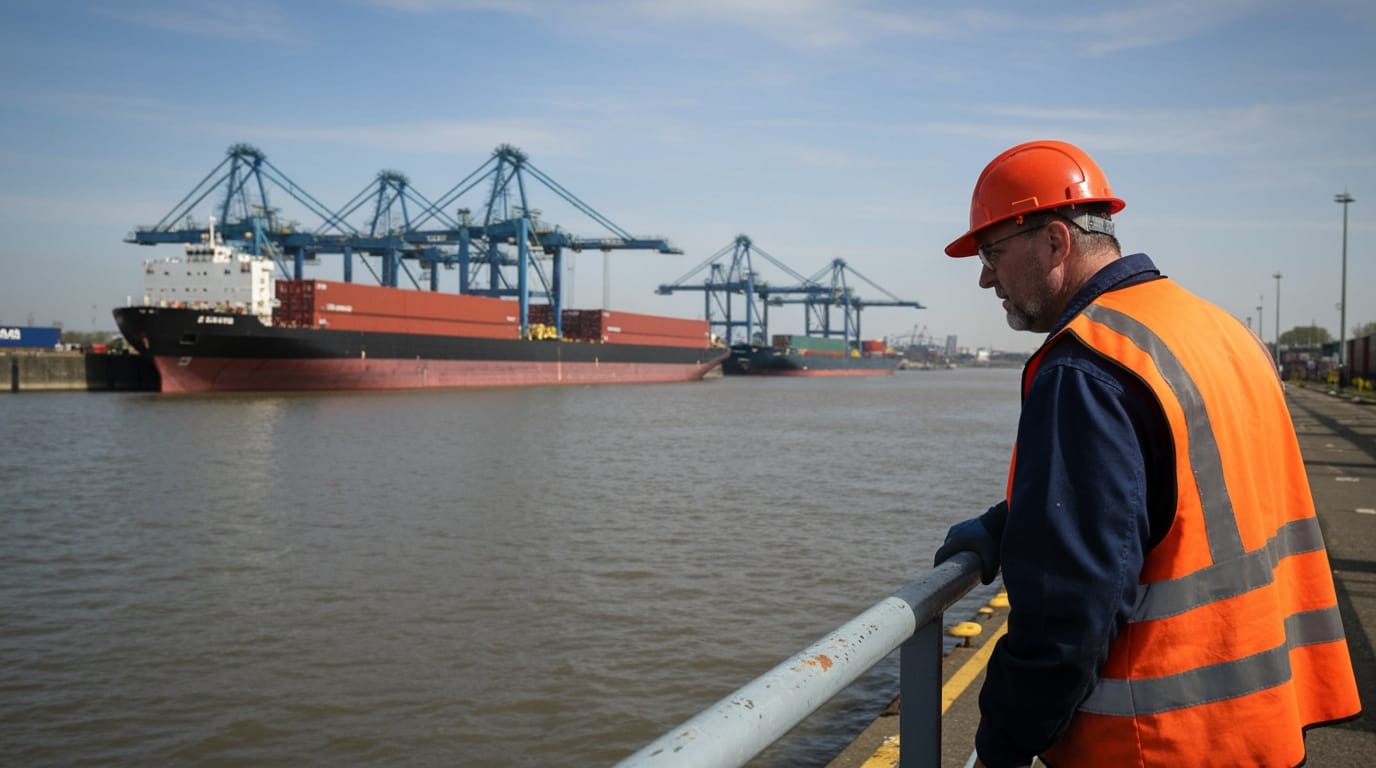
Cologne, Germany – The Rhine River, a vital artery of German commerce, is experiencing alarmingly low water levels, raising fears that this perennial challenge could push Europe's largest economy into stagnation. The critical decline, exacerbated by persistent dry weather and summer heatwaves, is severely impeding shipping, escalating transport costs, and disrupting supply chains for key industries, posing a significant headwind to Germany's already fragile economic recovery.
The Lifeline Under Threat: A Nation's Waterway in Peril
For centuries, the Rhine has served as Germany's most important inland waterway, a bustling conduit for raw materials, fuel products, and manufactured goods. From its headwaters in the Swiss Alps to its delta in the North Sea, the river links vast industrial regions with major ports like Rotterdam, facilitating the movement of an estimated 195 million tons of cargo annually on German rivers alone. However, the current conditions have transformed this economic lifeline into a bottleneck.
At Kaub, a crucial chokepoint between Koblenz and Mainz, water levels have plummeted to as low as 20-30 centimeters in recent days, matching or even surpassing the record lows seen in 2018. While the riverbed is deeper than these measured levels, a navigable depth of around 1.5 meters at Kaub is typically required for vessels to operate fully loaded. With current depths, cargo ships are forced to sail significantly lighter, often at 10% to 20% of their full capacity, to avoid running aground. This drastic reduction in load capacity means that multiple vessels are now required to transport the same volume of goods, leading to substantial increases in freight rates and considerable logistical strain. The German inland navigation agency anticipates further drops, with little immediate relief in sight from rainfall.
Economic Ripples: Industries on Edge
The repercussions of the Rhine's dwindling water levels are rippling through critical sectors of the German economy. Industries reliant on the river for inbound raw materials and outbound finished products are facing mounting pressures, threatening to undermine the nation's industrial output.
Shipping and Logistics Under Duress: The most immediate impact is on the shipping industry. Transport costs have surged dramatically, with commodity traders reporting increases from approximately €45 per ton at the end of June to €130-€140 per ton for routes like Rotterdam to Karlsruhe by late July. This rise is due to "low water surcharges" imposed by vessel owners to compensate for operating with reduced loads, and the necessity of deploying more barges to carry equivalent volumes. While alternative transport options like rail and road are being utilized, these too come with higher costs and often lack the capacity to fully absorb the diverted cargo. Some vessel owners are even considering suspending operations if loads become too small to be profitable or if there's a risk of damage to their barges.
Manufacturing and Energy Supply Chains Strained: Germany's robust manufacturing sector, particularly its chemical and steel industries, is feeling the pinch. Companies like Thyssenkrupp Steel have been compelled to "slightly reduce blast furnace production" at their Duisburg plant due to restricted raw material supplies, as their own push-barge fleet has been taken out of service. Similarly, the chemical industry is facing significant challenges, with LyondellBasell declaring force majeure on butadiene supplies from its Wesseling plant due to feedstock shortages, and Shell's steam cracker in Wesseling reportedly going offline. BASF, Shell, and Thyssenkrupp are among the industrial giants adapting their logistics by employing low-draft barges and increasing reliance on rail, trucks, and pipelines where feasible.
The energy sector is also vulnerable. The Rhine is crucial for transporting coal to power plants, and disruptions risk decreasing production in thermal power facilities. The German government has reportedly prioritized energy products on railways to mitigate this issue.
Broader Economic Implications: Economists are closely monitoring the situation, warning of significant macroeconomic consequences. Deutsche Bank Research economist Marc Schattenberg noted that if water levels remain as low as in 2018 or 2022, it would negatively impact economic recovery and slow the expected easing of inflation. The Kiel Institute for the World Economy estimates that a month with 30 days of low water levels on the Rhine could lead to a decline of approximately 1% in Germany's industrial production. Furthermore, some economists predict that disruptions to Rhine traffic could reduce Germany's gross domestic product in the third quarter by 0.1 to 0.2 percentage points, potentially pushing the economy into stagnation. The fragile economic recovery, complicated by other global factors, now faces an unwelcome domestic headwind.
A Recurring Crisis: Climate Change as a Catalyst
The current low water levels are not an isolated incident but rather part of a disturbing trend. Germany experienced severe low-water events on the Rhine in 2018 and 2022, with the 2018 drought costing the German economy an estimated 0.4% of its output. These recurring crises are increasingly linked to climate change, which is altering precipitation patterns and causing more frequent and intense droughts across Europe.
Studies show that the Rhine has warmed significantly since 1978, with the average annual water temperature in Basel rising by 0.4°C per decade. Projections indicate that the Rhine could warm by an additional 2.9 to 4.2°C by 2100 compared to 1990-2010 levels, leading to more frequent days with dangerously high water temperatures above 25°C. This warming is compounded by a decrease in snowmelt and glacier melt from the Alps, which historically contributed to river flow, especially during drier periods. Future climate scenarios predict wetter winters but significantly drier summers, leading to increased streamflow variability and more pronounced low-flow extremes. The buffering capacity provided by ice melt during hot, dry summers, as seen in 2003 or 2018, is projected to diminish and almost disappear by the end of the century, exacerbating future low-water events.
Navigating the Shallows: Mitigation and Adaptation
In response to the escalating challenges, both industry and government are exploring and implementing various mitigation and adaptation strategies. Companies are not entirely unprepared, having learned lessons from previous low-water crises. Many have invested in more resilient supply chains, utilizing low-draft barges, and optimizing their use of alternative transport modes like rail, trucks, and pipelines.
Governmental efforts include investigating the deepening of strategic points along the Rhine and increasing investment in rail and road infrastructure to provide more robust alternatives for cargo transport. In a broader context, the Netherlands initiated the Integral River Management (IRM) program in 2020 to address climate change impacts on its river regions, including measures like selectively deepening waterways and collaborating with riparian states. Long-term solutions also involve increasing storage capacity near waterways to buffer supply disruptions and developing new low-water vessels designed for shallower drafts. However, these solutions require considerable time and investment to yield widespread results.
The persistent low water levels of the Rhine highlight a critical vulnerability in Germany's economic infrastructure, directly linked to the accelerating impacts of climate change. The current situation demands urgent attention and a comprehensive, collaborative approach to safeguard the nation's industrial heartland and ensure its future prosperity. Without sustained efforts to adapt to a changing climate and bolster logistical resilience, the Rhine's shrinking waters will continue to pose an existential threat to Germany's economic stability.