Global Spotlight on White House Dinner: Ronaldo's Presence Intertwines Sports, Diplomacy, and Geopolitics
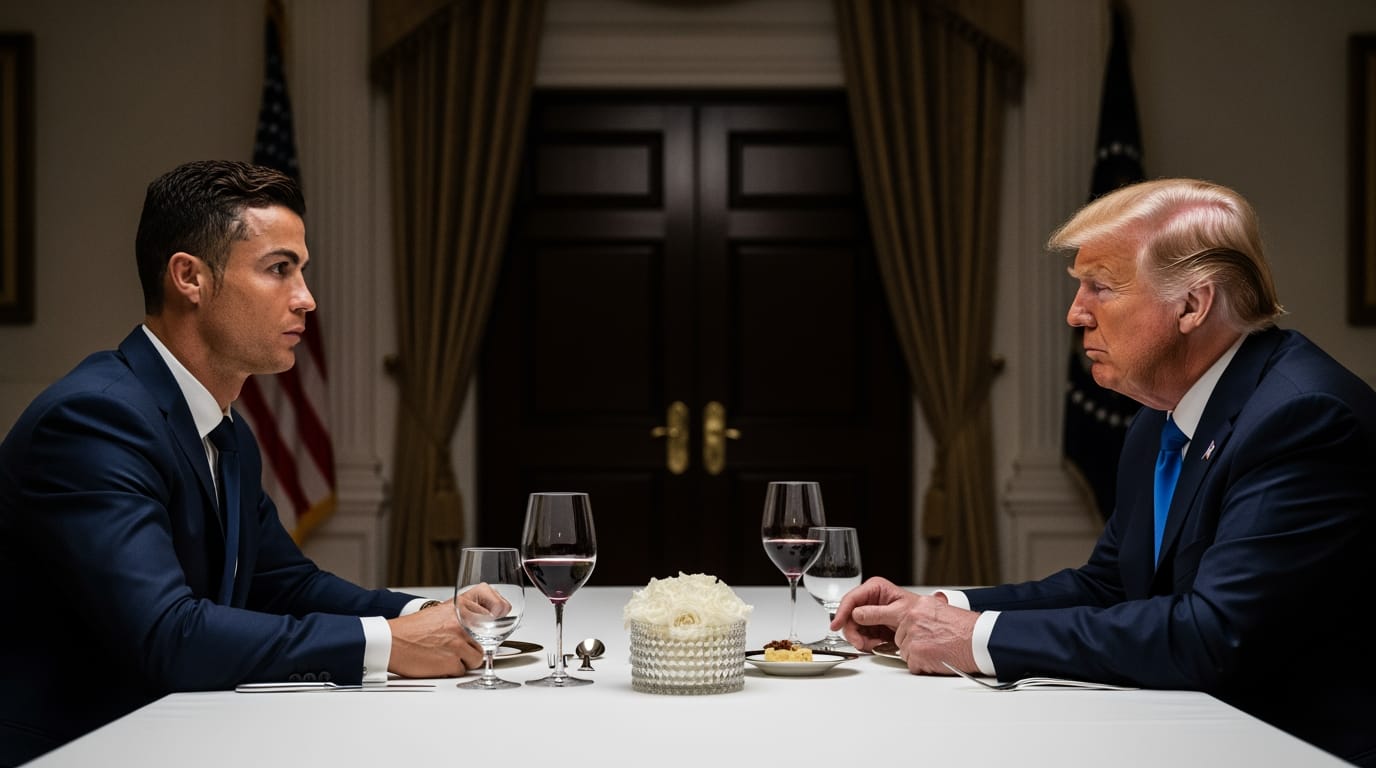
Washington D.C. — In an unexpected convergence of global celebrity, high-stakes diplomacy, and political maneuvering, football superstar Cristiano Ronaldo recently attended a high-profile dinner at the White House, hosted by then-President Donald Trump. The event, which unfolded around November 19-20, 2025, saw the Portuguese icon join an exclusive gathering that included Saudi Crown Prince Mohammed bin Salman (MBS), underscoring a complex interplay of soft power and strategic interests at the heart of Washington’s foreign policy efforts. Ronaldo’s presence at the state dinner, held in honor of the Saudi delegation, quickly became a focal point, drawing significant international attention and sparking discussions about the evolving landscape where sports and geopolitics increasingly intersect.
The Unconventional Guest List: A Blend of Influence
The White House dinner was far from a conventional diplomatic affair, distinguished by its unique mix of attendees. Beyond the usual political figures, the guest list boasted a constellation of influential personalities from the business and sports worlds, including Tesla CEO Elon Musk and Apple CEO Tim Cook. However, it was the arrival of Cristiano Ronaldo, one of the most recognizable athletes globally, that particularly captured headlines. The five-time Ballon d'Or winner was seen in the Oval Office with President Trump and First Lady Melania Trump, and later took his seat among prominent guests at the lavish East Room dinner. His fiancée, Georgina Rodríguez, also accompanied him during parts of his White House visit, adding another layer of personal interest to the high-level engagement.
The timing of Ronaldo's visit coincided directly with Crown Prince Mohammed bin Salman's first return to the United States in seven years. The Saudi leader's trip was widely seen as a concerted effort to strengthen ties with Washington and to project a modernized image for the kingdom on the global stage. Ronaldo, a figure with immense international reach and currently the face of the Saudi Pro League, where he plays for Al-Nassr, became an undeniable element in this diplomatic overture. His club is notably majority-owned by Saudi Arabia's Public Investment Fund (PIF), chaired by Crown Prince Mohammed bin Salman himself, thereby intertwining Ronaldo’s professional career with Saudi strategic ambitions.
Ronaldo's Engagements and Public Acknowledgment
Throughout his visit, Ronaldo engaged in several public interactions that quickly went viral across social media. He took to Instagram to express his gratitude, posting: "Thank you Mr. President for your invitation and for the warm welcome you and the First Lady gave me and my future wife." This message was accompanied by photos and videos depicting Ronaldo shaking hands with President Trump in the iconic Oval Office and taking a leisurely stroll through the White House grounds. One particularly notable video, shared by the White House, featured the caption "Two GOATS. CR7 x 45/47," playfully referring to Ronaldo's "Greatest Of All Time" status and Trump's non-consecutive terms as the 45th and 47th U.S. President.
During his remarks at the dinner, President Trump specifically acknowledged Ronaldo's presence, highlighting the footballer's global appeal. "My son is a big fan of Ronaldo," Trump stated, adding, "And Barron got to meet him, and I think he respects his father a little bit more now that I've introduced you. Thank you for being here, it's an honor." This personal anecdote humanized the high-level political event and further amplified the media buzz surrounding Ronaldo's attendance. Ronaldo himself had previously expressed admiration for Trump, telling Piers Morgan in an interview that Trump is "one of the guys that can help to change the world," and indicating a desire to meet him. His appearance at the White House served as a tangible realization of that expressed interest. Furthermore, images showed Ronaldo holding a ceremonial "key to the White House," symbolizing the unique access granted during his visit.
Diplomatic Intent: Saudi Arabia's Global Reintegration
The broader context of Crown Prince Mohammed bin Salman's visit, and by extension, Ronaldo's presence, revolved around Saudi Arabia's ongoing efforts to redefine its international standing. Since the 2018 killing of U.S.-based journalist Jamal Khashoggi, the kingdom has faced significant international scrutiny and diplomatic isolation. The Crown Prince's engagement in Washington was a strategic move to address these concerns, rebuild his global image, and foster stronger bilateral ties with the United States. Saudi Arabia's Vision 2030, an ambitious plan to diversify its economy away from oil and strengthen strategic partnerships, formed a crucial backdrop to these discussions.
Ronaldo's influential role extends beyond the football pitch; he has actively promoted Saudi Arabia, featuring in promotional videos for the Saudi Tourism Authority and openly referring to MBS as "our boss" in the kingdom. His unparalleled global following, particularly on social media, offers immense soft power leverage, capable of swaying international perceptions and bolstering the kingdom's public relations initiatives. The presence of such a universally admired figure at a dinner meant to mend diplomatic fences underscores a contemporary trend: the increasing utilization of sports and celebrity influence as tools in international relations. This visit, for instance, coincided with Saudi Arabia's successful bid to host the 2034 World Cup, a campaign Ronaldo actively supported, further cementing his role as a key figure in the kingdom's global outreach.
The Echoes of Controversy and Global Speculation
Ronaldo's White House visit, though presented as a warm exchange, was not without its surrounding whispers and speculation. Just days after his appearance at the prestigious dinner, a surprise reprieve from a FIFA-issued three-game suspension for violent conduct was granted to the football star, significantly reducing his ban. This unexpected development, coming so soon after his high-profile diplomatic engagement, led some to connect the two events, fueling "conspiracy theories" about potential external influences on sporting decisions. While such claims remain unsubstantiated, the timing inevitably added a layer of intrigue to an already remarkable sequence of events.
The entire episode generated a wealth of viral content and extensive media coverage, reflecting the immense global interest in the personalities involved. From the casual banter between Trump and Ronaldo to the broader geopolitical implications of the Saudi Crown Prince's visit, the dinner transcended a mere social gathering, becoming a significant cultural and political moment. It highlighted how modern diplomacy can leverage celebrity status and popular culture to advance national interests and reshape international narratives.
A New Chapter in Diplomacy
The White House dinner featuring Cristiano Ronaldo, Donald Trump, and Crown Prince Mohammed bin Salman represents a compelling snapshot of modern diplomacy, where the lines between celebrity, sports, and international relations are increasingly blurred. Ronaldo's presence served multiple functions: a personal meeting with a leader he admired, a nod to sports diplomacy, and a subtle yet potent symbol in Saudi Arabia's ongoing efforts to recalibrate its image and strengthen its global partnerships. The event showcased the power of global icons to lend visibility and soft power to diplomatic endeavors, effectively capturing public imagination and media attention in ways traditional statecraft often cannot. As nations continue to navigate complex geopolitical landscapes, the strategic inclusion of figures like Ronaldo may well become a more common feature in the pursuit of national interests and the fostering of international goodwill.