Greenland's Football Dreams: Chasing the World Stage Amidst Political Shifts
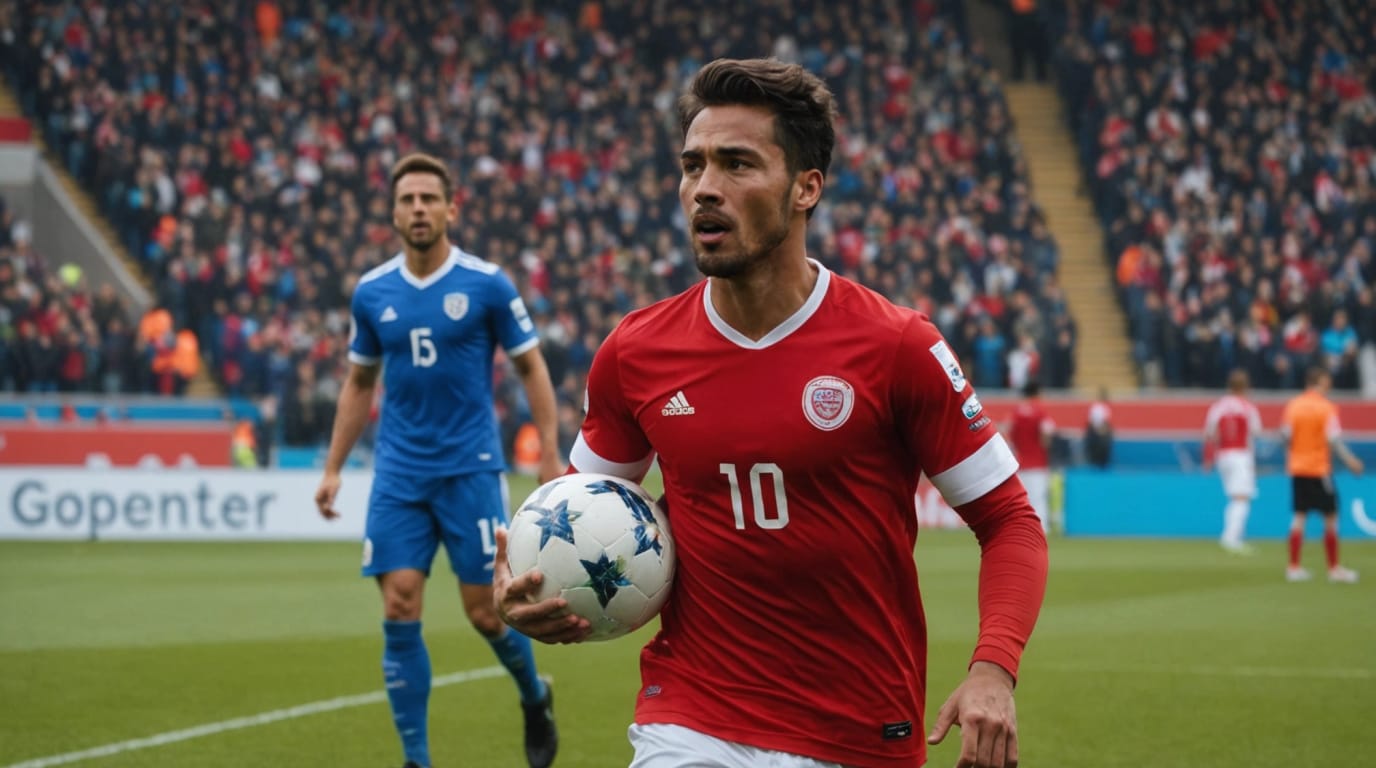
NUUK, Greenland – In a land where ice and snow dominate the landscape, a different kind of passion is taking root: football. Despite the challenges posed by a harsh Arctic climate and a unique political status, Greenland is determined to make its mark on the world stage through the beautiful game. With renewed calls for annexation by the U.S. and a growing sense of national identity, Greenland's pursuit of international football recognition has become more than just a sport; it's a symbol of its aspirations and a potential tool for shaping its future.
A Game Against the Odds
Football has been played in Greenland since the 1950s, quickly becoming the island's most popular sport. In 1971, the Football Association of Greenland (KAK) was founded to oversee domestic leagues and develop national teams. Today, Greenland boasts 39 clubs and over 5,600 registered players, an impressive figure considering its population of roughly 55,000.
However, Greenland faces significant hurdles in its quest for international recognition. The primary obstacle is its political status as an autonomous territory within the Kingdom of Denmark. Unlike the Faroe Islands, another Danish dependency with its own FIFA membership, Greenland is not considered an independent nation, a key requirement for joining FIFA and UEFA.
Adding to these challenges are the environmental realities of Greenland. The island's polar and sub-polar climate limits outdoor play to a few months each year, typically from late May to mid-September. Historically, games were played on sand and ash pitches due to the inability to sustain grass fields.
The CONCACAF Path
Faced with rejection from UEFA, Greenland has turned to CONCACAF, the governing body for football in North America, Central America, and the Caribbean. Geographically, Greenland is part of North America, making CONCACAF a logical, if unconventional, choice.
In May 2024, the KAK officially applied to join CONCACAF, a move hailed as a "historic step" by Greenland's national coach, Morten Rutkjær. The application is currently under consideration, with a crucial meeting between KAK and CONCACAF representatives scheduled for April 4 in London to discuss Greenland's potential accession. Rutkjær has stated his expectation that Greenland will become the 42nd member of CONCACAF in 2026.
CONCACAF membership would offer Greenland several benefits, including access to international competitions and increased funding for infrastructure development. It would also provide a platform for Greenland to showcase its national identity on a global scale, regardless of its political status.
Infrastructure and Investment
One of the key challenges for Greenland is meeting FIFA and CONCACAF's infrastructure requirements. While Greenland laid its first artificial pitch in 2010, its stadiums, such as Nuuk Stadium, do not meet the minimum seating capacity of 3,000.
To address this, plans have been proposed for a new stadium, the Arktisk Stadion, with a seating capacity of 3,000. The project, however, has faced funding concerns and delays. The KAK is also seeking funding to build airdomes, which would allow for year-round soccer.
Despite these challenges, progress has been made in upgrading football facilities across Greenland. Thanks to FIFA's Goal Program, several artificial pitches have been constructed in towns such as Nuuk, Qeqertarsuaq, and Sisimiut.
Trump's Influence and Greenland's Identity
The renewed interest in Greenland's geopolitical importance, fueled by former U.S. President Donald Trump's calls for annexation, has added another layer to the island's football ambitions. While seemingly unrelated, Trump's focus on Greenland has inadvertently highlighted the island's desire for greater autonomy and international recognition.
Some observers believe that Trump's influence could potentially expedite Greenland's CONCACAF membership, particularly if the U.S. were to exert pressure on the confederation to accept Greenland. Regardless of its future political status, joining CONCACAF would provide Greenland with a symbolic national identity and elevate its standing on the world stage.
A Future on the World Stage
Greenland's pursuit of international football recognition is a testament to the passion and determination of its people. Despite the challenges posed by climate, geography, and political status, Greenlanders are united in their desire to compete on the world stage.
As Kenneth Kleist, president of Greenland's football association, stated, "Our dream is to be recognised as a footballing nation." With its application to CONCACAF under consideration and ongoing efforts to improve infrastructure, Greenland is one step closer to realizing that dream. Whether as an independent nation, an American territory, or as part of Denmark, football could play a pivotal role in shaping Greenland's future and asserting its unique identity to the world.