Gulf States Confront Dual Security Dilemma Amidst Escalating Iran Conflict
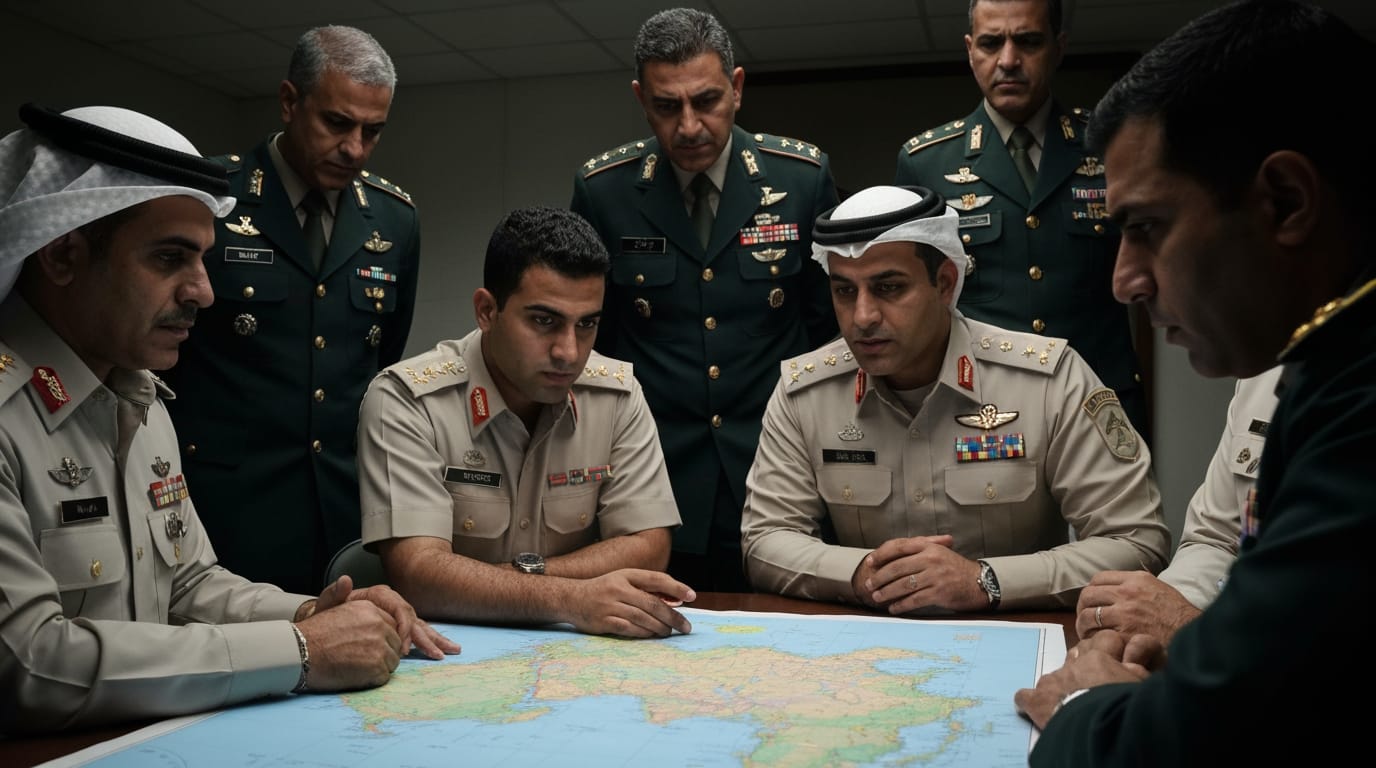
The Persian Gulf nations are navigating a profound security re-evaluation, grappling with the enduring presence of U.S. military bases and the renewed urgency for a unified regional defense alliance, all against the volatile backdrop of an escalating "Iran War." Recent U.S.-Israeli strikes on Iran and subsequent Iranian retaliatory attacks across the Gulf have forced a critical reassessment of long-held security strategies, challenging the region's stability and economic prosperity.
Regional Stability Under Fire: The Impact of Conflict
The ongoing military confrontation, characterized by U.S.-Israeli operations against Iran and widespread Iranian retaliatory strikes, has thrust Gulf states into a precarious position. The conflict, which commenced with U.S. and Israeli strikes on Iran on February 28, 2026, has seen Iran respond by targeting not only U.S. military installations but also civilian infrastructure across the Gulf Cooperation Council (GCC) states. This wave of attacks has included missile and drone barrages against targets in the UAE, Kuwait, Oman, Qatar, Saudi Arabia, and Bahrain, causing casualties, disrupting critical oil and gas infrastructure, and impacting tourism.
This escalation has severely disrupted the delicate balance Gulf states historically maintained through a dual strategy: cultivating strong security ties with the United States while pursuing diplomatic engagement with Iran. The strikes on civilian targets, including airports and hotels, have demonstrated that even states not formally involved in the conflict are vulnerable, destabilizing the region's efforts towards economic diversification and its reputation as a global business hub. As a result, Gulf governments are now confronted with the challenging decision of how to protect their interests while managing the unpredictable dynamics of the U.S.-Iran rivalry.
The Double-Edged Sword of U.S. Military Presence
A significant aspect of the security debate revolves around the substantial U.S. military footprint across the Gulf. The United States maintains a robust presence, with tens of thousands of personnel stationed in bases vital for regional security operations. Key installations include Qatar's Al Udeid Air Base, which serves as the largest U.S. military base in the Middle East and the forward headquarters for U.S. Central Command, housing approximately 10,000 personnel. Bahrain hosts Naval Support Activity Bahrain, home to the U.S. Naval Forces Central Command and the U.S. Fifth Fleet, with around 9,000 military personnel. Kuwait, another crucial partner, accommodates approximately 13,500 U.S. forces across bases like Camp Arifjan, Ali Al Salem Air Base, and Ahmad al-Jaber Air Base, serving as a vital logistics hub. The UAE hosts about 3,500 U.S. personnel at Al Dhafra Air Base, and its ports, particularly Jebel Ali, are critical for U.S. Navy logistics. Saudi Arabia, while not hosting large permanent combat forces, has recently allowed the U.S. to utilize King Fahd Air Base in Taif, providing a safer operational distance from Iranian missile ranges.
These bases have historically been perceived as cornerstones of regional deterrence against threats, particularly from Iran. However, the current conflict has underscored their vulnerability. Iranian retaliatory strikes have directly targeted these facilities, with Al Udeid Air Base and NSA Bahrain sustaining damage. This has led to a growing perception among some Gulf states that hosting these bases not only ensures protection but also draws them into conflicts they wish to avoid. Ahead of the recent U.S.-Israeli strikes, some Gulf allies reportedly blocked U.S. access to their bases and airspace, fearing Iranian retaliation. In response to the escalating situation, the U.S. has bolstered its presence, deploying approximately 5,000 Marines and several warships to the Persian Gulf in the largest force expansion since the conflict began in late February.
The Enduring Vision of a Gulf Military Alliance
Amidst the heightened regional tensions, the concept of a unified Gulf military alliance, often dubbed an "Arab NATO," has gained renewed traction. The Gulf Cooperation Council (GCC), established in 1981, already functions as a political, economic, and military alliance. Its military arm, the Unified Military Command, formerly known as the Peninsula Shield Force, was created in 1984 and renamed in 2021 to reflect deeper integration.
The idea of a more robust, integrated regional defense system is not new, surfacing repeatedly during periods of crisis. Calls for enhanced cooperation include coordinated air-defense networks, shared early-warning systems, and closer maritime security collaboration. Saudi Arabia, given its geographic, political, and military weight, is often envisioned as playing a central role in such an alliance.
However, forming a truly cohesive military bloc faces significant hurdles. Historically, the GCC has struggled with developing a common threat perception and achieving full military integration due to the reluctance of some member states, inter-GCC disputes, differing foreign policies, and challenges in ensuring interoperability between diverse national weapons systems. Despite these challenges, the urgency brought by the recent conflict is pushing some states to consider closer military alignment and joint responses.
Navigating a New Reality: Gulf States' Evolving Strategies
The current regional instability is prompting Gulf states to adapt their security postures. Many now seek to move beyond a sole reliance on external security guarantees, prioritizing the strengthening of their national defense capabilities and expanding intra-regional defense cooperation. This includes investing in advanced air and missile defense systems and enhancing cybersecurity.
There is also an evident shift towards diversifying international partnerships. While maintaining robust ties with the U.S., some Gulf states are exploring closer security cooperation with other global players and even considering engagement with Israel, particularly in areas like missile defense and cyber capabilities, despite the political sensitivities surrounding the Palestinian issue.
Crucially, the conflict has led to a hardened stance among some Gulf states towards Iran. Despite earlier efforts at de-escalation, the repeated attacks on their territories have fostered a strong desire to see Iran's military capabilities degraded. Some Gulf officials are even considering joining U.S. and Israeli strikes against Iran to ensure its ability to threaten neighbors is diminished. This evolving approach signifies a complex strategic calculus where national sovereignty, regional stability, and economic imperatives are constantly weighed against the unpredictable realities of conflict.
The Gulf states are currently trapped in a complex security dilemma, balancing the immediate threat from Iran with the long-term implications of hosting foreign military forces. The ongoing "Iran War" has undeniably accelerated a re-evaluation of their security architecture, pushing them towards greater self-reliance and regional integration, even as they continue to navigate their critical alliances with global powers. The coming months will likely reveal how these nations manage the competing demands of deterrence, diplomacy, and collective defense in a region increasingly defined by flux.