Hegseth Declares Asia Must Remain Free from Dominance, Citing China's Growing Ambitions
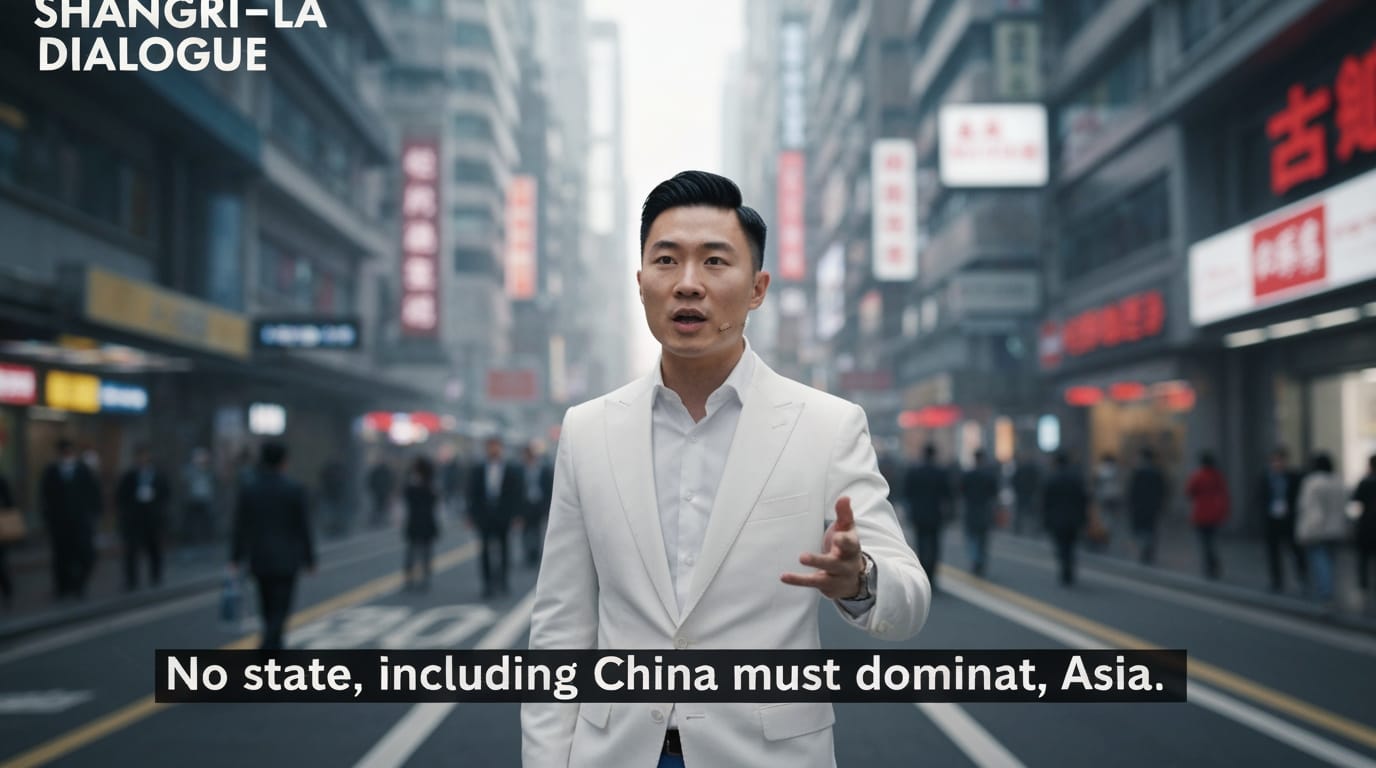
SINGAPORE – The future of Asia’s security landscape took center stage at the Shangri-La Dialogue today as U.S. Secretary of Defense Pete Hegseth delivered a firm assertion: no single state, including China, should be permitted to dominate the region. Speaking at Asia’s premier security forum, Hegseth underscored Washington's commitment to a free and open Indo-Pacific, directly challenging Beijing's escalating military advancements and its stated intent to reshape the regional order. His remarks signaled a pivotal moment in the ongoing geopolitical competition, emphasizing a U.S. strategy of deterrence and collective security amidst rising tensions.
The Principle of Non-Dominance and U.S. Intentions
Secretary Hegseth's address unequivocally stated that "no state, including China, can impose its hegemony and hold the security or prosperity of our nation and our allies in question." This core message resonated through his speech, outlining a clear red line for U.S. engagement in the Indo-Pacific. While expressing respect for the Chinese people and their civilization, the Pentagon chief clarified that the United States does not seek conflict, dominance, or regime change in Beijing. "We do not seek to dominate or strangle China, to encircle or provoke," Hegseth said, reinforcing a desire for peace over confrontation. He further noted that despite the contentious rhetoric, U.S.-China relations are "better than they have been in many years," citing more frequent military-to-military communications aimed at managing tensions. However, this pursuit of peace is predicated on strength, ensuring that neither the U.S. nor its regional partners can be subordinated or intimidated.
The Rising Threat and Regional Alarms
Despite calls for stable relations, Hegseth painted a stark picture of the perceived threat emanating from China. He explicitly warned that "the threat China poses is real, and it could be imminent." The Secretary detailed Beijing's "massive military buildup" and its increasing willingness to employ military force, including "gray zone tactics and hybrid warfare," to fundamentally alter the established status quo in the region. Hegseth asserted that China "seeks to become a hegemonic power in Asia," aiming to dominate and control significant portions of the vibrant and vital region. Of particular concern was Beijing's stated objective to be capable of invading Taiwan by 2027, with the People's Liberation Army (PLA) actively building the necessary capabilities and conducting daily training for such an eventuality. Any forceful attempt to conquer Taiwan, Hegseth cautioned, would lead to "devastating consequences for the Indo-Pacific and the world." He also highlighted the risk of economic entanglement, warning that economic dependence on China only deepens Beijing's malign influence and complicates defense decisions during periods of heightened tension.
A Call for Shared Responsibility and Deterrence
In response to these perceived threats, Secretary Hegseth urged Asian allies to significantly increase their defense spending, emphasizing a shared responsibility in maintaining regional stability. He called for partners to boost their military expenditures to 3.5% of their Gross Domestic Product (GDP), mirroring the U.S.'s own pledged $1.5 trillion investment in its military. The message was clear: the era of the United States solely subsidizing the defense of wealthy nations is over, and Washington expects "partners, not protectorates," with allies demonstrating "skin in the game." Hegseth pointed to European allies, particularly NATO members like Germany, who are now pledging up to 5% of their GDP to defense, as an example for Asian nations facing an "even more formidable threat." This strategic recalibration aims to foster a "stronger, more self-reliant network of allies," which he described as essential for deterrence and preserving the balance of power. This approach, he argued, is about achieving "peace through strength," ensuring the costs of aggression are prohibitively high.
The Broader Indo-Pacific Context
Hegseth’s remarks at the Shangri-La Dialogue were delivered against a backdrop of increasing geopolitical competition and a dynamic security environment in the Indo-Pacific. The forum, a critical gathering for defense leaders and diplomats, serves as a barometer for regional tensions and collaborative efforts. Notably, China's Defense Minister, Dong Jun, reportedly opted to skip the major forum, instead sending only an academic delegation. This absence, or limited high-level representation, underscored a potential divergence in engagement strategies between the two global powers. Hegseth further articulated a strategic focus for the U.S., suggesting that European allies should concentrate their security efforts on the European continent, thereby allowing Washington to dedicate its comparative advantages and resources more fully to the challenges posed by China in the Indo-Pacific. This perspective reflects a broader strategic shift, where the Indo-Pacific remains a paramount priority for the U.S. administration.
Conclusion
Secretary Hegseth's address at the Shangri-La Dialogue articulated a robust U.S. vision for the Indo-Pacific: one defined by peace and prosperity, but critically, free from the unilateral dominance of any single power. His strong stance on China's military expansion and its hegemonic ambitions served as a clarion call for increased vigilance and collective defense spending among regional allies. While emphasizing a desire for stable U.S.-China relations, the message underscored a firm commitment to deterring aggression and maintaining the existing balance of power. The ongoing dialogue in Singapore and the reactions to Hegseth's statements will undoubtedly shape the contours of future security cooperation and competition in a region pivotal to global stability. The delicate dance between engagement and deterrence, cooperation and competition, will continue to define the complex geopolitical landscape of the Indo-Pacific.


