High-Speed Trains Collide in Central Spain Leaving Dozens Dead
The crash on the Madrid-to-Seville corridor ranks among the deadliest rail disasters in modern Spanish history and halted rail travel across the southern route.
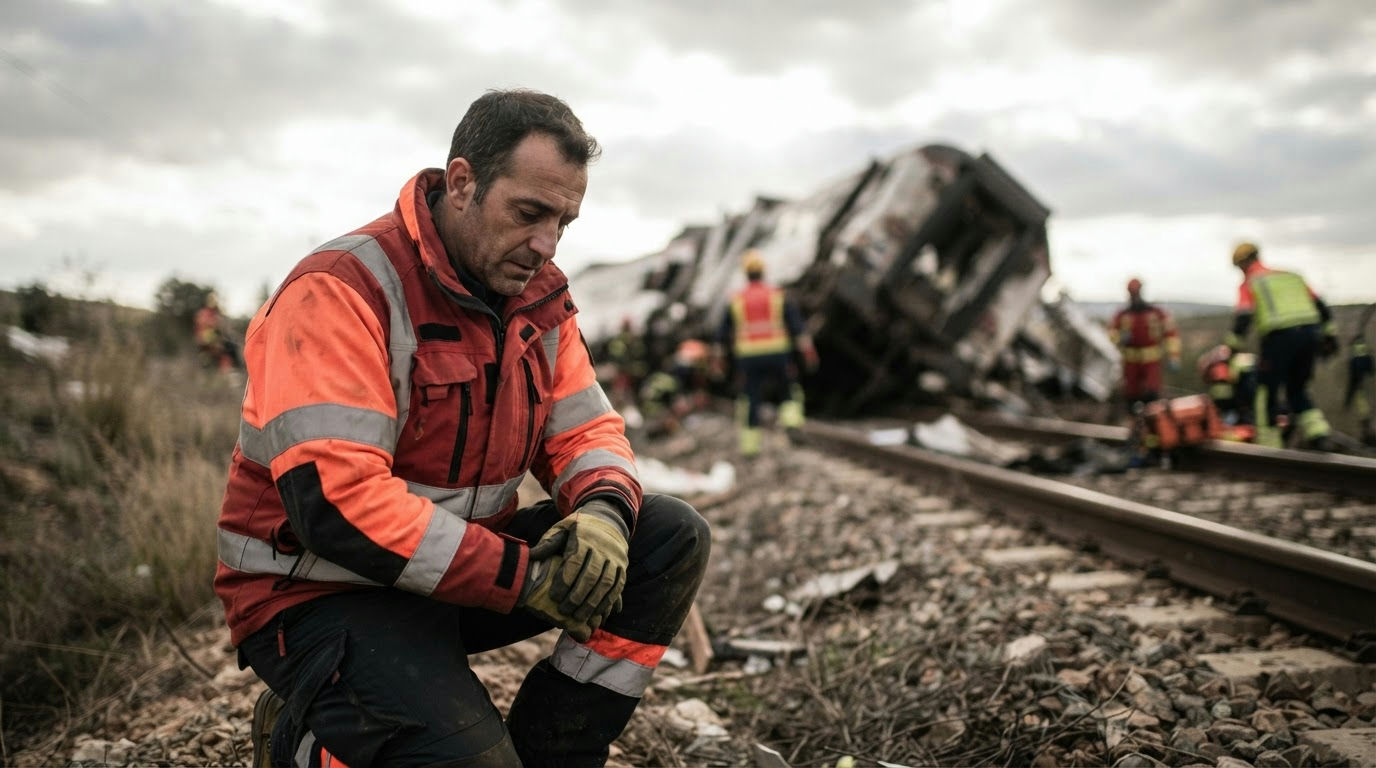
A high-speed train collided with a stationary passenger train shortly after 9 a.m. on Wednesday, Oct. 28, 2026, in central Spain. The crash occurred between Urda and Los Yébenes in Toledo province on the line between Madrid and Seville.
The state-owned Renfe AVE train struck the rear of an Iryo train halted on the tracks. The impact derailed railcars and sent two carriages down an embankment.
Regional government sources in Castilla-La Mancha said the confirmed death toll reached 64. Initial counts had placed the fatalities between 30 and 32. Regional President Emiliano García-Page had earlier confirmed at least 32 deaths during an interview with Radio Nacional de España.
About 80 people suffered injuries, regional authorities said. Approximately 30 passengers sustained minor injuries, while 50 people suffered moderate to severe injuries. Early tallies counted 24 of the dead aboard the AVE train and six on the Iryo train.
Both services carried a combined 544 passengers, including 397 on the Renfe train and 147 on the Iryo service. Castilla-La Mancha government spokeswoman Esther Padilla told public broadcaster TVE that the collision was severe and casualty numbers could rise.
García-Page stated that rescuers had not reached the bottom of the most damaged carriages. He warned that search teams would likely find more victims inside the wreckage. Urda Mayor Manuel Galán told TVE that local teams opened a municipal sports pavilion to assist passengers.
Prime Minister Pedro Sánchez said he was shocked by the disaster and expressed solidarity with victims. Sánchez coordinated the government response with Transport Minister Óscar Puente. European Commission President Ursula von der Leyen and French President Emmanuel Macron also expressed condolences and support.
Spain operates the largest high-speed rail network in Europe and the second largest worldwide after China. The collision marks Spain's second fatal high-speed crash in 2026. A January crash near Adamuz in Córdoba province killed 46 people and injured more than 100 on the same corridor.
The accident ranks among Spain's deadliest modern rail disasters, alongside the 2013 Santiago de Compostela derailment and a 1972 crash in El Cuervo. Spanish political parties suspended major campaign events following the collision.
Emergency crews continue operations with helicopters, medical personnel and firefighters to reach trapped passengers. A specialist judicial disaster unit from the Civil Guard is examining the wreckage. Investigators are focusing on Adif signalling systems after early reports indicated the Iryo train stopped due to a signal problem.